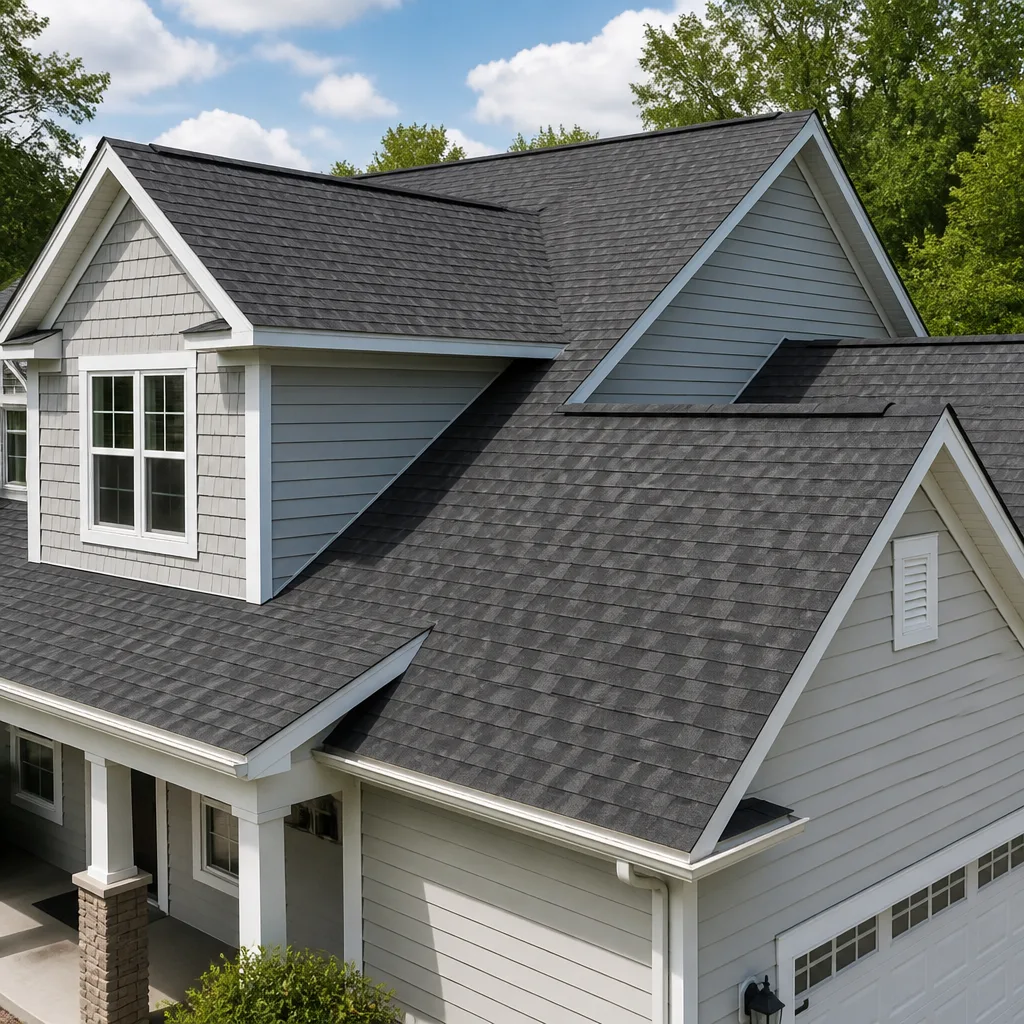
 Architectural shingles
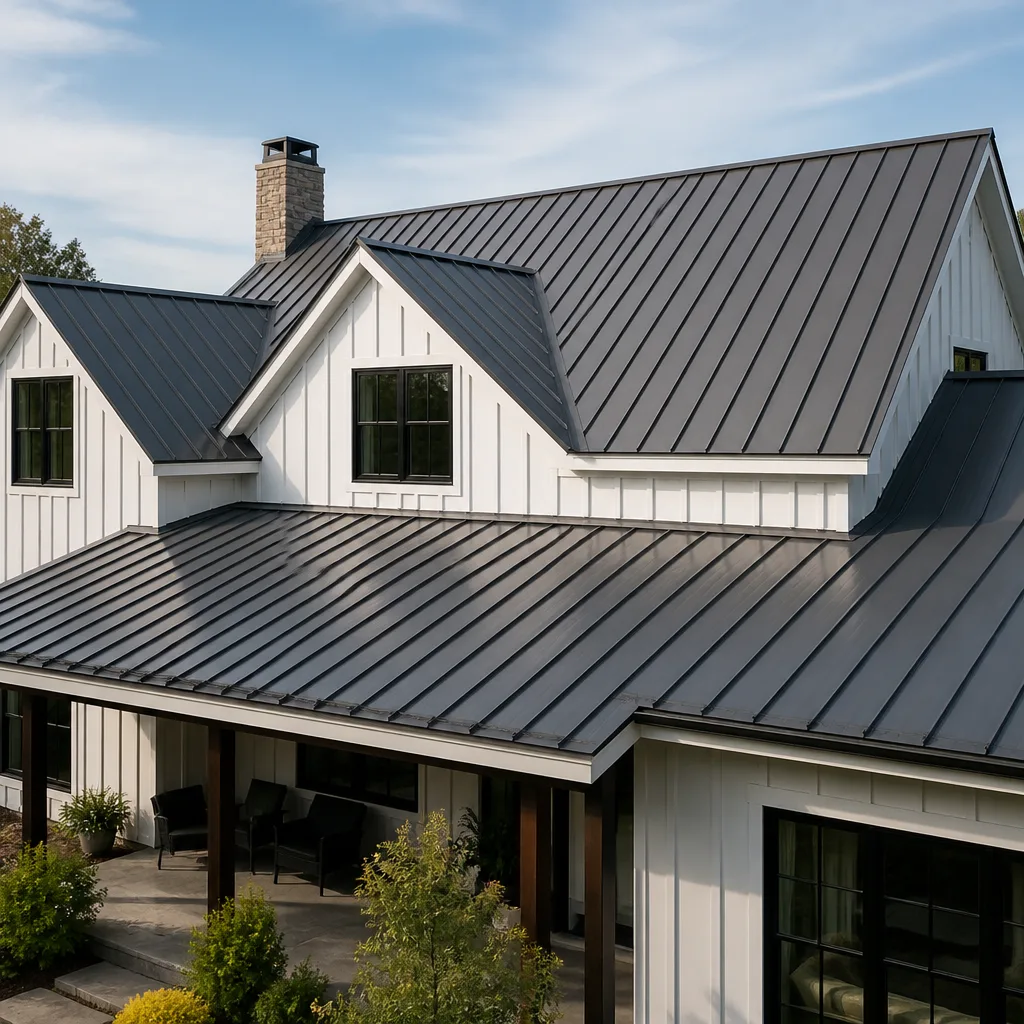 Metal roofing
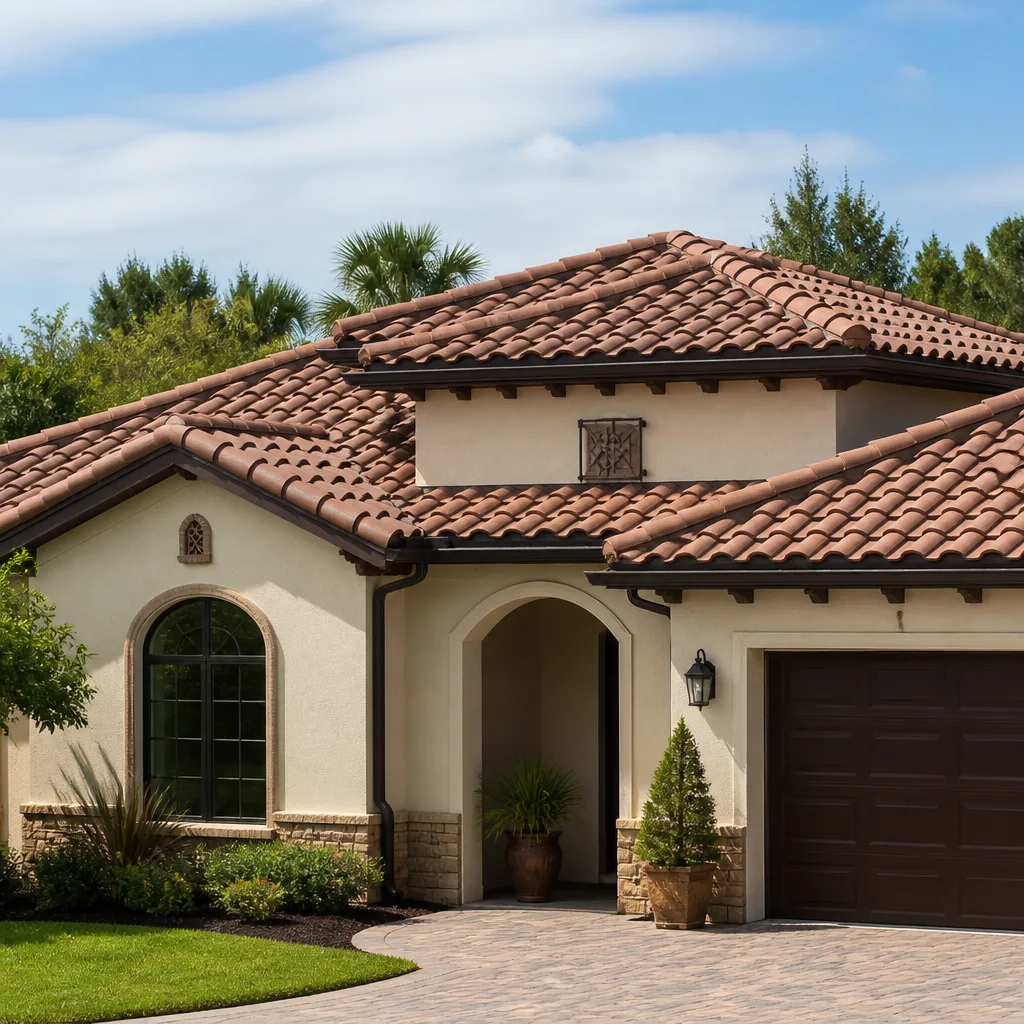 Tile roofing
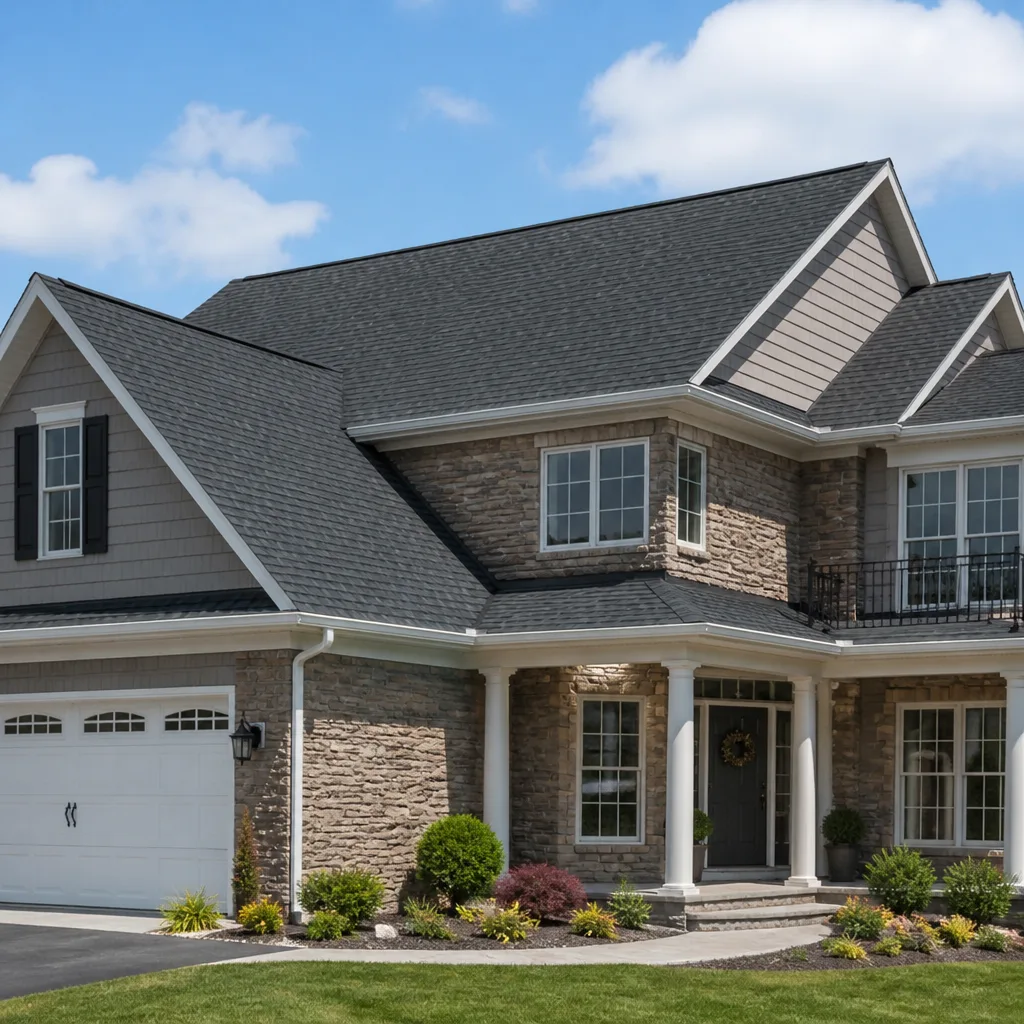 GAF
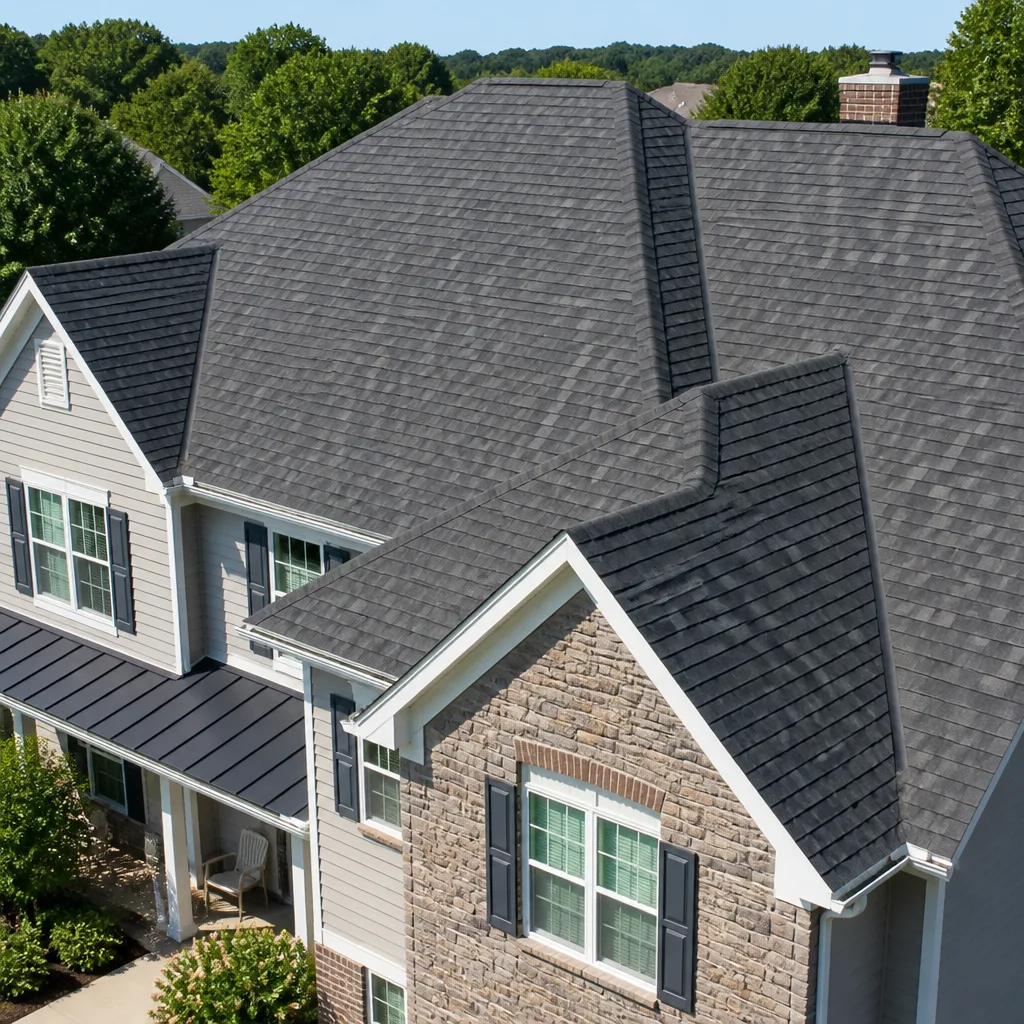 Owens Corning
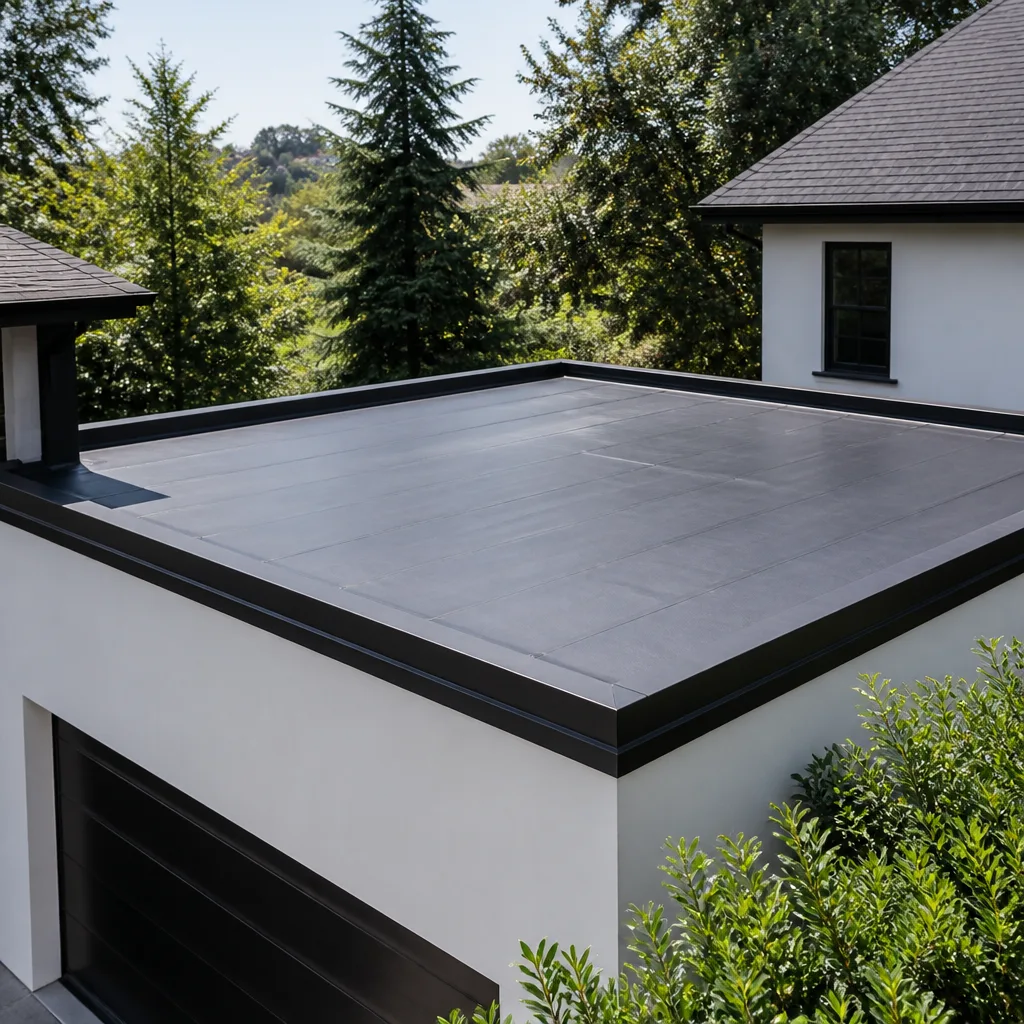 Flat & low-slope
Free roof inspection with deck photos before we talk money - GAF and Owens Corning certified installation
Fast, Reliable Roof Replacement Across Huntington Beach
If your Huntington Beach roof is nearing the end of its life, a full replacement typically runs between $11,500 and $24,000 for a standard asphalt shingle tear-off on a 1,500 to 2,200 square foot home, with architectural shingles at the higher end of that range. Coastal homes south of the pier often land 10 to 15 percent higher because of underlayment upgrades and flashing work the salt air demands. Call (833) 467-4901 and we’ll walk the roof with you, measure it, and give you a written line-item quote before you commit to anything.
We work Huntington Beach every week, from the pier-area cottages to the tract homes east of Beach Boulevard. The lots are tight, the parking is honest-to-god scarce, and the marine air does things to fasteners that inland roofers never see. Knowing these blocks before we show up is what keeps a replacement moving on schedule.
Key Takeaways
- Roof replacement in Huntington Beach typically runs $11,500 to $24,000 depending on square footage, shingle grade, and decking condition.
- Coastal homes south of the pier frequently need full flashing and fastener replacement due to salt-air corrosion, which adds cost but prevents early failure.
- Tight lots and shared walls on 1950s to 1970s tracts mean staging and neighbor notice affect the schedule as much as the roofing work itself.
- We carry seven manufacturer lines (GAF, CertainTeed, Owens Corning, IKO, Atlas, Tamko, and Boral), so the shingle recommendation follows your roof and budget, not our inventory.
- Every job starts with a standalone inspection. If repair makes more sense than replacement, we’ll tell you that first.
We carry seven lines of shingles. One contractor handles inspection, repair, and replacement. If you’re weighing whether to patch or tear off, we’ll tell you which one actually makes sense for your Huntington Beach roof.
Styles & brands we work with
Why Huntington Beach Roofers Is Huntington Beach’s Preferred Roof Replacement Company
Huntington Beach is one of the rare US cities where a roofing contractor routinely deals with two fundamentally different roofing environments within a few miles: the salt-laden marine air of the coastal zone, especially south of the pier, that eats through fasteners and flashing, and the hotter, drier, Santa Ana wind-exposed inland tracts east of Beach Boulevard. No neighboring city combines that coastal salt exposure with the same concentrated stock of mid-century tract homes still under original or first-replacement roofs. We inspect for both failure modes because we work both zones.
Our approach is inspection first, recommendation second. Too many homeowners in Huntington Beach have paid for a full tear-off when a targeted repair would have served them for another five years, or signed for a patch job when the decking underneath was already compromised. We won’t put you in either position. Match the material to the roof, not the other way around.
Neil Stratton built this company around a simple idea: carry enough brands that the shingle choice follows the house, not the warehouse. That’s why we’re authorized to install GAF, CertainTeed, Owens Corning, IKO, Atlas, Tamko, and Boral. If a Huntington Beach homeowner wants a builder-grade Owens Corning for a rental flip, we can do that. If they want a premium CertainTeed system with a manufacturer-backed wind rating for a coastal property, we can do that too. Same crew, same inspector, same accountability from the first inspection to the final shingle.
Roof Replacement Contractor in Huntington Beach
As a Roof Replacement Contractor working Huntington Beach, the jobs that come across our desk usually start as one of three calls: a leak near the pier that won’t stop, an insurance adjuster’s quote an inland contractor wrote without seeing the flashing, or a homeowner east of Beach Boulevard whose 1970s original roof finally gave up. A full replacement here means tearing off the old shingles and underlayment, inspecting and often replacing sections of decking, laying new synthetic underlayment (with ice and water shield in the valleys), and nailing the new shingle system to the manufacturer’s spec for wind exposure.
A typical tear-off and replacement on a Huntington Beach tract home takes four to seven working days once permits clear, depending on decking condition and how much of the original fastening has to be redone. Coastal-plan review can add one to three weeks before we can start on some properties near the beach, and we factor that into the schedule honestly when we quote.
How We Handle a Constrained Huntington Beach Lot
Because so much of Huntington Beach’s 1950s to 1970s stock is single-story tract and bungalow housing packed onto tight lots, a roof replacement here is as much a site-logistics and neighbor-notice job as a roofing job. Staging, dumpster placement, and access often constrain the schedule more than the decking does. We stage materials in permitted curbside zones when there’s no driveway, give shared-wall neighbors written notice on work hours, and keep the site swept each afternoon so nothing tracks into adjacent entries.
If your lot has a shared driveway or no driveway at all, that changes the quote. It means a smaller dumpster, more trips, and more labor hours for material handling. We won’t pretend it doesn’t. The estimate you get reflects how your lot actually works, not how a generic Huntington Beach roof looks on a spreadsheet.
When a Repair Becomes a Replacement
On a block of older beach cottages near the pier, our crew tore off a first-replacement asphalt roof and found the original 1950s galvanized nails and valley flashing rusted through from years of salt air. We replaced the flashing, laid new underlayment and ice and water shield in the valleys, and set the decking right before nailing architectural shingles to spec. If the homeowner had paid another contractor to patch the visible shingle damage, that hidden corrosion would have kept leaking through every few storm seasons.
That’s the coastal Huntington Beach reality. The shingle that’s missing on top is rarely the whole story. The fastener and flashing layer underneath tells you whether you’re fixing a roof or resetting a clock. Salt air corrosion is why a pier-area repair often becomes a full re-roof once we get eyes on the valleys.
Asphalt Shingle Roof Replacement in Huntington Beach
Asphalt Shingle Roof Replacement is the most common job we do in Huntington Beach, because most of the city’s housing stock was built between 1950 and 1980 with asphalt shingle roofs that have now cycled through one or two replacement intervals. For a typical 1,800 square foot Huntington Beach home, architectural asphalt shingle replacement runs $13,000 to $20,500, while a simpler three-tab installation on the same footprint lands around $11,500 to $16,000. Those ranges assume the decking underneath is sound. If the tear-off exposes soft or delaminated 1960s sheathing, expect to add $2.00 to $3.50 per square foot for the affected sections.
Huntington Beach gets almost no snow and modest rain, so asphalt shingles here rarely fail from freeze-thaw. They fail from wind, UV exposure, and salt corrosion. That changes which shingle you should pick and how it should be fastened. A roof spec that works for a house in Frederick, Maryland, is wrong for a house three blocks off Pacific Coast Highway.
Architectural vs. Three-Tab on Huntington Beach Roofs
Architectural shingles are the standard recommendation for most Huntington Beach homes because they carry higher wind ratings and a thicker laminated profile that stands up to Santa Ana gusts better than three-tab. On exposed inland roofs east of Beach Boulevard, skip-nailing or an under-rated shingle fails at the ridge and perimeter, where the nailing pattern matters most. We install architectural shingles with the manufacturer’s required nailing schedule for the wind zone, which Huntington Beach’s exposure essentially demands.
Three-tab still has a place, mainly for rental properties or homes being prepared for sale where the buyer cares about the roof line item, not the roof’s next 30 years. We stock both, and we’ll show you the actual material difference and cost delta before you choose.
Decking and Underlayment on 1960s Tracts
The 1960s and 1970s tracts east of Beach Boulevard often have original wood sheathing and low-slope sections. When we tear off a first-replacement roof there, we routinely find sections of decking that have been quietly absorbing moisture for 50 years. Reusing compromised sheathing undermines the new underlayment and voids the manufacturer warranty. We replace those sections rather than shingle over them and hope nobody notices.
On low-slope sections, we lay a peel-and-stick underlayment that handles ponding water far better than standard felt. That’s not an upsell. It’s what a Huntington Beach roof with a 2:12 or 3:12 pitch actually needs to shed the marine-layer moisture we get nearly every morning.
Trusted Brands We Service in Huntington Beach
Seven brands. One contractor. We’re authorized to install roofing products from GAF, CertainTeed, Owens Corning, IKO, Atlas, Tamko, and Boral, which means the shingle recommendation follows the roof’s needs and your budget, not our inventory. If a GAF line is backordered or a CertainTeed product doesn’t suit a coastal exposure, we move to Atlas or Tamko without changing crews or contracts. Roof Replacement work in Huntington Beach gives us the chance to match the material to the actual conditions on your block, whether that’s salt air, Santa Ana wind, or a low-slope section that needs a specific underlayment.
We don’t push a single brand because we’re not tied to a single manufacturer’s quota. For Huntington Beach homeowners, that means the conversation starts with your roof’s condition and your budget, and the brand discussion comes after.
See the difference
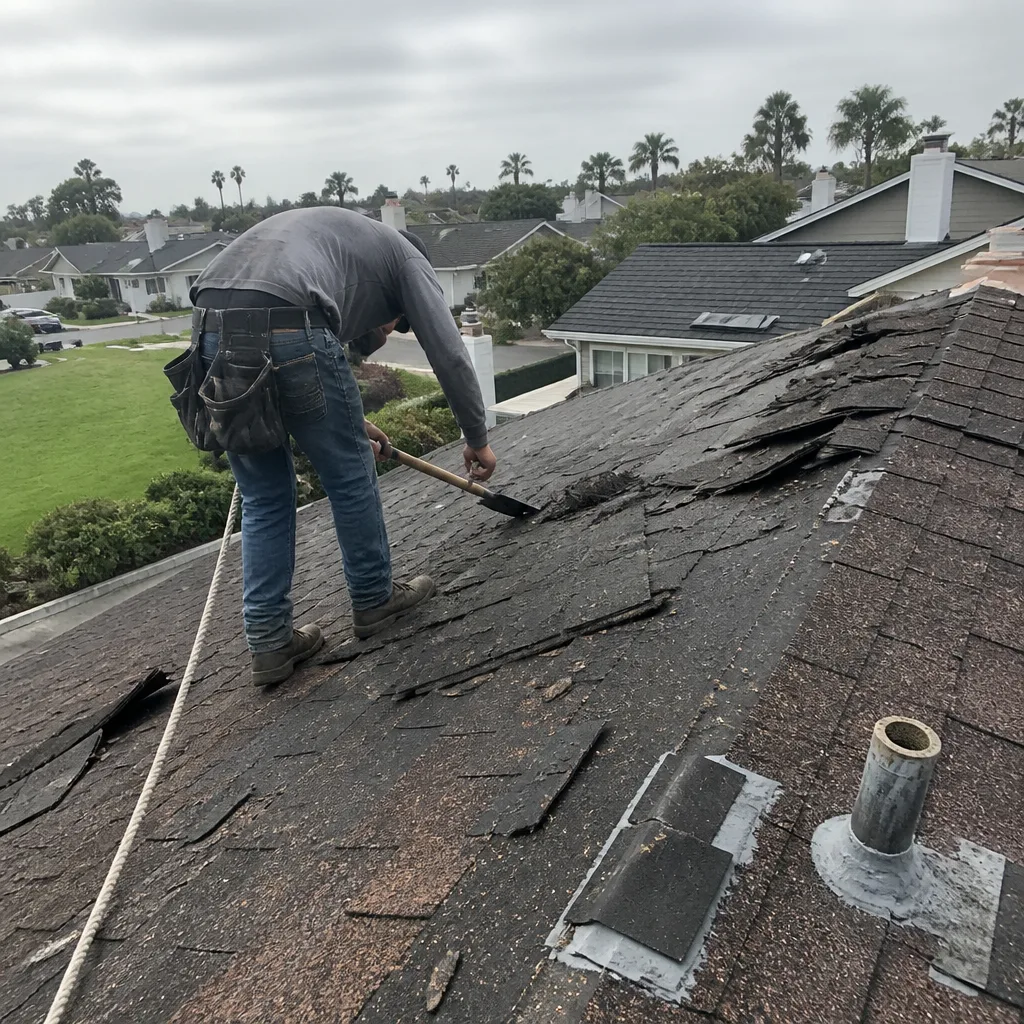 Before
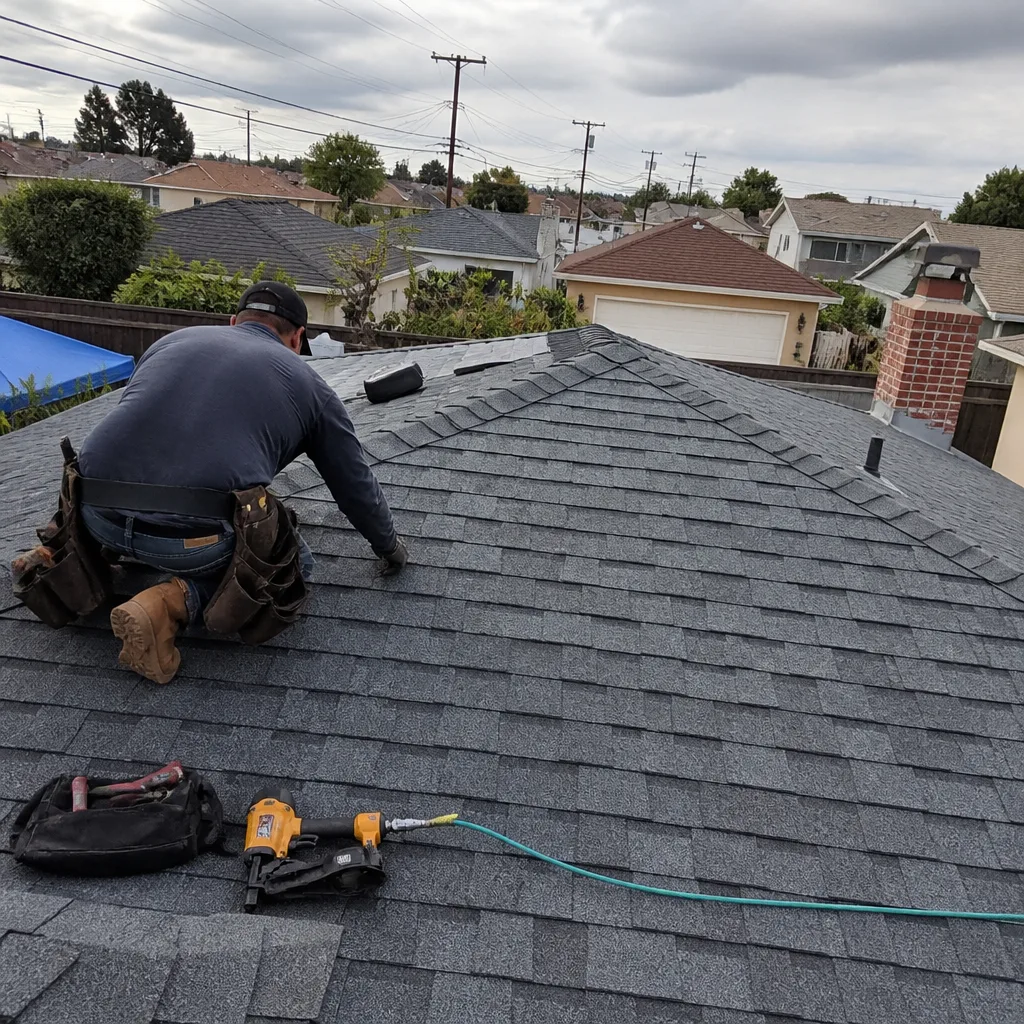 After
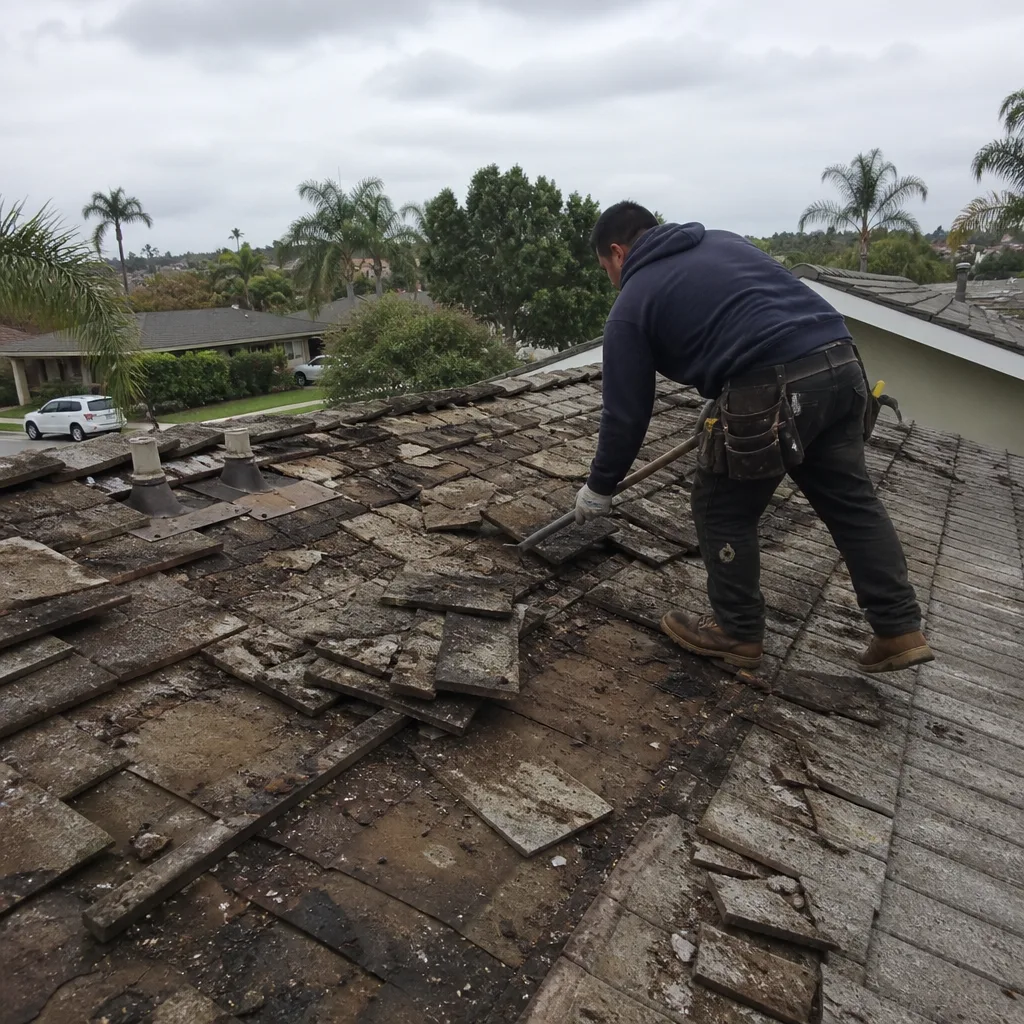 Before
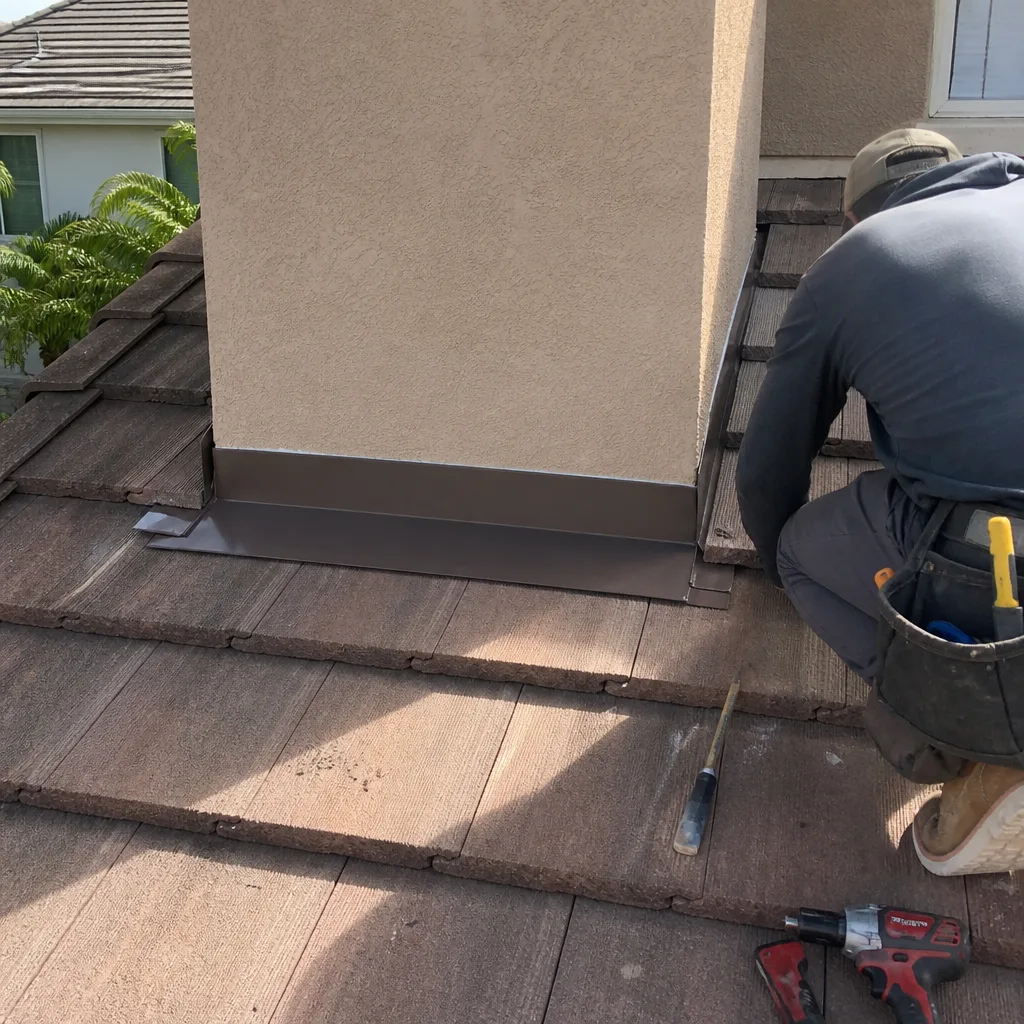 After
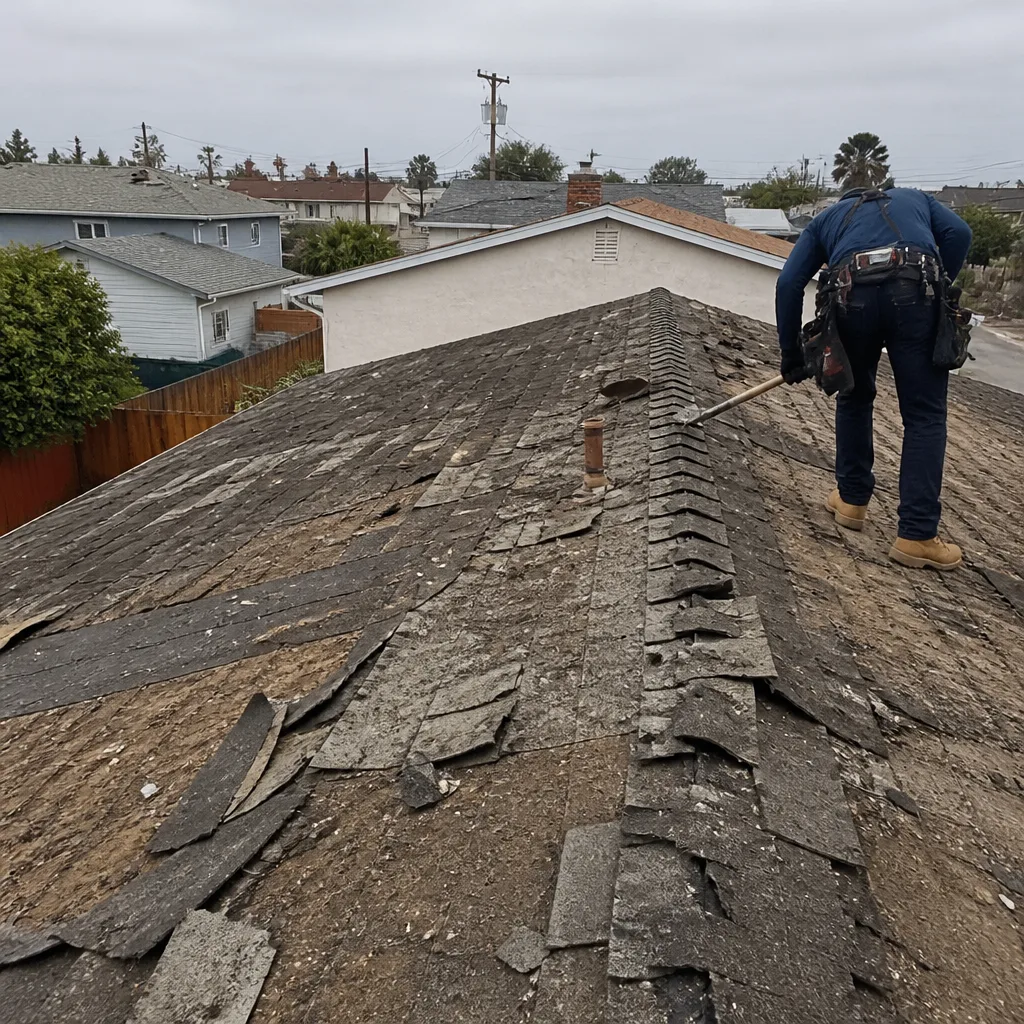 Before
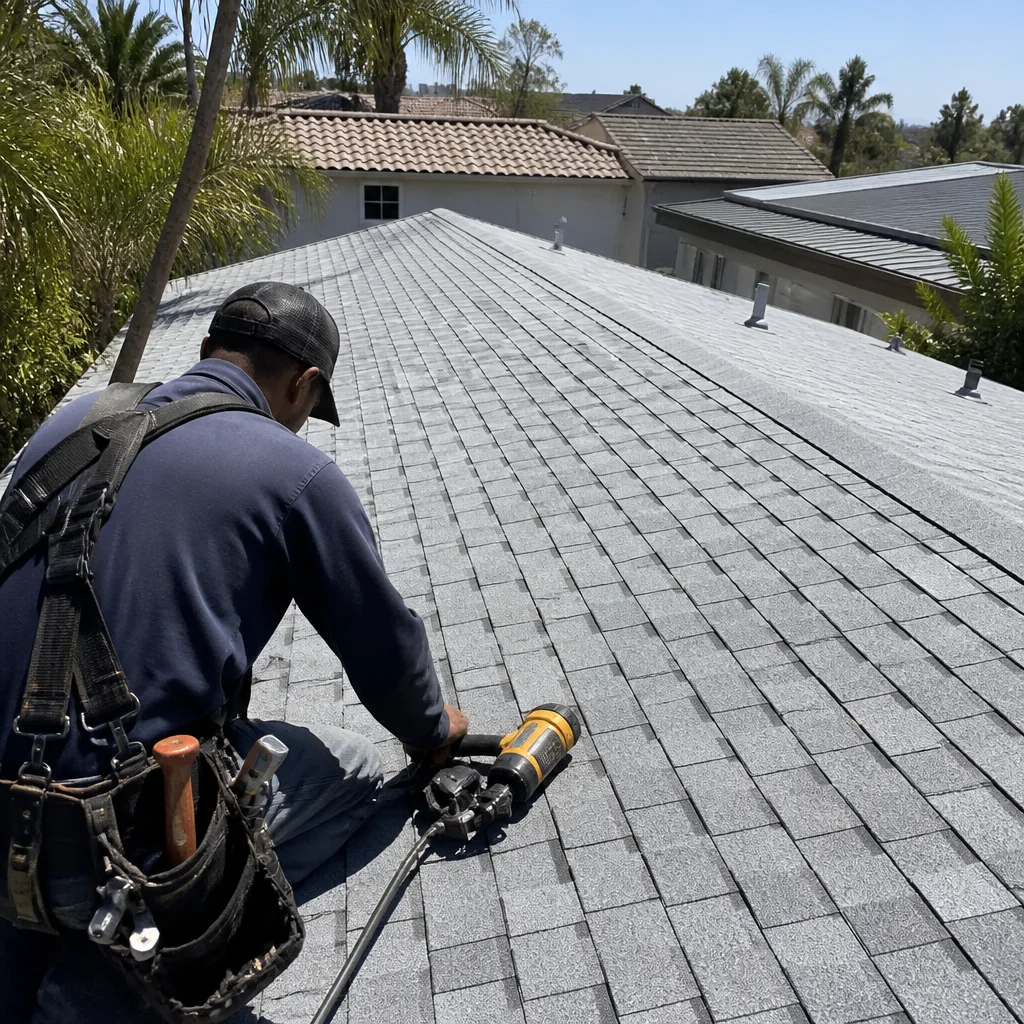 After
Common Roof Replacement Problems We See in Huntington Beach Homes
- Salt-air corrosion on 1950s and 1960s original fasteners: Coastal homes south of the pier and around the downtown blocks often still have their original galvanized nails and valley flashing. By the time we tear off, those fasteners are rusted through, and the “repair” was only ever covering the symptom. A replacement that includes new flashing resets the clock; skipping it doesn’t.
- Low-slope sections and soft original sheathing east of Beach Boulevard: Those 1960s and 1970s tracts were built fast, and the wood decking shows it. Tear-off exposes soft spots that must be replaced before the underlayment goes down, or the new roof starts with a structural problem already baked in.
- Santa Ana wind abrasion on exposed inland roofs: The dry, abrasive gusts every fall lift and abrade aging shingles, particularly at the ridge and perimeter. An under-nailed or under-rated installation fails there first. Wind-rated architectural shingles with the correct nailing pattern are the difference between a roof that lasts and one that needs patching every other year.
- Coastal-plan review delays on pier-area replacements: Some Huntington Beach coastal-zone properties require local coastal-plan review before a roof replacement can start. That’s a permit step inland contractors never encounter, and if the roofer doesn’t know to file it, the project stalls. We know which properties trigger it and we file accordingly.
Pricing for Roof Replacement in Huntington Beach, CA
Here’s what you’re actually looking at in Huntington Beach. A full architectural shingle tear-off and replacement on a 1,500 to 1,800 square foot home runs $13,000 to $20,500. A three-tab replacement on the same footprint runs $11,500 to $16,000. Coastal-zone homes with salt-air damage add $1,500 to $3,500 for full flashing and fastener replacement, and decking replacement adds $2.00 to $3.50 per square foot when the tear-off exposes soft sections. Those are the real Huntington Beach numbers, not a national average that ignores the marine layer and the tract-home stock.
What moves the price: square footage, shingle grade, decking condition, access and staging constraints on your lot, and whether the property is inside the coastal-plan review zone. We give free written estimates with line items, so you see exactly what each component costs before you sign. Call (833) 467-4901 to schedule yours.
We Also Serve Cities Near Huntington Beach
Our crews work regularly in Midway City, Fountain Valley, Westminster, and Costa Mesa, and we know how the housing stock shifts from one block to the next. If you’re in a neighboring city, the page for Huntington Beach still describes how we approach the coastal and inland zones, and we’ll bring the same inspection-first process to your roof.
Serving Huntington Beach, CA — Our Local Coverage Area
We’re based in the Huntington Beach area and know this community well. Use the map below to see our service coverage — if you’re nearby, we can almost certainly help.
FAQs About Roof Replacement in Huntington Beach
Some properties in Huntington Beach’s coastal zone require local coastal-plan review before a roof replacement can begin, particularly homes south of the pier and near the downtown beach blocks. The trigger depends on the specific overlay district and the scope of the replacement, and we check the property’s status during the estimate so you aren’t caught waiting on a permit step an inland contractor would never know to file. Call (833) 467-4901 and we’ll confirm whether your property falls inside the review zone.
Tight lots and shared walls directly affect the schedule because staging, dumpster placement, and material handling take longer when there’s no driveway or side yard. On Huntington Beach blocks with shared driveways, we stage materials in a permitted curbside zone, use a smaller dumpster, and give shared-wall neighbors written notice of work hours. The roofing itself may take four to seven working days, but constrained access can add a day or two. We build that into the quote up front, not as a change order later.
Because the shingles are almost never the root cause on coastal Huntington Beach homes. The original 1950s and 1960s galvanized nails and valley flashing rust through from salt air long before the shingles wear out, so water enters at the valleys and eaves even though the shingle surface looks passable. Patching the visible shingle damage leaves the corroded fasteners below, and the leak returns. A proper fix on those homes usually means full flashing replacement and new underlayment, which is why a pier-area “repair” often grows into a full re-roof once we open it up. Call (833) 467-4901 for an inspection and we’ll show you what’s actually happening under the shingle layer.
Most single-story Huntington Beach tract homes from the 1950s through 1970s run between 15 and 22 roofing squares, depending on the footprint and whether there’s an attached garage or low-slope section. A pier-area beach cottage might run 10 to 14 squares because the homes are smaller, while a larger two-story near Edison Park can push past 25 squares. We measure the actual roof plane area during the free estimate and quote per square, so the number reflects your roof, not an average.
Wind rating matters more in Huntington Beach than most homeowners assume, because the Santa Ana winds hit the inland tracts with dry, abrasive gusts that lift and abrade aging shingles at the ridge and perimeter. For exposed roofs east of Beach Boulevard, we recommend architectural shingles with a wind rating of at least 110 mph, installed with the manufacturer’s required nailing pattern for the wind zone. Three-tab shingles typically carry lower wind ratings and fail earlier under Santa Ana conditions. The rated installation matters as much as the rated shingle. Call (833) 467-4901 and we’ll tell you what your specific exposure actually requires.
Written by Neil Stratton, Owner at Huntington Beach Roofers, serving Huntington Beach and surrounding coastal Orange County.