
Last updated October 31, 2026
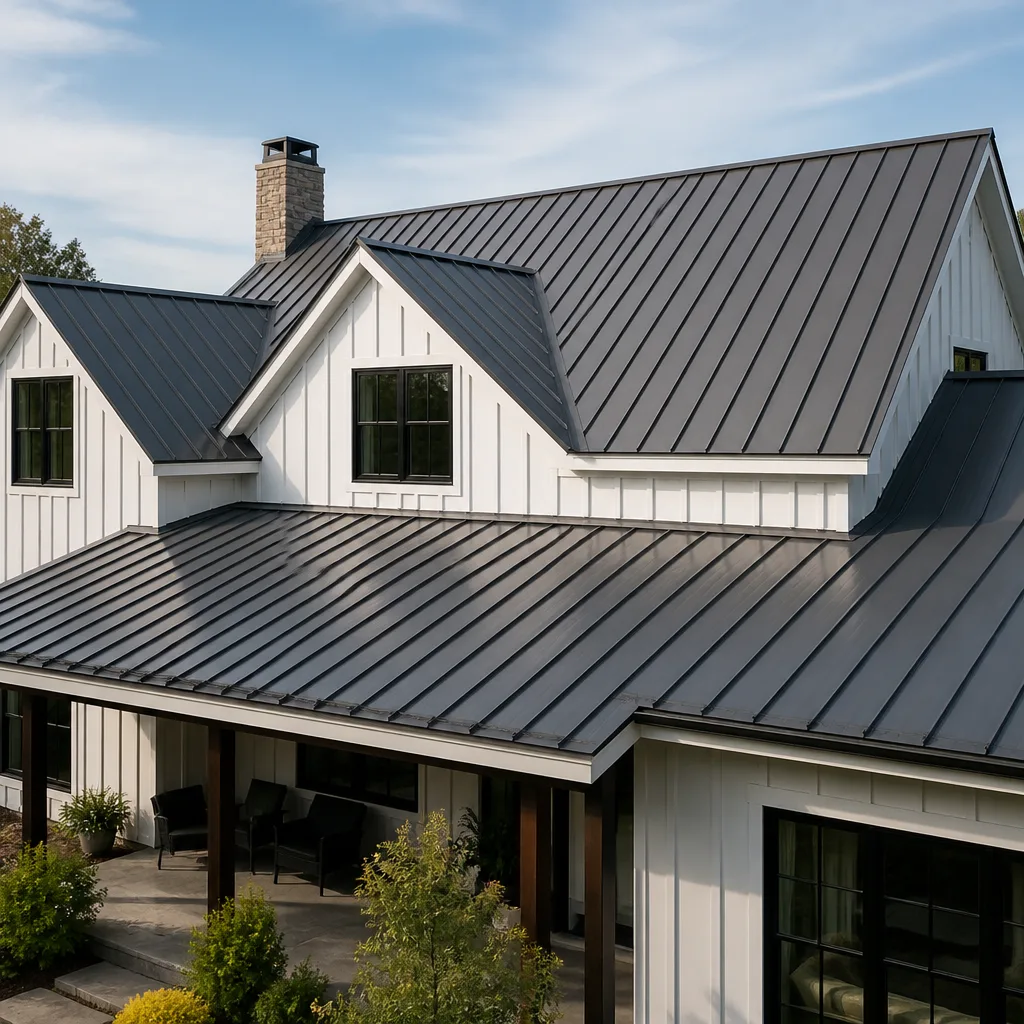 Metal roofing
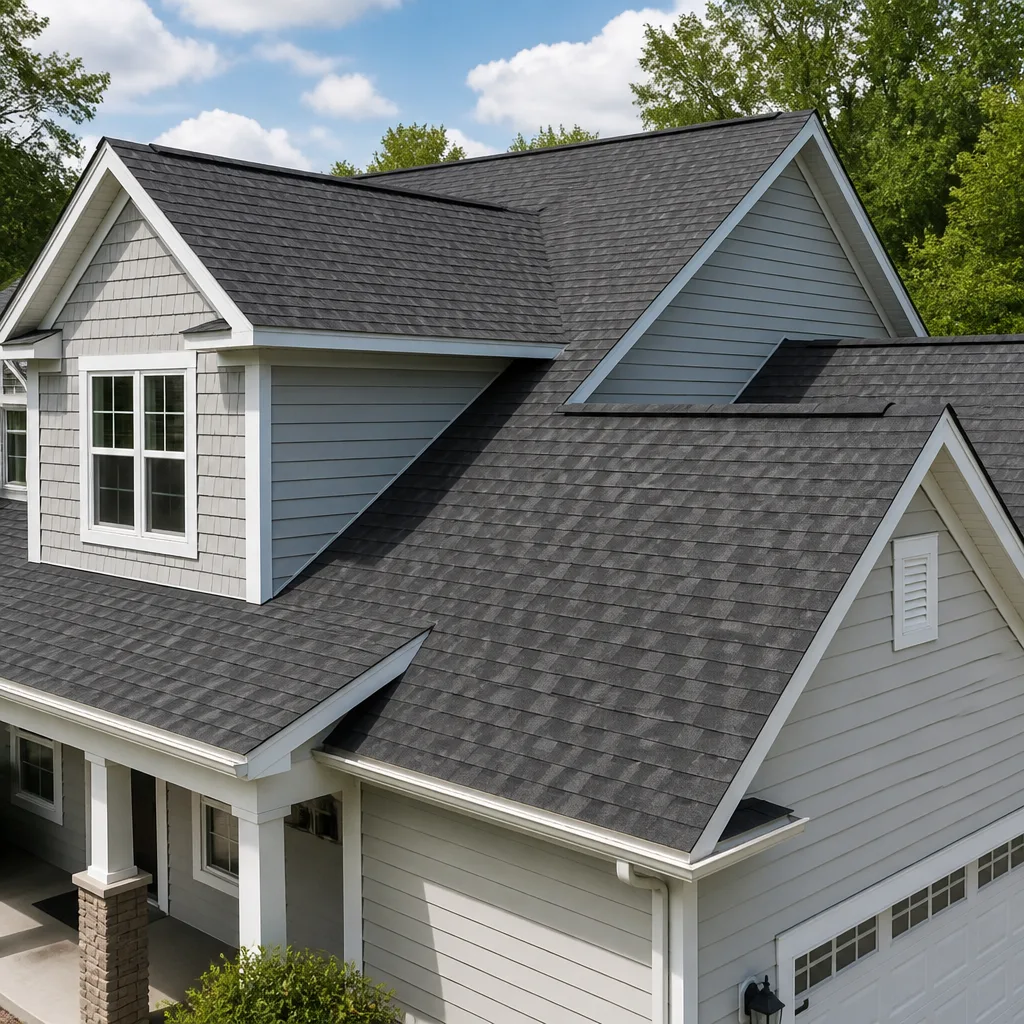 Architectural shingles
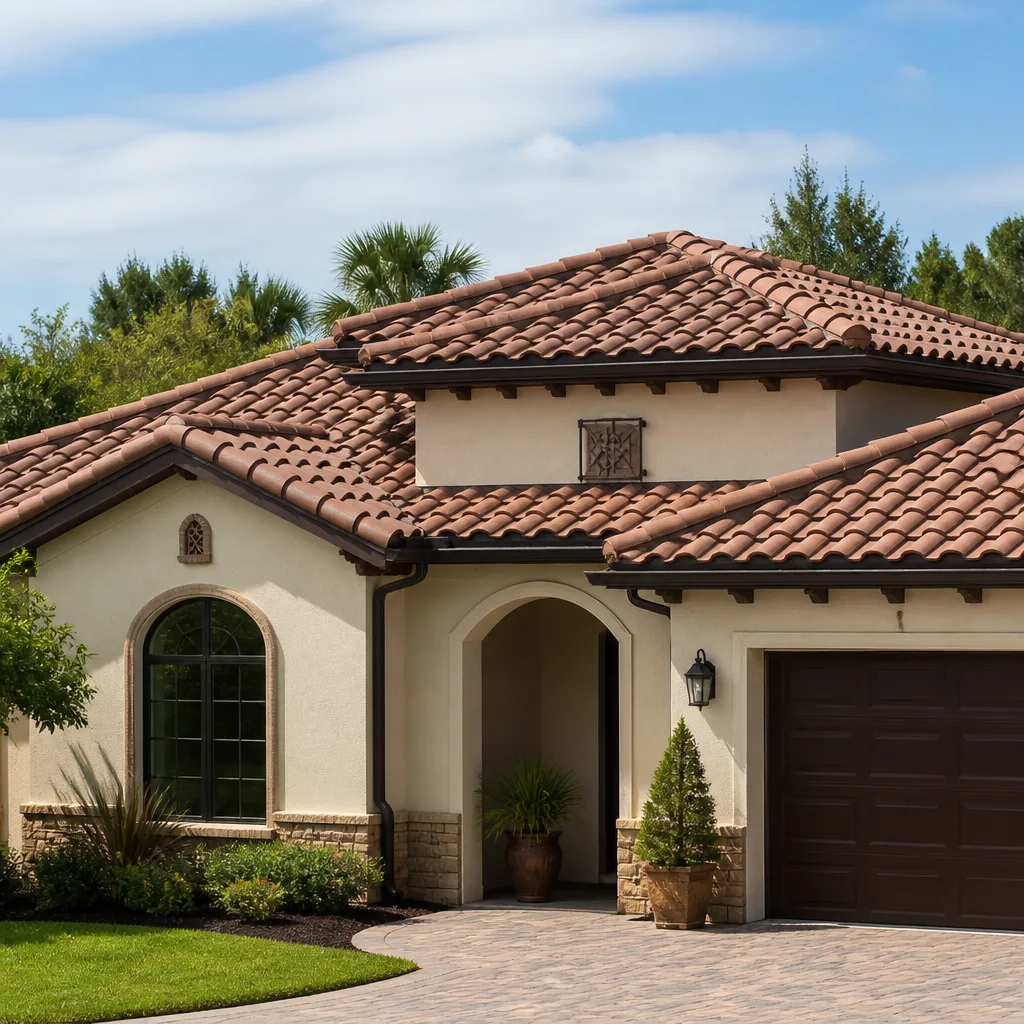 Tile roofing
 GAF
 Owens Corning
 Flat & low-slope
Free roof inspection with deck photos before we talk money - GAF and Owens Corning certified installation
How to Hire a Roofing Contractor in Huntington Beach: A Step-by-Step Guide
Here’s a fact most homeowners never learn until it’s too late: in California, a person can hold a C-39 roofing license without ever having nailed a single shingle themselves. The license is tied to a “responsible managing employee” – and that person’s actual field experience is what the state verifies, not the salesperson who shows up at your door. This guide teaches Huntington Beach homeowners how to audit the bid document itself before judging price, because the bids that look cheapest are usually the ones missing the line items that keep a roof watertight for 20 years. For Roofing Cost Breakdown: The Huntington Beach Homeowner’s Reference for 2026, see our dedicated breakdown. You’ll learn how to verify a license properly, which six line items your bid must contain, and how to spot a storm chaser working your street after a Santa Ana event.
Quick Answer
To hire a roofing contractor in Huntington Beach, verify their C-39 license through the CSLB portal and check the responsible managing employee’s experience, then require a written bid that itemizes six specific line items: underlayment spec, nail type and pattern, drip edge material, flashing method, haul-off plan, and permit responsibility. Compare bids on those specifications – not just the bottom line – and ask for the workmanship warranty in writing before signing anything.
Styles & brands we work with
Table of Contents
- Step 1: Verify the C-39 License (And What the CSLB Portal Actually Tells You)
- Step 2: The Six Line Items Every Huntington Beach Roofing Bid Must Include
- Step 3: How to Compare Bids With Different Underlayment Products
- Step 4: Spotting Storm Chasers in Huntington Beach After Santa Ana Events
- Step 5: What a Workmanship Warranty Should Actually Say
- Step 6: Questions to Ask Every Contractor Before You Sign
- Red Flags That Should End the Conversation Immediately
- Common Mistakes to Avoid
Step 1: Verify the C-39 License (And What the CSLB Portal Actually Tells You)
Every legitimate roofing contractor in Huntington Beach must hold a C-39 roofing license issued by the California Contractors State License Board. Verifying that license takes about four minutes and it is the single most important step in the entire hiring process. Here’s what to do:
- Go to the CSLB license lookup page at cslb.ca.gov.
- Enter the contractor’s name or license number.
- Confirm the license status reads “Active” – not “Suspended,” “Expired,” or “Revoked.”
- Check the “Classification” field. It must say “C-39 Roofing.” A general contractor’s B license does not authorize roofing work in California.
- Look at the “Responsible Managing Employee” (RME) field. This tells you who actually qualified for the license by proving years of field experience. If the RME name is different from the person you’re talking to, ask who that RME is and whether they still work for the company.
The RME field matters more than most homeowners realize. A C-39 license can be held by a business owner who hired an RME to qualify on paper, then never set foot on a roof. That’s legal in California. But it means the person selling you the job may have zero field hours. Ask your salesperson directly: “Are you the RME on this license, or is someone else?” The answer tells you whether you’re dealing with a roofer or a sales rep with a license number on their business card. We’ve been told this question ends more conversations than any other – which is exactly the point.
The CSLB portal also shows workers’ compensation insurance status and any disciplinary actions or complaints filed against the license. Check both. A contractor without workers’ comp coverage is a liability waiting on your roof. If one of their crew falls, your homeowners insurance can be pulled into the claim.
Step 2: The Six Line Items Every Huntington Beach Roofing Bid Must Include
This is where the bid audit happens. The most dangerous moment in hiring a roofer isn’t picking the wrong brand – it’s accepting a bid that leaves out enough line items that the contractor has room to cut corners you’ll never see until the roof fails. A complete bid in Huntington Beach must itemize all six of the following. If any are missing, that’s not an oversight. It’s room to cut.
- Underlayment spec. The bid should name the exact product – not just “synthetic underlayment” but the manufacturer and product line, like CertainTeed DiamondDeck or GAF FeltBuster. If it says “underlayment included” with no product name, the contractor can install the cheapest roll they can find.
- Nail type and pattern. This should specify nail material (galvanized steel, stainless steel), nail length, and nailing pattern (typically four nails per shingle in normal wind zones, six nails in high-wind or coastal zones). The Huntington Beach coastal strip sits in a high-wind exposure zone for parts of the year. A bid that says “nails” without type, length, and pattern is incomplete.
- Drip edge material. Drip edge is the metal strip at roof edges that directs water into gutters instead of behind them. The bid should specify the material (galvanized steel, aluminum) and gauge. Missing drip edge from a bid often means it gets skipped entirely.
- Flashing method. Flashing is the metal or membrane material used at penetrations, valleys, chimneys, and wall intersections. The bid should state what material will be used (standard 26-gauge galvanized, or a peel-and-stick membrane like CertainTeed WinterGuard at valleys and eaves) and where it will be installed. “Flash as needed” is not a method.
- Haul-off plan. Who removes the old roofing material? Where does it go? Is the dump fee included in the bid or billed separately? In Huntington Beach, some HOAs require specific disposal documentation. Get the haul-off plan in writing.
- Permit responsibility. The bid should state explicitly who pulls the permit – the contractor, not the homeowner. Roof replacements in Huntington Beach require a city building permit. If a contractor tells you a permit isn’t needed for a full reroof, that’s a red flag. For repairs under 10% of the roof area, a permit may not be required, but the contractor should still know that threshold and explain it.
When you receive a bid that’s missing any of these six items, you have two choices: ask for a revised, itemized bid, or move on. The contractors who write complete bids are the ones who do complete work. The roof replacement process in Huntington Beach that we follow includes every one of these items as a standard part of the written estimate – not as an add-on when the homeowner asks.
Step 3: How to Compare Bids With Different Underlayment Products
Here’s a scenario we see constantly in Huntington Beach: one bid says “30 lb. felt underlayment,” another says “synthetic underlayment,” and a third says “peel-and-stick underlayment at eaves and valleys.” Three different products, three different prices, and no way for the homeowner to tell which one is actually right for their roof. You don’t need to become a roofer to compare these bids. You need to understand what each product does and what it costs relative to the others.
- Felt 30 (asphalt-saturated felt): This is the traditional material. It’s been used for decades and still meets code minimums in most residential applications. It costs the least, tears more easily during installation, and doesn’t seal around nails as well as newer products. If your roof pitch is steep and water runs off quickly, felt 30 may be adequate. If your roof is low-slope or near the coast with wind-driven rain, it’s the weakest option.
- Synthetic underlayment: Made from polypropylene or polyester, synthetic underlayment is lighter, stronger, and more tear-resistant than felt. It holds up better to foot traffic during installation and resists UV exposure longer if left exposed before shingles go on. It costs 30-50% more than felt, but the performance gap is real. Brands like GAF FeltBuster and Owens Corning DeckDefense fall into this category.
- Peel-and-stick membrane: This is a self-adhering, rubberized asphalt membrane that seals around nails and creates a watertight barrier. It’s typically required by code in ice dam regions – which Huntington Beach is not – but it’s still specified for vulnerable areas: eaves, valleys, around chimneys, and under metal flashing. Products like CertainTeed WinterGuard and GAF WeatherWatch fall into this category. It’s the most expensive option per square foot, but on the areas where leaks actually start, it’s the strongest defense.
The comparison isn’t about which product is “best.” It’s about which product belongs on which part of your roof. A smart bid will specify a base underlayment (felt or synthetic) across the field of the roof, plus peel-and-stick membrane in the vulnerable zones: eaves, valleys, penetrations. That’s the spec we recommend for most Huntington Beach homes, especially older ones in South Huntington Beach and Edwards Hill where original roof decking has seen decades of salt air. When comparing bids, look past the word “underlayment” and ask for the product name on each bid. The difference between a $14,000 roof and an $18,000 roof often isn’t profit margin – it’s the difference between felt and synthetic with peel-and-stick at the valleys.
Huntington Beach’s coastal climate adds one more consideration. Salt air accelerates corrosion on metal components, which is why galvanized or stainless fasteners matter here more than they do inland. If you’re comparing bids and one specifies stainless steel nails and another doesn’t, factor that in. The cheaper nails will rust out years before the shingles fail.
Step 4: Spotting Storm Chasers in Huntington Beach After Santa Ana Events
Santa Ana winds tear through Huntington Beach neighborhoods every fall, ripping shingles off roofs in Seacliff, Huntington Harbour, and downtown. Within days, out-of-state “contractors” appear. They knock on doors, leave flyers, and offer to “help with your insurance claim.” Some of them are legitimate. Many are not. Here’s how to tell the difference:
- They don’t have a California C-39 license. They’ll tell you their license is from Texas or Arizona or Florida and that “it transfers.” It doesn’t. California requires a C-39 issued by the CSLB. No exceptions.
- They ask you to sign an “assignment of benefits” form. This gives the contractor the right to collect payment directly from your insurance company. Once you sign it, you lose control of the claim. The contractor can bill your insurer for more than the job costs and you’ll never see the numbers. Legitimate Huntington Beach roofers don’t require this.
- They want a deposit before doing any work. In California, a contractor cannot ask for a down payment of more than 10% of the total project cost or $1,000, whichever is less. If a storm chaser asks for 30% upfront, they’re breaking state law.
- They’re working out of a rental truck with out-of-state plates. No physical address in Huntington Beach, no local phone number, no way to find them when the warranty claim comes around.
- They pressure you with a deadline. “Sign today and we can start tomorrow.” Legitimate roofers doing real post-storm repair work in Huntington Beach are booked out. They don’t need to pressure anyone.
After a Santa Ana event, the right first call is to a local contractor who can do a roof inspection in Huntington Beach and give you an honest damage report – not a sales pitch. Our inspection service is standalone. You’ll get a condition report that you can use for insurance purposes, and a repair or replacement recommendation based on what the roof actually needs. If the damage is minor, we’ll say so. If it’s a full reroof, we’ll tell you that too. The point is you’ll know before anyone asks you for money.
Step 5: What a Workmanship Warranty Should Actually Say
Most homeowners don’t read the workmanship warranty clause until they need it – and by then, the vague language is already there. A workmanship warranty covers installation errors: leaks caused by bad flashing, improperly driven nails, seams that weren’t sealed. The manufacturer’s warranty covers defects in the shingles themselves. You need both, and the workmanship warranty needs to be written in language you can actually enforce.
Here’s what a legitimate workmanship warranty should state:
- A specific duration. “Five years” or “ten years” – not “for the life of the roof” or “as long as you own the home.” Those phrases mean nothing in court.
- A specific response obligation. “Contractor will respond to any reported leak within 72 hours and complete repairs within 30 days.” Without a response time, “we’ll fix it” can mean “we’ll fix it whenever.”
- A defined scope. What’s covered and what isn’t. Storm damage isn’t a workmanship issue. Clogged gutters causing backup aren’t a workmanship issue. But flashing that leaked from day one? That should be covered, and the warranty should say so.
- Transferability. If you sell the home in five years, does the warranty transfer to the new owner? A transferable warranty adds value to the home sale and is something you can mention to buyers.
- The contractor’s legal name and license number. Not a DBA or a marketing name. The entity that holds the C-39 license.
Here’s what vague, unenforceable warranty language sounds like: “We stand behind our work.” “If anything goes wrong, we’ll make it right.” “Your satisfaction is guaranteed.” These phrases appear in thousands of contracts across Huntington Beach. They’re not warranties. They’re marketing copy. An enforceable warranty has numbers. A real workmanship warranty from a contractor who does Huntington Beach roofing work full-time will list the term in years and the response obligation in days. If the warranty clause is one sentence long, ask for the real one.
Manufacturer warranties are a separate document. They come from the shingle manufacturer – GAF, Owens Corning, CertainTeed, Boral – and they cover defects in the shingles themselves: premature granule loss, curling, cracking, manufacturing flaws. The terms vary by product line. A GAF Timberline HDZ carries different warranty coverage than a GAF Royal Sovereign. Ask the contractor to explain the manufacturer warranty on the specific product they’re proposing, not just the brand name. Seven brands on a bid sheet doesn’t matter if the specific product line isn’t specified.
Step 6: Questions to Ask Every Contractor Before You Sign
By now you’ve verified the license, audited the bid, understood the underlayment options, watched for storm chasers, and read the warranty language. Here are the remaining questions that separate serious contractors from everyone else:
- “Do you do the work with your own crew or do you subcontract?” Subcontracting isn’t automatically bad, but you need to know who will actually be on your roof and whether they’re covered by the contractor’s workers’ comp and liability insurance. If the answer involves a different company name, ask for that company’s license and insurance too.
- “How many layers are on my roof now?” In most California jurisdictions, including Huntington Beach, a maximum of two layers of roofing is allowed. If you already have two layers, the old ones must be torn off before a new roof goes on. A contractor who doesn’t know to check this isn’t paying attention.
- “What happens if you find rotten decking once the shingles come off?” This is the classic change-order trap. The cheap bid didn’t include decking replacement, then the crew finds rot and suddenly the price jumps. A legitimate contractor will explain their decking replacement rate upfront: cost per sheet of plywood or OSB, materials and labor. If they can’t answer this question with a number, you’re walking into a change order.
- “What’s your payment schedule?” California law caps the down payment at 10% or $1,000, whichever is less. Progress payments should be tied to milestones, not dates. The final payment shouldn’t be due until the job is complete and you’ve done a walkthrough.
- “Do you pull the permit, and is the inspection scheduled?” The contractor should pull the permit from the City of Huntington Beach and schedule the required inspections. If they suggest skipping the permit to “save you money,” walk away.
Red Flags That Should End the Conversation Immediately
- The contractor can’t produce a C-39 license number on the spot. Every legitimate roofer knows their number by heart. If they have to “check the truck,” they’re not a roofer.
- The bid is 40% lower than the next closest bid. Roofing materials cost roughly the same for every contractor in Huntington Beach. Labor varies, but not by 40%. A bid that far below market means something is missing – underlayment spec, decking replacement allowance, permit fees, or all three.
- The contractor asks for cash payment or wants the check made out to a person, not a company. That’s how you lose every protection California law gives you.
- They say they “don’t need a permit” for a full reroof. They do. The City of Huntington Beach requires permits for roof replacements. No permit means no inspection, which means no independent verification that the roof meets code.
- They pressure you to sign a contract the same day. A complete roofing bid takes time to prepare properly. Anyone who needs an answer immediately isn’t selling you a roof; they’re selling you urgency.
- They offer to “handle” your insurance claim by inflating the estimate. Insurance fraud puts you on the hook. You sign the claim document. You’re responsible for the accuracy of the claim.
Common Mistakes to Avoid
- Choosing the contractor who can start the soonest. Availability is not a qualification. The best Huntington Beach roofers are booked. Waiting three weeks for the right contractor beats gambling on whoever’s free next Tuesday.
- Comparing bids by total price alone. A $15,000 bid with felt underlayment and no drip edge is not the same roof as a $17,000 bid with synthetic underlayment, peel-and-stick at valleys, and stainless fasteners. Compare line items, not bottom lines.
- Skipping the CSLB license check. It takes four minutes and it catches the storm chasers, the unlicensed subcontractors, and the suspended licenses.
- Not reading the warranty clause before signing. The workmanship warranty is the only thing protecting you after the crew drives away. If it’s vague, it’s worthless.
- Paying too much upfront. California caps the down payment at 10% or $1,000. Anyone asking for more is breaking the law.
- Getting only one bid. Two to three bids is standard. Fewer than that and you’re making a decision without comparison data. More than that and you’ll drown in paperwork.
- Assuming a big brand name means a quality install. GAF, CertainTeed, and Owens Corning all make excellent shingles. But a bad install can ruin good shingles, and the manufacturer warranty doesn’t cover installation errors. That’s the workmanship warranty’s job.
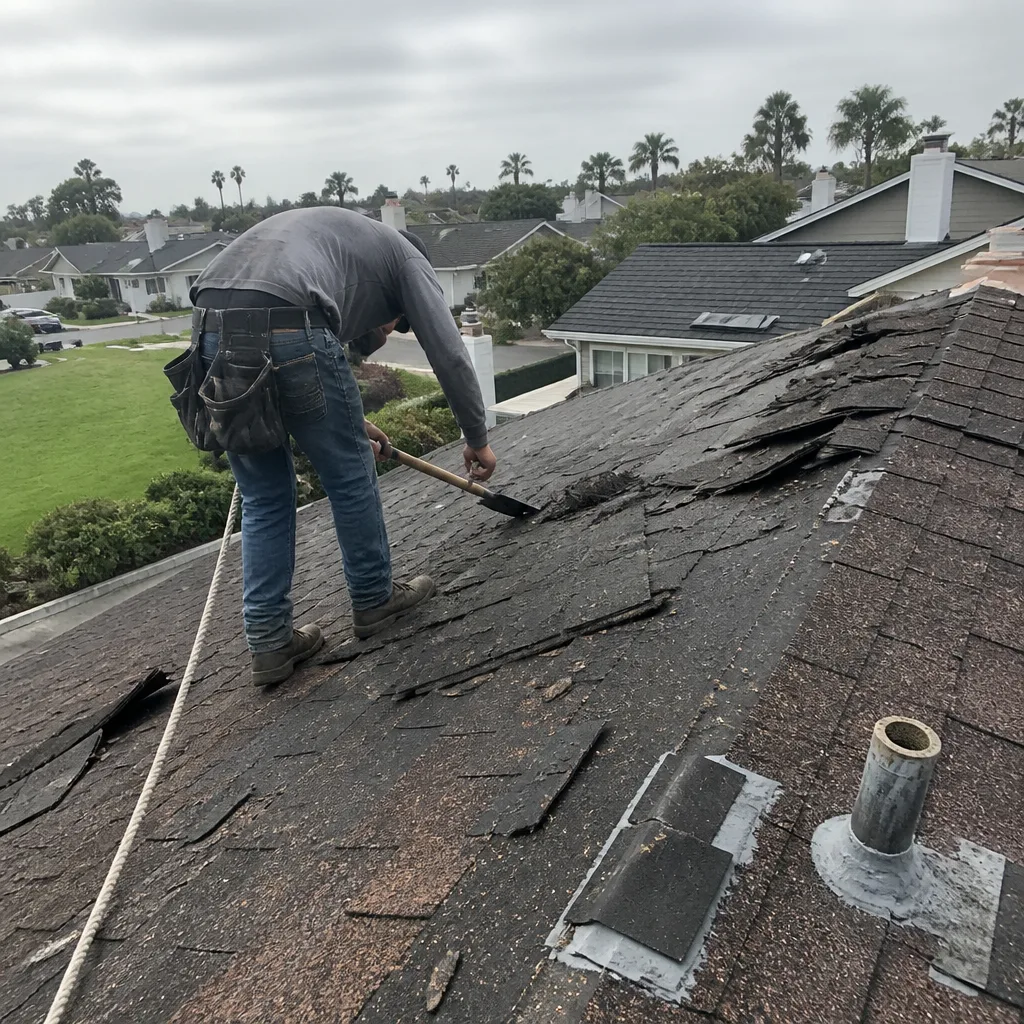
See the difference
 Before
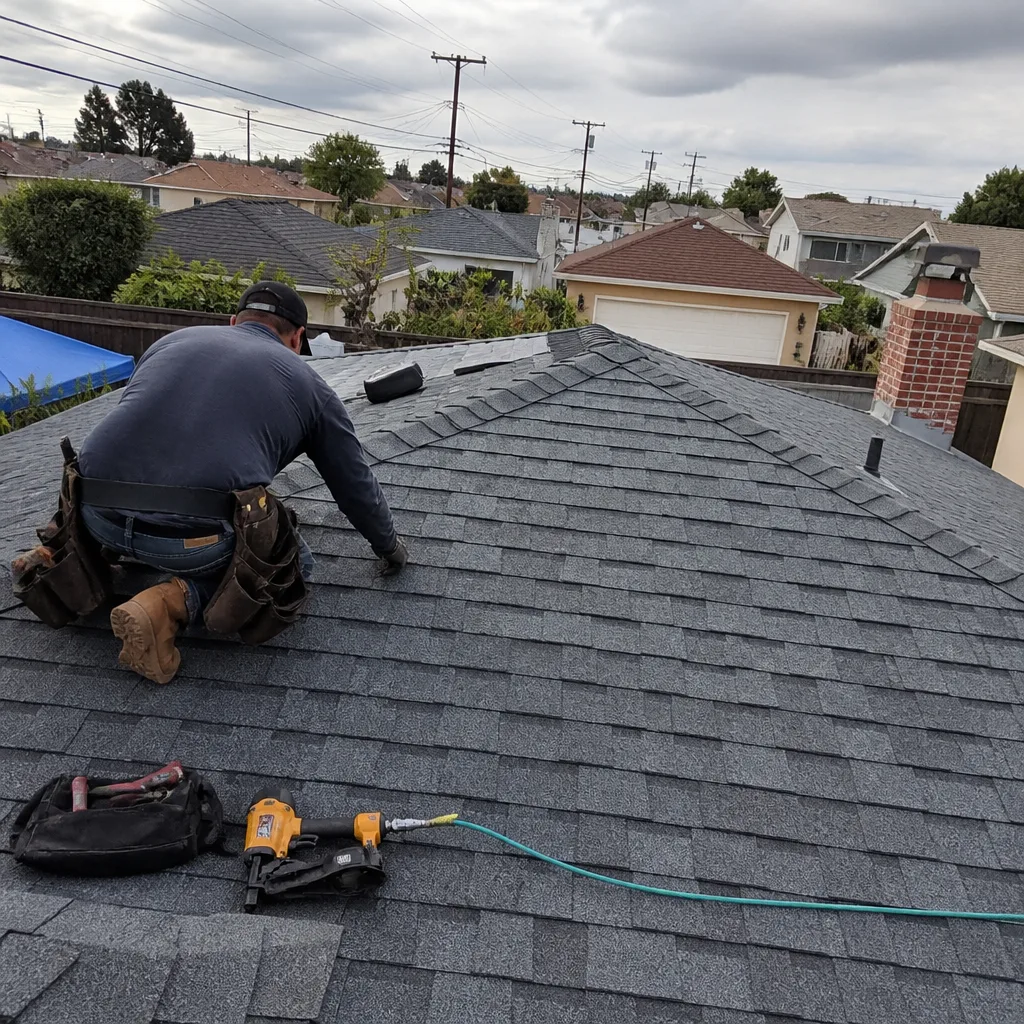 After
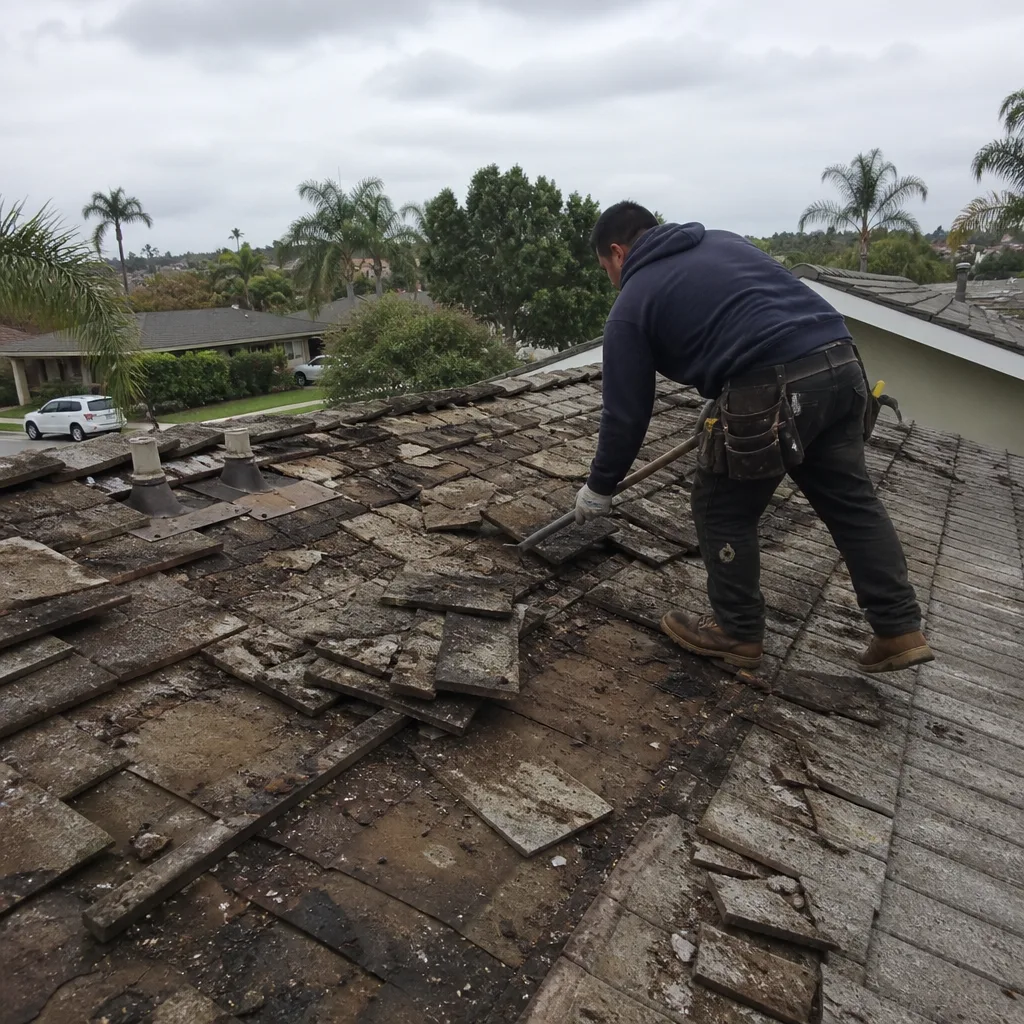 Before
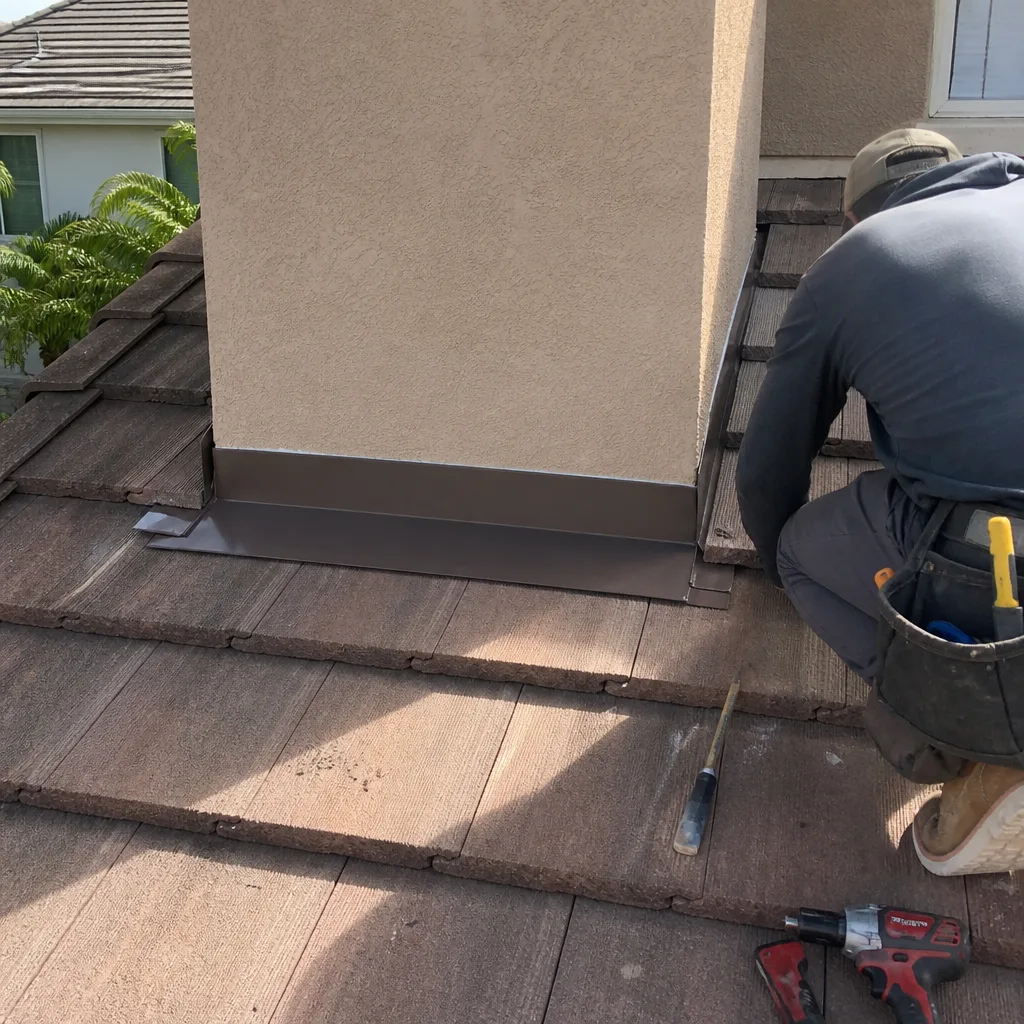 After
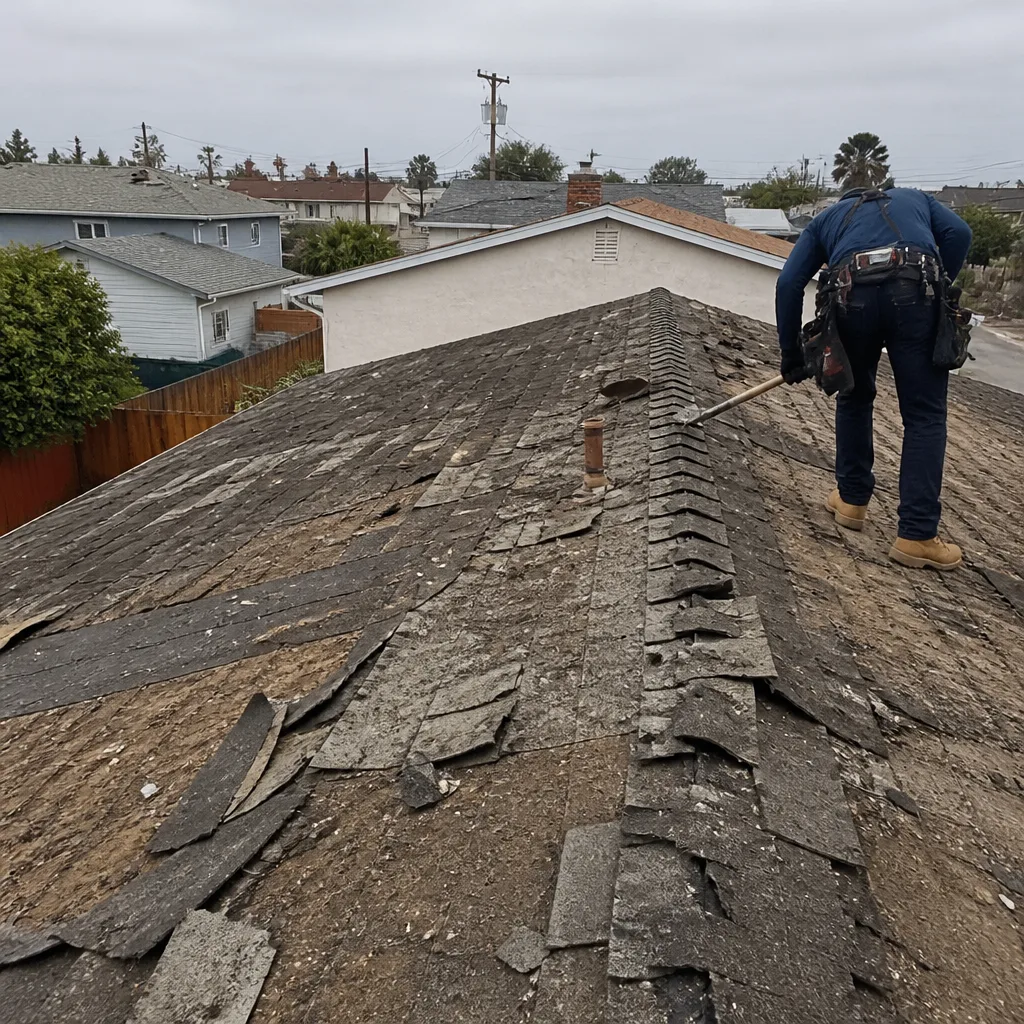 Before
 After
When to Call a Professional
You should call a professional the moment you see water stains on a ceiling, granules collecting in gutters, shingles in the yard after a wind event, or daylight coming through the attic roof deck. These are signs that the roof’s protective layer has been compromised, and delay just lets water do more damage. You should also schedule an inspection from Huntington Beach Roofers if your roof is 15 years old or older and you’re not sure whether it needs repairs or full replacement – we’ll tell you which one actually makes sense, and the inspection is a standalone service, not a sales tool.
Huntington Beach Roofers offers free estimates in Huntington Beach. Call (833) 467-4901 to schedule yours.
Frequently Asked Questions
A full roof replacement in Huntington Beach typically ranges from $12,000 to $25,000 depending on roof size, pitch, material choice, underlayment spec, and the amount of decking replacement needed. Entry-level architectural shingles start around $12,000 for a smaller single-story home, while premium shingle systems with synthetic underlayment and peel-and-stick membrane run higher. The only way to get an exact number is with a written, itemized estimate. Call (833) 467-4901 for a free one.
Yes, a full roof replacement in Huntington Beach requires a building permit from the City of Huntington Beach. The contractor should pull the permit and schedule the required inspections. Repairs covering less than 10% of the roof area may not require a permit, but the contractor should know that threshold and explain it to you.
Go to cslb.ca.gov, enter the contractor’s name or license number, and confirm the license is active with a C-39 roofing classification. Check the responsible managing employee field, workers’ compensation insurance status, and any disciplinary actions on file. This takes about four minutes.
A manufacturer warranty covers defects in the shingles themselves – premature granule loss, curling, cracking – and comes from the shingle manufacturer like GAF or CertainTeed. A workmanship warranty covers installation errors and comes from the roofing contractor. You need both, and the workmanship warranty should state a specific duration and response obligation in writing.
No. California law caps the down payment for roofing work at 10% of the total project cost or $1,000, whichever is less. Progress payments should be tied to project milestones, and the final payment shouldn’t be due until you’ve walked the roof and approved the finished work.
Most residential roof replacements in Huntington Beach take 2 to 5 days from tear-off to final inspection, depending on roof size, pitch, and weather. Decking replacement discovered during tear-off can add a day. The permit inspection adds time after the physical work is done, typically 1 to 3 business days depending on city scheduling.
The Bottom Line
Hiring a roofing contractor in Huntington Beach comes down to one skill: reading the bid document before you read the price. Verify the C-39 license and check the responsible managing employee. Demand six line items in every bid – underlayment spec, nail type and pattern, drip edge material, flashing method, haul-off plan, and permit responsibility. Compare underlayment products by product name, not by category. Watch for storm chasers after Santa Ana events, especially any contractor asking for an assignment of benefits form. Read the workmanship warranty before signing and reject anything vague. Do all that, and the contractor you hire will be the one who wrote the complete bid in the first place. From the first inspection to the final shingle, that’s the process Huntington Beach Roofers follows on every job.
Written by the team at Huntington Beach Roofers, serving Huntington Beach since 2018.