
Last updated October 31, 2026
 Architectural shingles
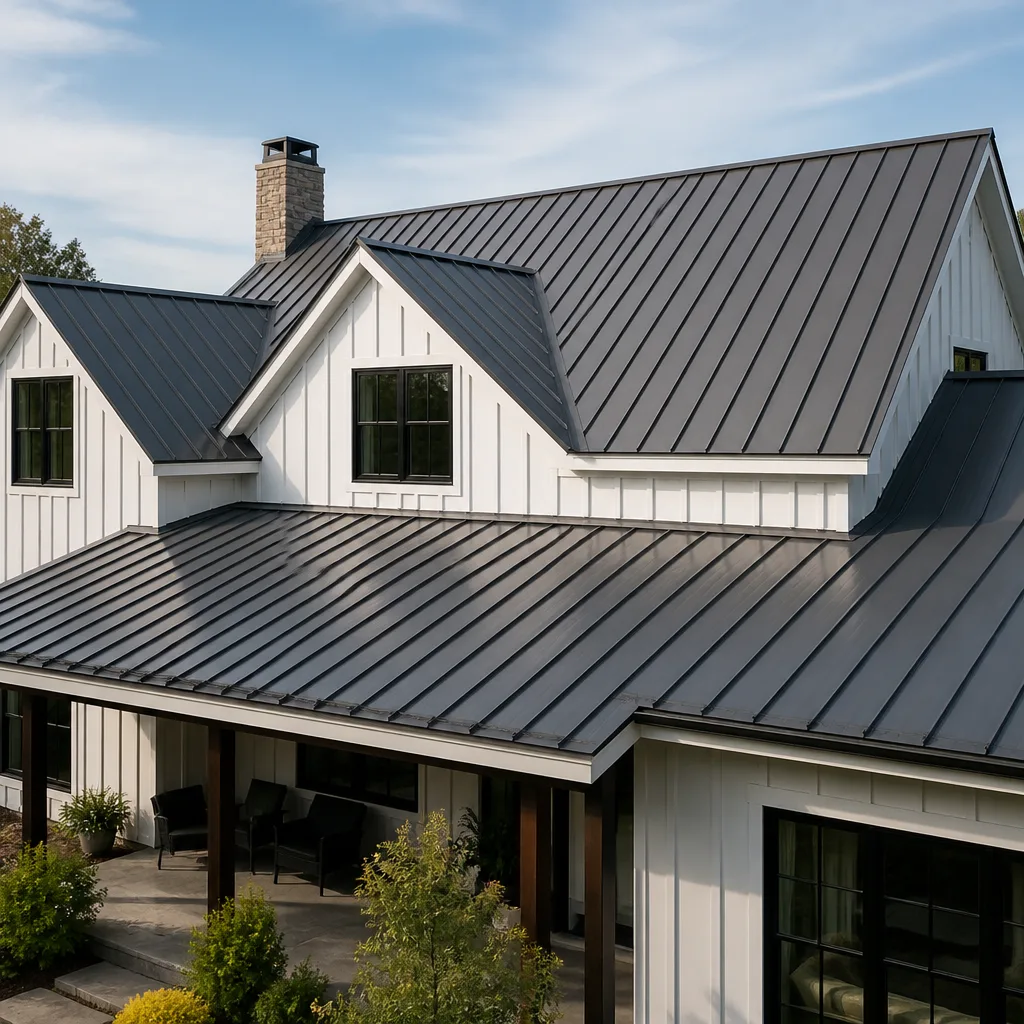 Metal roofing
 Tile roofing
 GAF
 Owens Corning
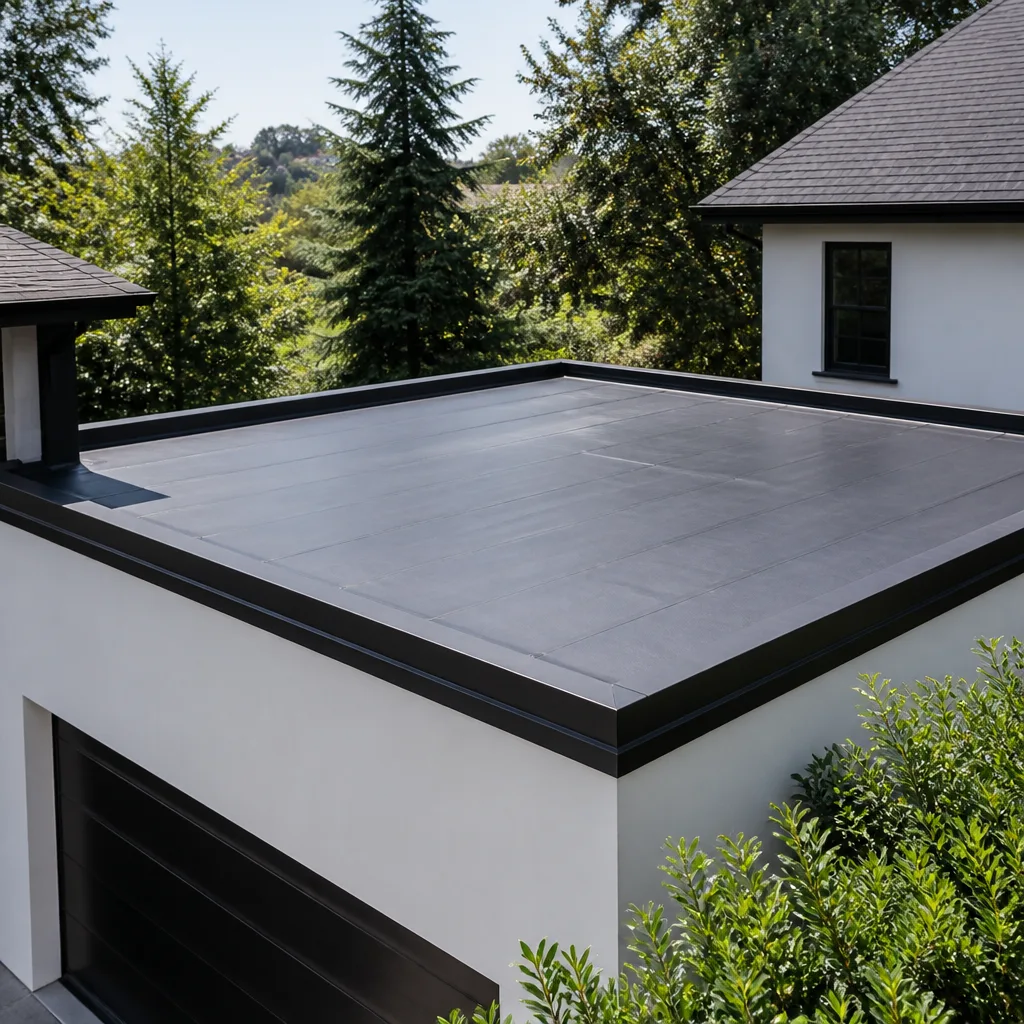 Flat & low-slope
Free roof inspection with deck photos before we talk money - GAF and Owens Corning certified installation
Roof Repair Maintenance Checklist for Huntington Beach Homeowners
The number-one source of preventable roof damage in coastal Orange County isn’t storm damage. It’s clogged downspout extensions that back water under fascia boards during the brief but intense winter rain events Huntington Beach gets every few years. Most maintenance guides hand homeowners a generic “look for missing shingles” list. This one is different. It’s built around the five failure modes we actually see on roofs in Huntington Beach, and every task on it has a clear pass/fail outcome. You won’t be guessing whether you did it right. You’ll know.
Styles & brands we work with
Quick Answer
A proper roof repair maintenance checklist for Huntington Beach homeowners has two seasonal inspections (pre-Santa Ana and post-winter rain), five specific failure-point checks, and a documented pass/fail result for each item. The highest-value tasks are clearing downspout extensions, inspecting pipe boot flashings for UV cracking, checking concrete tile ridge caps, and verifying soffit vent airflow before attic moisture becomes a deck-rot problem. Most of the list is ground-level or ladder work; anything requiring you to walk the roof surface should be handled by a professional offering Roof Repair services, not a homeowner.
Table of Contents
- The Five Failure Modes That Actually Matter on Huntington Beach Roofs
- The Seasonal Sequence: When to Inspect, and Why Twice a Year Beats Once
- Check 1: Downspout Extensions and Ground-Level Drainage
- Check 2: Pipe Boot Flashings – the Most Common Leak Source on 1980-2005 Homes
- Check 3: Concrete Tile – Cracked Field Tiles vs. Cracked Ridge Caps
- Check 4: Algae Streaking on the North Face – Cosmetic or a Countdown?
- Check 5: Gutter and Soffit Vent Airflow – the Attic Moisture Connection
- Common Mistakes to Avoid
- When to Call a Professional
- Frequently Asked Questions
- The Bottom Line
The Five Failure Modes That Actually Matter on Huntington Beach Roofs
In our experience inspecting roofs across Huntington Beach, the same five problems show up over and over. They’re not mysterious. They’re predictable, tied directly to our coastal climate, and almost always cheaper to fix when caught early. Here they are, ranked roughly by how often we see them:
- Clogged downspout extensions backing water under fascia boards. The rain events we get in Huntington Beach are short and intense, not long and gentle. When water can’t drain away from the foundation, it pools, backs up, and saturates the fascia and soffit.
- UV-cracked pipe boot flashings. Homes built between 1980 and 2005 in Huntington Beach typically have rubber pipe boots around plumbing vents. Salt air and relentless sun dry the rubber out until it splits. A split pipe boot leaks directly into the attic, and it’s a $300 fix that becomes a $3,000 ceiling repair if ignored.
- Cracked ridge caps on concrete tile roofs. Ridge caps bear the brunt of wind uplift and direct sun. A cracked ridge cap lets water run down into the tile system, where it sits against the underlayment and rots it over time. Field tiles crack too, but they’re less likely to leak because water flows over them rather than through them.
- Algae accumulation on north-facing roof planes. The shaded side of a Huntington Beach roof never fully dries out during morning marine layer months. Algae establishes, holds moisture against the shingle surface, and shortens the life of the shingle from the top down.
- Restricted soffit vent airflow. Coastal wind patterns push dust, debris, and sometimes sand into soffit vents. When intake airflow drops, attic moisture rises, and the underside of the roof deck begins to rot. We see this most often in homes within a mile of the beach.
Every task on this checklist targets one of these five failure modes. That’s the point. You’re not maintaining a roof in the abstract. You’re preventing the specific failures that Huntington Beach roofs actually develop.
The Seasonal Sequence: When to Inspect, and Why Twice a Year Beats Once
Huntington Beach has two seasons that stress a roof differently. The Santa Ana winds hit in the fall, driving dry air at 40 to 60 miles per hour through every gap, lifting tile edges, and testing every flashing seal with wind-driven grit. Then the winter rains arrive, typically in a handful of intense events rather than steady drizzle. Water, driven by wind, finds every crack the Santa Anas exposed.
That’s why a single annual inspection isn’t enough. A roof that passes inspection in July can fail in February because the Santa Ana season changed something that the rain then exploited. The sequence matters:
- Pre-Santa Ana check (September or early October): Walk the perimeter, clear gutters and downspouts, inspect flashings for existing cracks before wind stress makes them worse, and document everything with photos.
- Post-winter rain check (March or April): Look for water staining on ceilings, check the attic for moisture, re-inspect flashings and ridge caps, and clear any debris that winter storms deposited.
This twice-yearly rhythm aligns with how the weather actually works in Huntington Beach, not with a generic “inspect annually” rule that ignores local wind patterns. If you only have time for one inspection, do the post-winter rain check. That’s the one that catches active leaks before summer heat bakes the damage deeper into the decking.
Check 1: Downspout Extensions and Ground-Level Drainage
Here’s the failure mode in plain terms. Your downspout extension carries water away from the foundation. If it’s clogged, disconnected, or pointed the wrong way, water exits the downspout and immediately pools against the house. During a Huntington Beach winter rain event, that pooled water wicks upward into the fascia board, and from there into the soffit, and from there into the roof deck. By the time you see a ceiling stain, the damage has been ongoing for months.
What to check:
- Every downspout extension is physically connected to the downspout, not just resting near it.
- Each extension slopes away from the house for at least three feet. Five is better.
- No extension is crushed, buried, or filled with debris. Run a hose through it if you’re unsure.
- The splash block or end of the extension isn’t sitting in a low spot that collects water.
Pass/fail outcome: Pass means you can pour a five-gallon bucket of water into the downspout and watch it exit the extension at least three feet from the foundation without pooling. Fail means the water backs up, spills over the gutter, or puddles against the house. If you fail this check, fix the drainage before you fix anything else. Roof Repair in Huntington Beach often starts with exactly this conversation, because a drainage fix is sometimes all the roof needs. And if the gutter itself is the problem, a professional assessment will tell you whether you’re looking at a repair or a replacement.
One more thing about Huntington Beach specifically: many homes here have decorative landscaping near the foundation, and that landscaping often hides a crushed or buried downspout extension. Check behind the shrubs. We find more failures there than anywhere else.
Check 2: Pipe Boot Flashings – the Most Common Leak Source on 1980-2005 Homes
If you own a home in Huntington Beach built between 1980 and 2005, there’s a strong chance your roof penetrations are sealed with rubber pipe boot flashings. These are the rubber collars that wrap around plumbing vents where they exit the roof. Rubber doesn’t last forever in coastal sun. Salt air accelerates the breakdown. After 15 to 20 years, the collar starts to crack. After 25, it splits. When it splits, water runs directly down the outside of the vent pipe into your attic.
You can inspect pipe boots from the ground with binoculars, or from a ladder if you’re comfortable and the ladder is on level ground. You do not need to walk the roof for this check.
What to look for:
- Visible cracks or splits in the rubber collar, especially on the sun-facing side.
- Chalking or flaking rubber that comes off when you touch it (if you can reach it safely).
- Gaps between the rubber collar and the vent pipe where the seal has failed.
- Rust or corrosion on the metal base of the flashing.
Pass/fail outcome: Pass means the rubber is still flexible enough to return to shape when pressed, with no visible cracks. Fail means any crack, any gap, or any rubber that feels brittle and flakes. A failed pipe boot is a simple repair for a roofer, but it’s not a DIY job we recommend. The flashing has to be seated correctly under the shingles or tile, and the seal has to be right the first time, or you’ve traded a small leak for a bigger one. On Huntington Beach homes, we see this particular leak more than any other single point of failure. It’s the first thing we check on an inspection, and the first thing we recommend replacing when it’s cracked.
Check 3: Concrete Tile – Cracked Field Tiles vs. Cracked Ridge Caps
Plenty of Huntington Beach homes have concrete tile roofs, especially in neighborhoods built from the 1970s onward. Tile is durable, but it cracks. The distinction that matters for homeowners is this: a cracked field tile (the flat tile in the main roof area) is less urgent than a cracked ridge cap (the curved tile along the peak). Here’s why.
Water flows over field tiles. A cracked field tile may look bad, but water still moves across the surface and down the slope. The underlayment below the tile is the real waterproofing layer. A cracked ridge cap, by contrast, sits at the peak where wind lifts the tile edge and drives water under it. When a ridge cap cracks, water gets under the tile system at the highest point of the roof and runs down across the underlayment, affecting a much larger area.
What to check from the ground:
- Ridge caps: look for visible cracks, missing pieces, or caps that look lifted or misaligned. Binoculars help.
- Field tiles: look for obvious broken tiles, especially near valleys, hips, and edges where water flow concentrates.
- Any tile that has slid out of position, leaving a gap.
Pass/fail outcome: Pass means all ridge caps are intact and seated, and you see no visible field tile damage. Fail means any cracked ridge cap, any missing tile, or any tile that has shifted. Here’s the important part: flagging the problem is safe from the ground. Walking a tile roof to fix it is not. Tile is brittle, it breaks under foot traffic, and the roof pitch on many Huntington Beach homes makes the fall risk real. If you spot a cracked ridge cap or a broken field tile, mark the location and call a roofer. Roof Inspection in Huntington Beach is available as a standalone service for exactly this reason – you get a professional read on how urgent the tile damage actually is before spending money on a repair you may not need yet.
Check 4: Algae Streaking on the North Face – Cosmetic or a Countdown?
Algae streaking shows up as dark, sometimes bluish-black streaks on the north-facing slope of a roof. In Huntington Beach, the north face stays shaded during afternoon hours and stays damp longer during marine layer mornings. Algae loves that environment. It establishes, spreads, and holds moisture against the shingle surface.
The question homeowners ask us is whether the algae is a problem or just an eyesore. The answer is both, depending on how far it’s progressed. Algae itself doesn’t eat shingles. But the moisture it holds accelerates granule loss, and granule loss is what eventually exposes the asphalt underneath to UV degradation. On a roof that’s 10 years old, algae treatment often buys several more years of service life. On a roof that’s already 20 years into a 25-year shingle, treatment is cosmetic and the shingles are nearing replacement anyway.
What to check:
- Walk around the house and look at the north-facing roof plane.
- Note whether streaking is limited to areas near trees or if it covers the majority of the plane.
- Check the roof age. If you don’t know it, the home purchase documents usually list the roof install date, or a previous owner may have left warranty paperwork.
Pass/fail outcome: Pass means no algae streaking visible, or only minor streaking in shaded corners where it hasn’t spread. Fail means widespread streaking on a roof that’s more than 15 years old. In that case, a roof inspection is the right next step. The inspection tells you whether the shingles still have granule integrity, or whether the algae has accelerated wear to the point where Roof Replacement in Huntington Beach needs to be on the table. And if treatment still makes sense, the same contractor can handle that and then keep monitoring the roof as it ages.
Check 5: Gutter and Soffit Vent Airflow – the Attic Moisture Connection
Most maintenance checklists include gutters. Almost none include soffit vents. That’s the omission that costs coastal homeowners the most. Here’s the sequence: soffit vents are the intake side of your attic ventilation system. Air enters through the soffits at the eaves, rises through the attic, and exits through ridge vents or roof vents at the top. If the soffit vents are clogged, intake airflow drops, attic moisture rises, and condensation forms on the underside of the roof deck. In Huntington Beach, where marine layer humidity is a daily fact of life for much of the year, that condensation accelerates deck rot faster than most homeowners realize.
What to check:
- Clean the gutters thoroughly, removing all debris. Clogged gutters back water into the soffit and often block the vent openings from the outside.
- Walk the eaves and look at the soffit vents. Are they painted over? Packed with dust, cobwebs, or sand? In beach-adjacent Huntington Beach neighborhoods, airborne sand is a real factor.
- From inside the attic (if accessible), check that you can see daylight through at least some of the soffit vents. Total darkness means total blockage.
- Check that insulation isn’t covering the soffit vents from inside, which happens commonly in older Huntington Beach homes that have been re-insulated.
Pass/fail outcome: Pass means you can see daylight through multiple soffit vents from inside the attic, gutters are clear, and water flows freely through the downspouts. Fail means blocked vents, zero visible daylight, or insulation covering the intake openings. This check ties directly to the downspout extension check at the top of this guide. They’re the same water-management system, and they fail together more often than not. We inspect first and recommend second, which means we’ll tell you if the ventilation problem is the bigger issue before you spend money on a repair that wouldn’t have solved it. For related reading, see our Roof Repair Troubleshooting: Common Problems and How to Fix Them.
Common Mistakes to Avoid
- Skipping the post-winter inspection because it “didn’t rain that much.” Huntington Beach gets infrequent but intense rain events. One afternoon of heavy rain is enough to expose every crack the Santa Anas created. The damage happens in hours, not months.
- Assuming a missing tile is an emergency. A missing field tile on a concrete roof is often less urgent than a cracked ridge cap. It looks bad, but the underlayment below is the waterproof layer. Get it assessed, but don’t panic.
- Painting over soffit vents during exterior repaint. We see this constantly. A painter covers the vents for a cleaner look, and the attic ventilation system quietly suffocates. If you’re repainting, tape off the soffit vents first.
- Ignoring algae because “all the roofs in the neighborhood have it.” Algae is common in Huntington Beach, but that doesn’t make it harmless. On an aging roof, it’s actively shortening shingle life. The question is whether treatment is worth it, and that depends on roof age.
- Using a pressure washer on roof algae. Pressure washing a shingle roof strips granules and can void the manufacturer’s warranty. The right treatment is a soft-wash chemical application, not high pressure.
- Walking the roof to “get a closer look” at something suspicious. Roof walking carries genuine risk, especially on tile or steep pitches. A binocular check from the ground answers most questions safely. Mark the location and call a professional if something looks wrong.
- Replacing pipe boots with a generic part from the hardware store. The boot has to match the pipe diameter and the roof material. Get it wrong, and the new boot leaks faster than the old one. This is a job for a roofer who stocks the right flashing for your specific roof system.
When to Call a Professional
Some checklist items end with a pass. Some end with a fail. Some end with “I’m not sure what I’m looking at.” That last one is a call. If you spot any cracked ridge cap, any split pipe boot flashing, any ceiling stain, any daylight visible through the roof deck from inside the attic, or any water staining on fascia boards, stop the DIY assessment and bring in a professional. The cost of an inspection is less than the cost of guessing wrong. Huntington Beach Roofers offers free estimates in Huntington Beach. Call (833) 467-4901 and we’ll walk the roof, document what we find, and tell you honestly whether you need a repair, a replacement, or just a watch-and-wait approach. We inspect first and recommend second, and the estimate tells you exactly where you stand.
Frequently Asked Questions
Twice a year: once in September or early October before the Santa Ana winds arrive, and once in March or April after the winter rain season ends. The two seasons fail different parts of the roof, and a single annual inspection misses half the risk. Call (833) 467-4901 if you’d rather have a professional do both inspections with a written report each time.
Most maintenance items in this checklist cost nothing but an hour of your time. Professional fixes run from around $200 to $400 for a pipe boot replacement, while a full roof inspection in Huntington Beach is often free or credited toward future work. The expensive failures happen when maintenance gets skipped for years. Call (833) 467-4901 for an exact quote on any specific issue you’ve found.
Ground-level and ladder-level checks (gutters, downspouts, pipe boots from a ladder, visual tile checks with binoculars) are reasonable for a careful homeowner. Anything requiring you to walk the roof surface, especially on tile or a steep pitch, should be handled by a professional roofer. The risk isn’t worth the savings, and a professional eye catches failures you’d miss.
A cracked field tile sits in the main roof area where water flows over it, so it’s less likely to leak immediately. A cracked ridge cap sits at the peak where wind drives water under it, potentially wetting a much larger area of underlayment. Ridge cap damage is more urgent. If you see either, mark the location and get a professional assessment.
Not necessarily. On a roof under 15 years old, professional algae treatment often extends shingle life by several years. On a roof over 20 years old, algae is usually accelerating a countdown that’s already underway, and replacement may be the smarter spend. A roof inspection gives you the answer for your specific roof and its remaining service life.
First, contain the interior water with a bucket or tarp. Second, document the leak location with photos for insurance purposes. Third, call a roofing contractor. Huntington Beach Roofers offers free estimates in Huntington Beach, and we can assess the leak source before it worsens. The longer a leak sits, the more the repair costs, so don’t wait for the next storm to confirm it’s real.
The Bottom Line
Roof maintenance in Huntington Beach isn’t about checking boxes. It’s about understanding the five failure modes this coastal climate produces and checking for each one at the right time of year. Downspout extensions in the fall. Pipe boot flashings every spring. Concrete tile ridge caps after every Santa Ana season. Algae and soffit ventilation annually. Most of the checklist is ground-level work that takes a couple of hours total per year. The failures cost thousands when they’re missed. And when something looks wrong, call a roofer who inspects first and recommends second. Seven brands, one contractor. That’s how you keep a roof over your head in Huntington Beach without spending money you didn’t need to spend.
Written by the team at Huntington Beach Roofers home, serving Huntington Beach since 2018.
See the difference
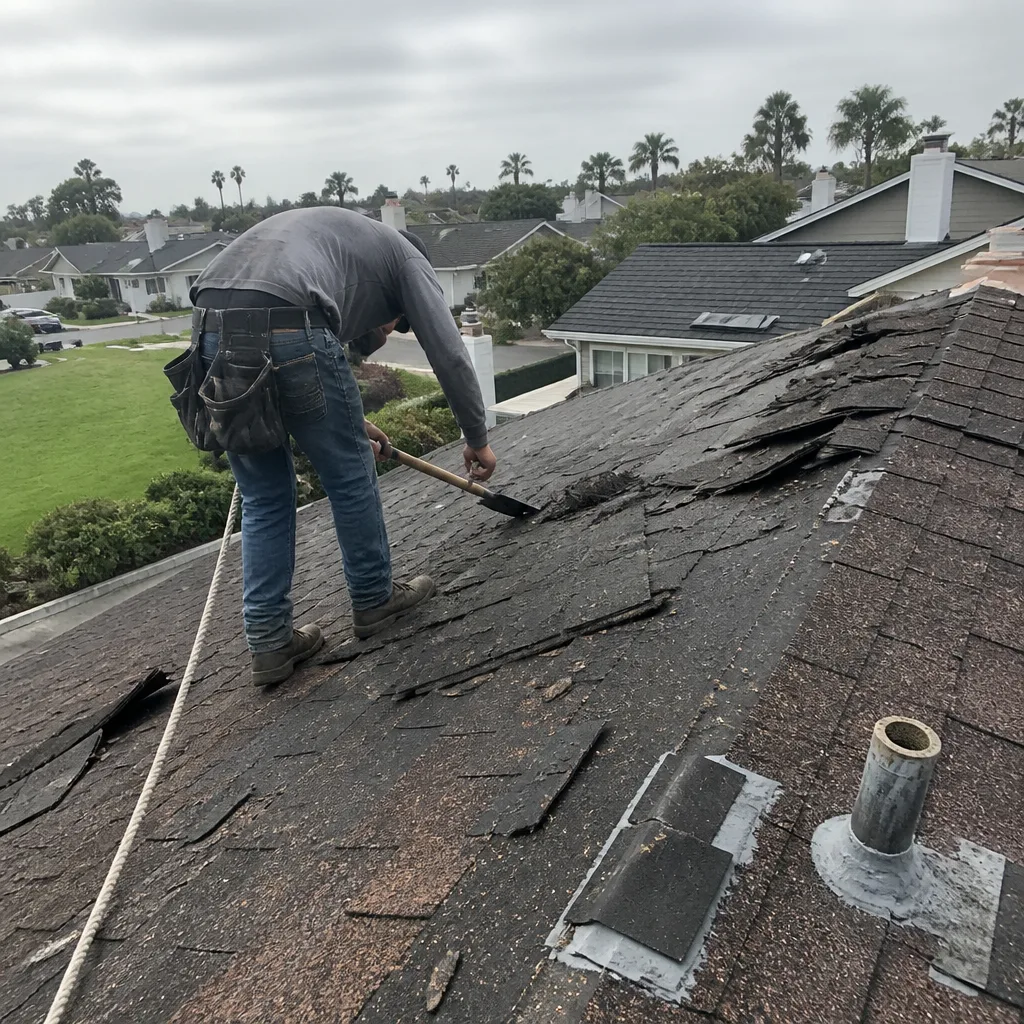 Before
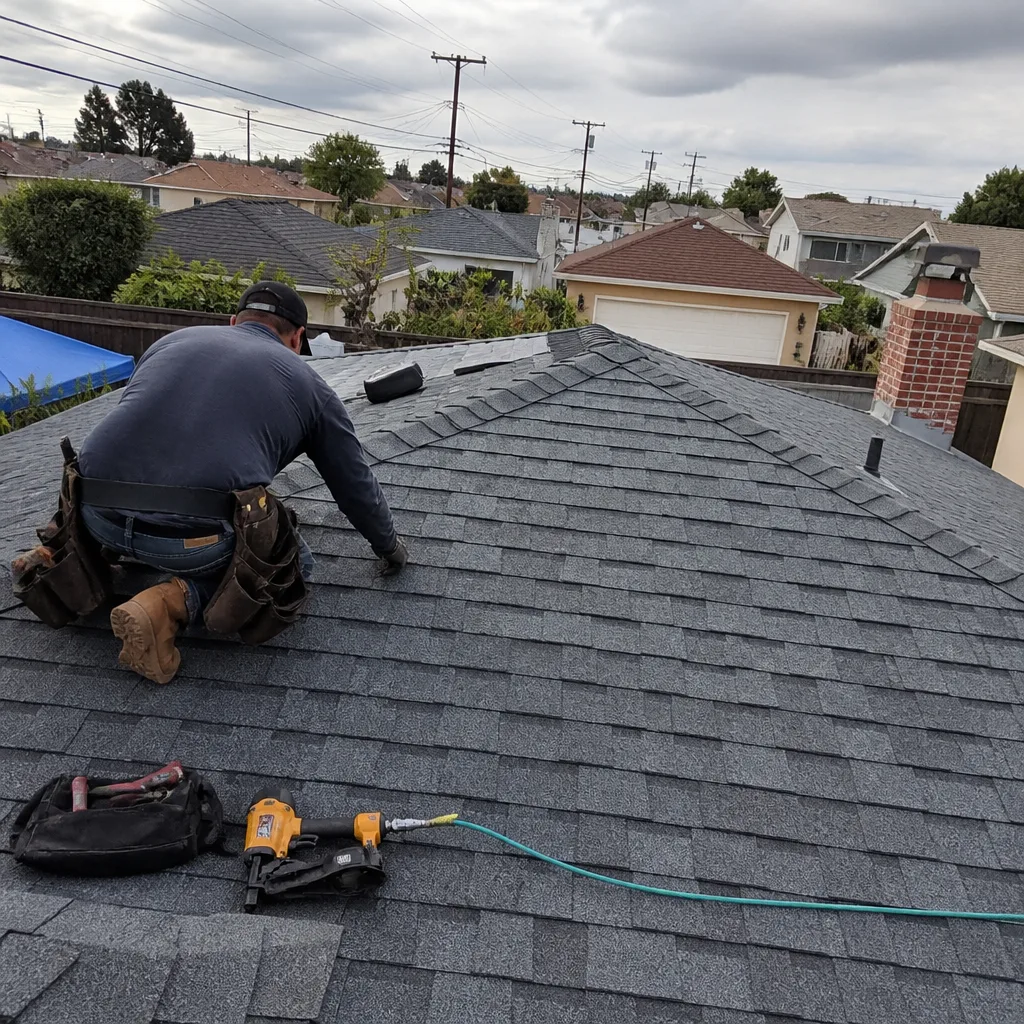 After
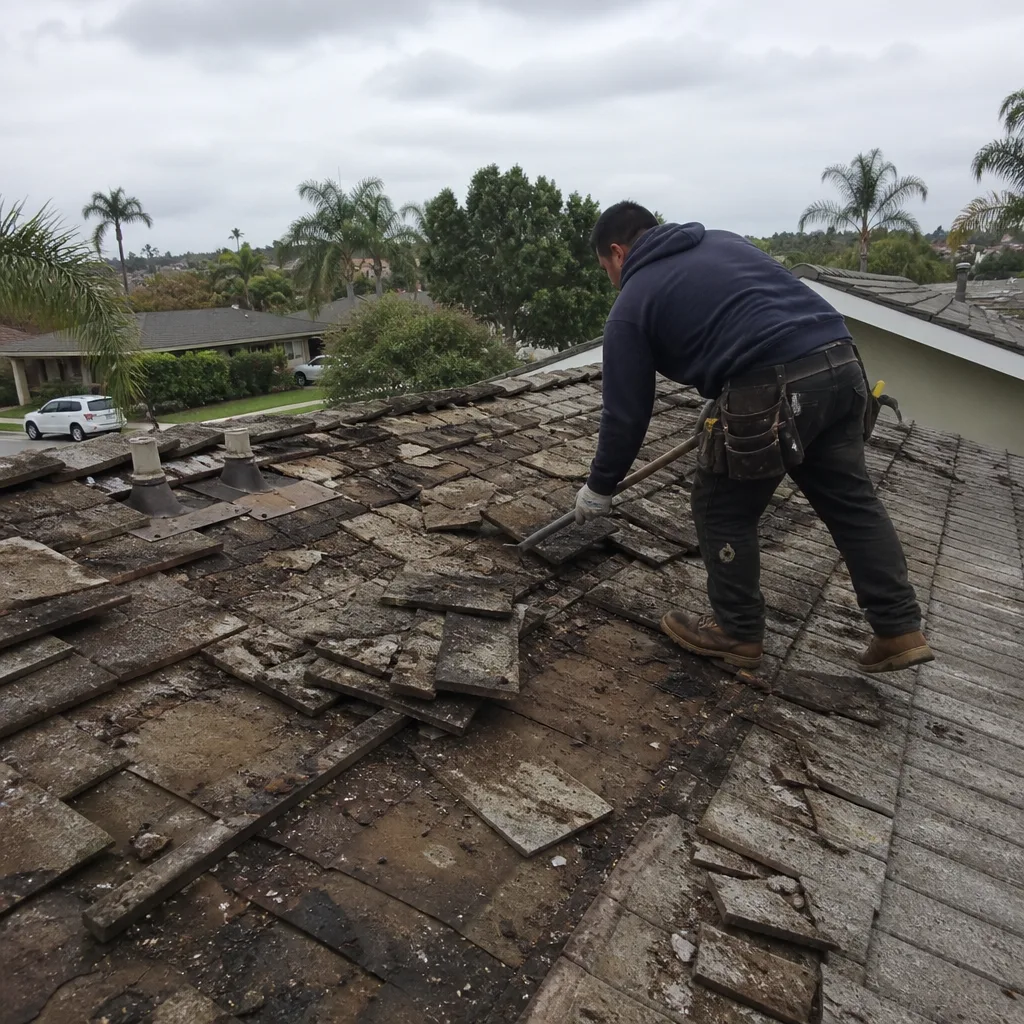 Before
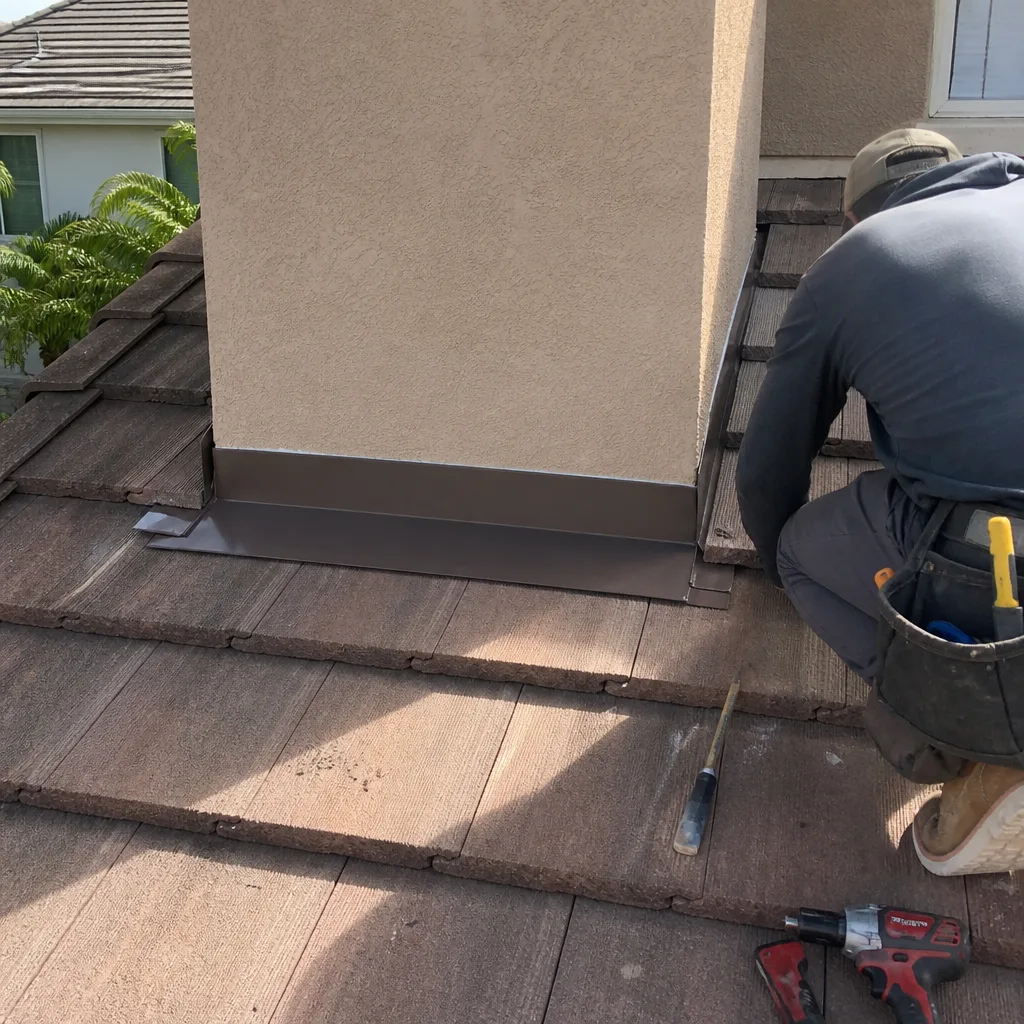 After
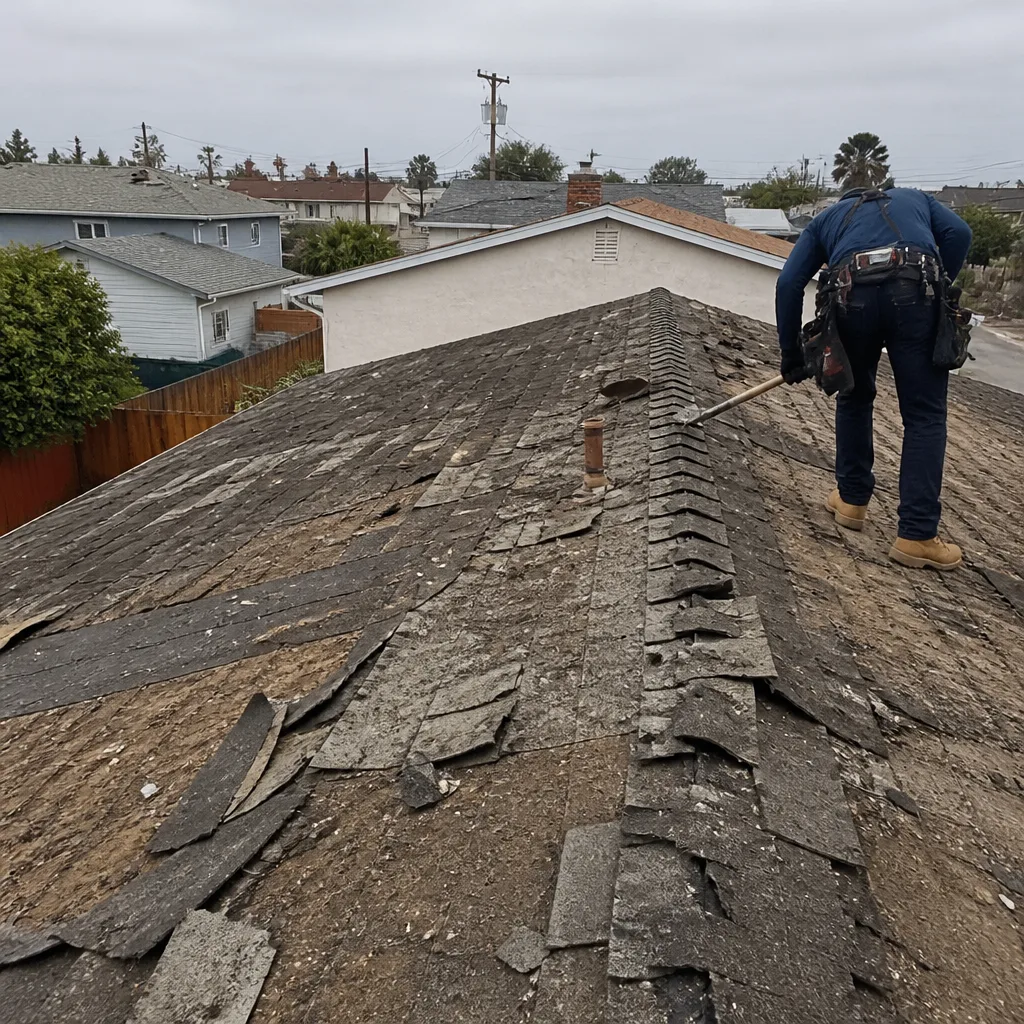 Before
 After