
Last updated October 31, 2026
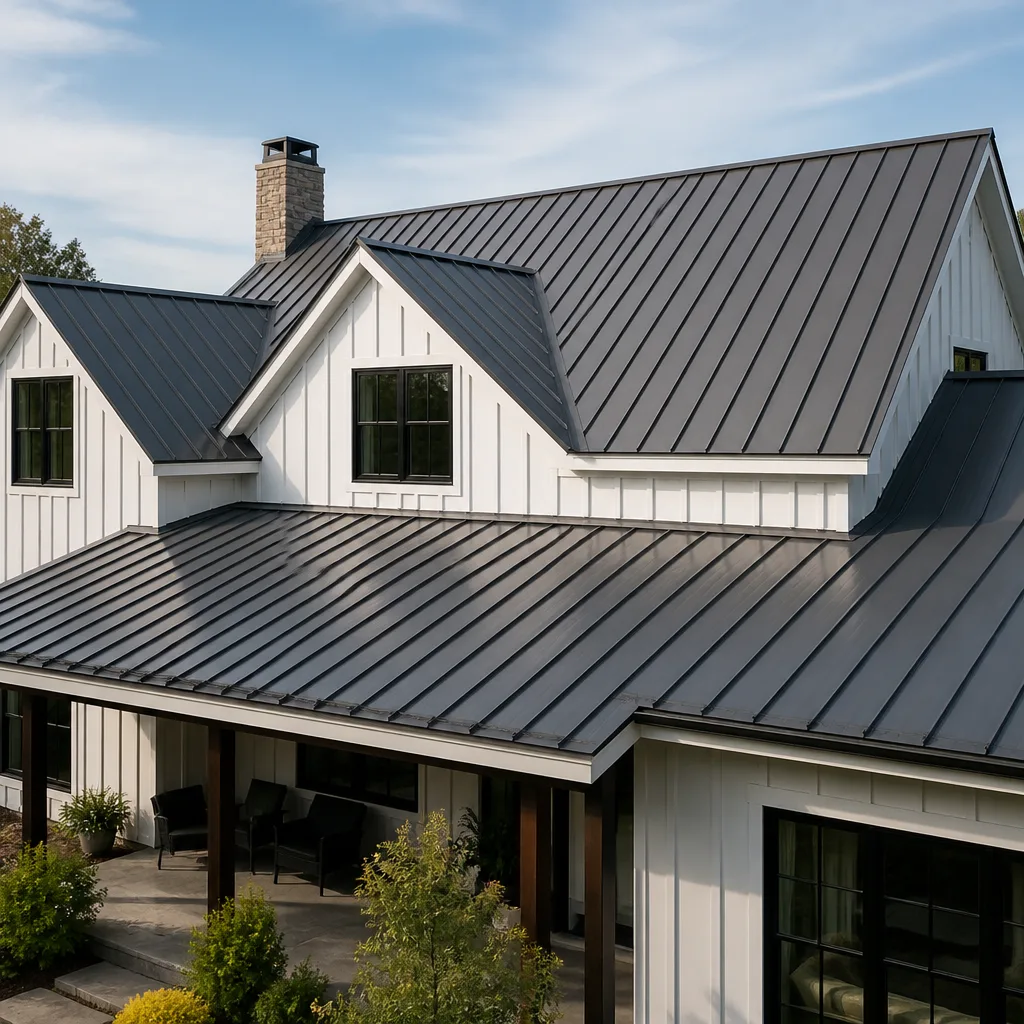 Metal roofing
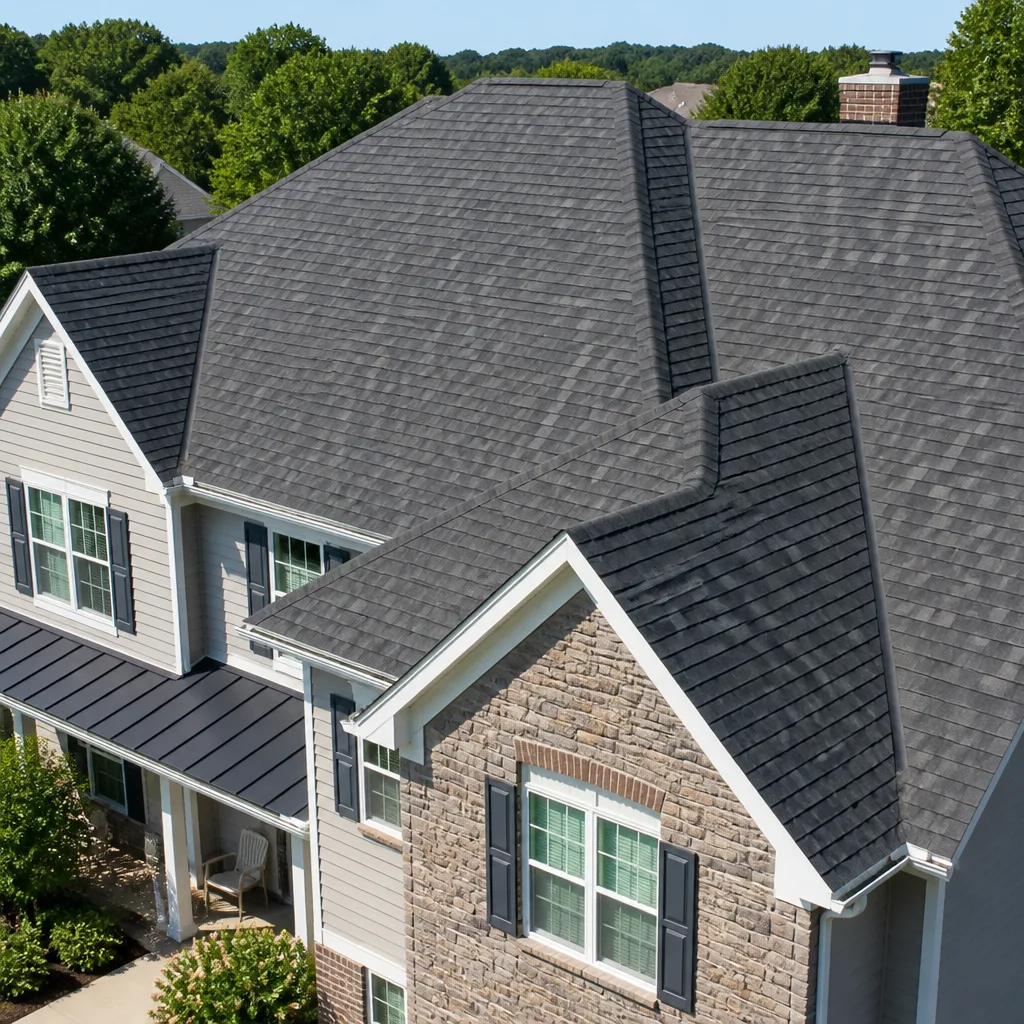
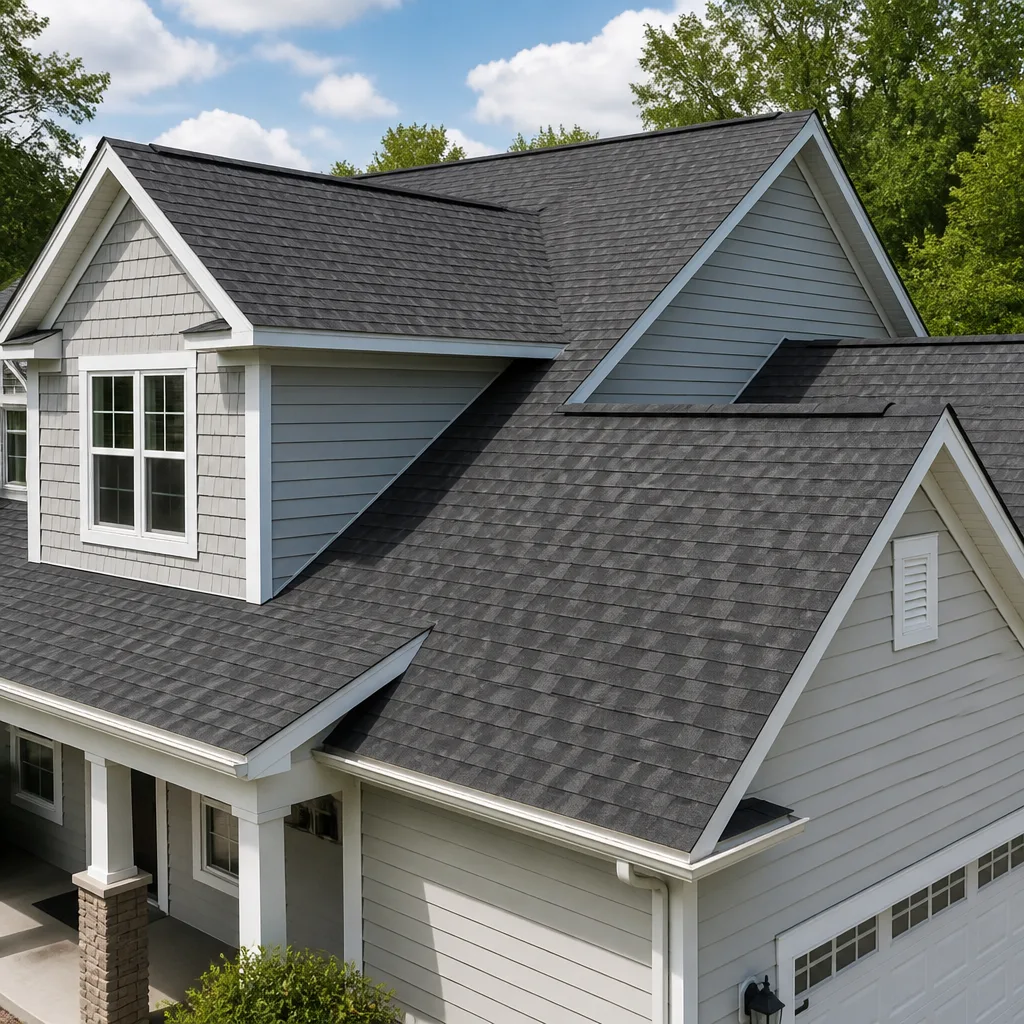 Architectural shingles
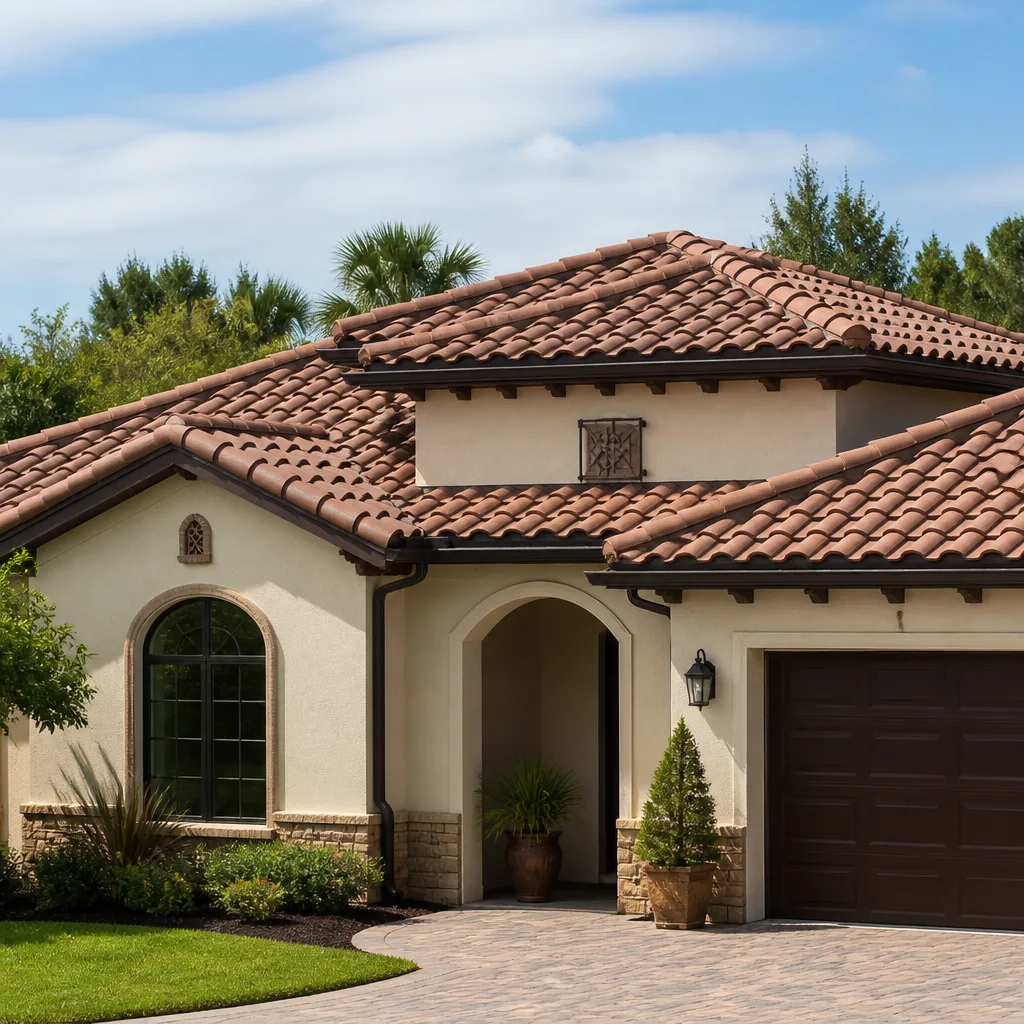 Tile roofing
 GAF
 Owens Corning
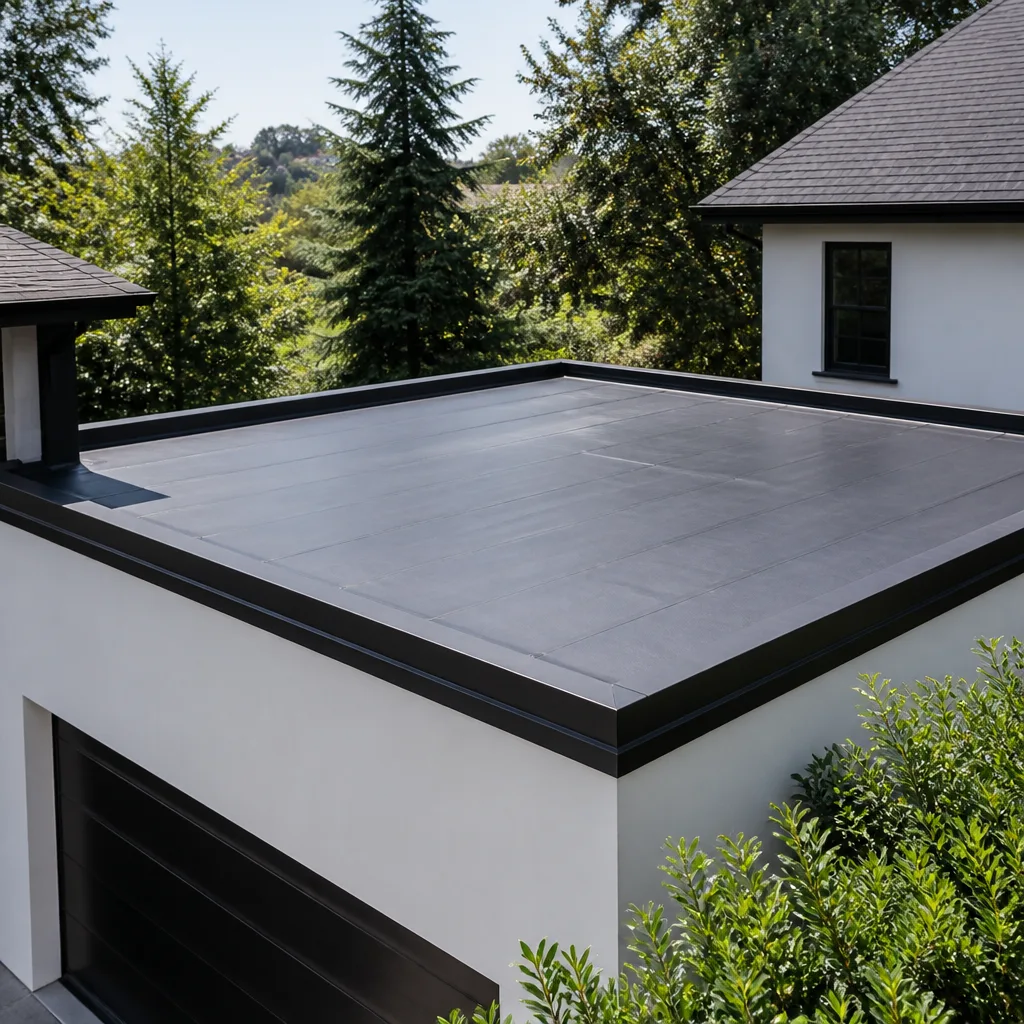 Flat & low-slope
Free roof inspection with deck photos before we talk money - GAF and Owens Corning certified installation
DIY vs Professional Roofing: The Huntington Beach Homeowner’s Decision Guide
Here’s a number that should stop you cold: a single improperly sealed pipe boot on a Huntington Beach roof lets in about 14 gallons of water per inch of rainfall. Over a winter that delivers 12 inches of rain, that one small mistake channels roughly 168 gallons of water into your attic, your insulation, and eventually your ceiling. The DIY vs professional roofing question rarely gets framed this way. Most people weigh the cost of a repair against the cost of doing it themselves. But in Huntington Beach, where salt air corrodes flashing faster than it does in Riverside or Irvine, the question is really about what you’re legally allowed to touch, what your insurance will still cover afterward, and whether a $12 tube of caulk can turn into a $14,000 rot repair. This guide walks through the actual legal boundaries for California homeowners, the insurance fine print most people never read, and a realistic way to figure out whether any given roofing task is worth your weekend.
Styles & brands we work with
Quick Answer
Most Huntington Beach homeowners should not DIY any roofing work that involves fasteners, flashing, underlayment, or sealant at penetrations. The legal exposure, insurance gaps, and salt-air failure patterns make the labor savings disappear quickly. The tasks that do make sense for homeowners are inspection-adjacent: monitoring granule loss, clearing gutters, checking attic ventilation, and documenting conditions after storms.
Table of Contents
- What California Law Actually Says About DIY Roofing
- The Insurance Gap Nobody Reads Until It’s Too Late
- Why Salt Air Changes the Math in Huntington Beach
- Where DIY Makes Defensible Sense
- Where DIY Fails: The Four Tasks to Never Touch
- Material Access Reality: What You Can Actually Buy
- The Break-Even Framework: A Step-by-Step Calculation
- Common Mistakes to Avoid
- When to Call a Professional
- Frequently Asked Questions
- The Bottom Line
What California Law Actually Says About DIY Roofing
California Business and Professions Code Section 7048 allows a homeowner to perform construction work on their own primary residence without holding a contractor’s license. That includes roofing. The key phrase is “primary residence.” You cannot legally roof a rental property you own, a vacation home you don’t live in, or a property you’re flipping. Those require a C-39 roofing contractor.
But here’s what most Huntington Beach homeowners don’t realize until a building inspector explains it: if the work requires a permit and you pull that permit as an owner-builder, you become the contractor of record. Every code deficiency the inspector finds is now legally yours. If the flashing detail is wrong and the inspector catches it, you’re redoing it. If you sell the house within one year of completing owner-builder work, California law requires you to disclose that work in writing to the buyer and you may be barred from claiming the owner-builder exemption on your next project for a period of time.
Huntington Beach enforces the California Residential Code, including Title 24 energy requirements when reroofing. A full reroof requires a permit. A repair covering less than 10% of the roof area within a 12-month period generally does not. But “repair” is narrowly defined. Replacing a few shingles after a storm? No permit. Replacing an entire slope’s underlayment? That triggers a permit and an inspection in most cases.
What this means practically:
- You can legally do: small shingle replacement, gutter work, attic inspection, granule-loss documentation, minor sealant touch-ups under a certain scale.
- You risk legal exposure on: full reroofs, structural repairs, any work over 10% of roof area, any work on a home you don’t occupy as your primary residence, and any work that fails an inspection you pulled the permit for.
The CSLB has been increasingly aggressive about unlicensed contracting in coastal communities. If a neighbor files a complaint about a crew you’ve hired from a parking lot, you’re not the victim. You’re the person who hired an unlicensed contractor, and you may be liable for workers’ compensation claims if someone gets hurt on your roof. Our Huntington Beach Roofers home page explains how a licensed contractor relationship works from the first inspection onward.
The Insurance Gap Nobody Reads Until It’s Too Late
Your HO-3 policy covers sudden and accidental damage. It does not cover faulty workmanship. That distinction matters enormously in roofing because water damage is almost always a chain reaction. The leak itself might start at a DIY repair. The damage that follows, the rotted sheathing, the mold in the drywall, the ruined insulation, gets classified by the claims adjuster as “resulting damage from faulty workmanship.”
Most policies exclude it.
Here’s the scenario we see repeatedly in Huntington Beach: a homeowner notices a small leak near a vent pipe, buys a tube of roofing sealant, climbs up, and smears it around the boot. It looks fine for three months. Then a winter storm with driving rain pushes water under the edge of the sealant where it didn’t fully bond. The leak worsens. The homeowner files a claim. The adjuster finds the DIY repair, documents it, and denies coverage for the water damage on the grounds that the original repair was, in the policy’s language, “constructed or repaired by the insured in a defective or negligent manner.”
The homeowner is now paying for the rotted sheathing, the insulation replacement, and the drywall repair, none of which they planned to pay for.
Licensed contractors carry general liability insurance. If a professional repair fails, that policy covers the resulting damage. That’s the structural difference. The repair itself might cost $300 as a DIY job versus $600 professionally. But the professional’s insurance is a backstop that your homeowner’s policy does not provide for your own work.
Before any DIY work, read the “Perils Insured Against” and “Exclusions” sections of your policy. Look specifically for the term “faulty workmanship.” If you see it, know that every DIY repair you make becomes a potential coverage gap. Our Roof Repair in Huntington Beach service documentation includes inspection findings written for insurance purposes, which helps if you ever do need to file a claim after an amateur attempt goes wrong.
Why Salt Air Changes the Math in Huntington Beach
Huntington Beach sits directly on the Pacific. The marine layer deposits a fine saline film on every exposed surface, including your roof. That film accelerates corrosion on metal flashing, pipe boots, and fasteners. A galvanized pipe boot that lasts 20 years in Tustin lasts 12 in Huntington Beach, and a cheap big-box boot might fail in 8.
Professional roofers compound for this. We specify stainless steel fasteners near the coast rather than electro-galvanized. We choose flashing materials that resist chloride corrosion. We know that sealant joints in Huntington Beach need a different cure time because the marine layer keeps surfaces damp longer than inland air does. The DIY homeowner reading a general roofing guide doesn’t get any of that context.
There’s also the simple fact that DIY work happens on weekends. In Huntington Beach, especially in the summer, morning marine layer means a roof can stay damp until 10 or 11 AM. Silicone and polyurethane sealants require a clean, dry surface to bond. Apply them to a damp surface and you get what the technical data sheets call “adhesive failure at the interface.” It looks sealed. It is not sealed. The first good storm finds the edge.
We inspect roofs in the Huntington Harbour area, Edwards Hill, and the tracts near the wetlands. The failures we see are almost always at the same locations: pipe boots, chimney step flashing, and wherever a previous repair was attempted with retail-grade materials. The salt air does not forgive shortcuts. It punishes them on a schedule.
Where DIY Makes Defensible Sense
Some roofing-related tasks are genuinely appropriate for a careful Huntington Beach homeowner. These are tasks where the cost of being wrong is low, the legal exposure is minimal, and the salt-air environment doesn’t create hidden failure modes.
- Granule-loss monitoring. Asphalt shingles shed ceramic granules as they age. You can document this by clearing your gutters and examining the accumulation. A sudden increase in granules after a hailstorm or heavy wind event is a signal to call for a professional Roof Inspection in Huntington Beach. This is observation, not modification.
- Gutter clearing and downspout flushing. Huntington Beach gets wind-driven debris from eucalyptus and palm trees. Clogged gutters cause water to back up under the roof edge, which leads to fascia rot. Clearing them twice a year is low-risk work with real protective value.
- Attic ventilation checks. Go into your attic on a warm day and check that air moves. Feel for airflow near the soffit vents and peak vents. Look for moisture staining on the underside of the sheathing. This is diagnostic work. It requires no tools and no modifications.
- Storm documentation. After a significant storm, take dated photos from the ground: the roof surface, the gutters, the flashing at visible points, any debris. If you later file an insurance claim or hire a contractor, this documentation helps establish a timeline.
These four tasks account for a meaningful portion of what homeowners think of as “roof maintenance,” and they’re the portion you should actually do yourself. They keep you informed without creating liability.
Where DIY Fails: The Four Tasks to Never Touch
There are four categories of roofing work that a Huntington Beach homeowner should not attempt, regardless of skill level or confidence. These tasks share a common trait: the cost of failure is many multiples of the cost of the original repair, and salt air accelerates the failure rate.
Flashing Replacement
Flashing is the metal that directs water away from roof penetrations: chimneys, vent pipes, skylights, dormers, and roof-to-wall intersections. It is the most common point of water entry in any roof, and it is the most unforgiving to install incorrectly. The tolerance for error is measured in millimeters. A step flashing installed with the wrong overlap direction sends water into the roof rather than away from it. In Huntington Beach, bad step flashing on a chimney can rot the surrounding sheathing in two seasons.
Tile Relaying
Many Huntington Beach homes have concrete or clay tile roofs. Tile is heavy and brittle. Walking on it incorrectly cracks tiles, and cracked tiles channel water to the underlayment, which is the actual waterproofing layer. A DIY homeowner who cracks six tiles while attempting to relay one has increased the leak risk rather than reducing it. Tile replacement also requires matching the existing tile profile, which often means sourcing from a specialty supplier rather than a home center.
Sealant at Penetrations
This is the single most attempted DIY roofing task, and the single most common source of damage we see. Pipe boots, vent hoods, and satellite dish mounts are sealed with specialized products that cure differently than retail silicone. The marine layer in Huntington Beach means the surface has to be dry, the temperature has to be within the product’s range, and the old sealant has to be mechanically removed rather than caulked over. Miss any one of those and the water finds a path within months.
Underlayment Work
Underlayment is the water-shedding membrane beneath the visible roof surface. It’s what actually keeps your house dry. Any repair that involves lifting shingles to access underlayment is, by definition, a roofing repair with waterproofing implications. If you get the underlayment detail wrong, you won’t know until water has already damaged the sheathing.
For all four of these, a professional Roof Repair in Huntington Beach service from a licensed contractor is the only sensible choice.
Material Access Reality: What You Can Actually Buy
Here’s something most DIY guides don’t tell you: the products available at Huntington Beach home centers are not the products a roofing contractor installs.
Home centers carry retail-grade shingles, typically one or two product lines from one or two manufacturers. The shingles are real shingles. They will shed water. What they lack is the wind warranty rating, the algae-resistance treatment, and the product documentation that a professional roof requires. In Huntington Beach, where wind-driven rain is a regular winter event, a shingle rated for 60 mph wind that you install yourself will fail sooner than a shingle rated for 130 mph that a contractor installs with the manufacturer’s full system.
Contractor supply houses in Orange County sell materials by brand and product line: CertainTeed’s Landmark series, Owens Corning’s Duration line, IKO’s Cambridge, Atlas’ Pinnacle. These products come with manufacturer specifications, installation instructions written for code compliance, and warranty documentation that requires certified installation. A homeowner can sometimes purchase these products through a supply house if they have cash, but they will pay retail pricing, not contractor pricing, and they’ll receive no manufacturer installation support.
The practical effect: a DIY reroof usually means installing retail-grade materials at retail prices, then bearing the full liability for the installation. The material savings that motivated the DIY project in the first place mostly evaporates, and the product quality is lower.
Our seven-brand material portfolio exists for exactly this reason. We can specify CertainTeed for a coastal home that needs strong wind performance, Owens Corning for a homeowner who wants the duration rating, or IKO or Atlas for budget-conscious replacements where the engineering still has to meet coastal code. The decision follows the roof’s needs, not the supply house’s shelf. If you decide to go professional, the Roof Replacement in Huntington Beach page outlines the process from material selection through final inspection.
The Break-Even Framework: A Step-by-Step Calculation
If you’re genuinely weighing a DIY repair against a professional quote, run the numbers the way a contractor does. Here’s the framework we use when homeowners ask us about this decision.
- Material cost, real version. Price the exact products you’d need, not the optimistic version. If a pipe boot repair requires the boot, sealant, fasteners, and a scrap of shingle to dress the area, price all of it. Then check whether the products are retail-grade or contractor-grade. If retail, accept that the failure rate is higher in this climate.
- Tool cost, amortized over one use. A roofing nailer, a ladder safe enough for roof access, a fall-arrest harness, and the sundry items you’ll need add up. You might already own a ladder. You probably don’t own a nailer. That’s $250 to $400 for a decent one, and you’ll use it once.
- Permit cost, if applicable. Huntington Beach building permits vary by project scope. A reroof permit can cost several hundred dollars. Repairs under 10% of roof area usually avoid this, but if you’re wrong about the 10% threshold, you’ve added a code enforcement risk.
- Time cost, honestly estimated. Professional roofers do this work daily. A repair that takes a crew two hours takes a careful DIY homeowner six to eight, including supply house trips and cleanup. If you make $50 an hour at your actual job, eight hours of DIY labor should be counted at $400 of opportunity cost, at minimum.
- Risk cost, the big one. Assign a dollar value to the risk of failure. If a botched repair causes $8,000 of water damage, and you estimate a 20% chance of failure based on your skill level and the salt-air environment, the expected risk cost is $1,600. Add that to the DIY total.
Run a real example: a pipe boot replacement. The professional quote is $450. The DIY materials cost $60. The tools you need cost $300 if you don’t already own a roofing nailer. Your time is four hours at $50, so $200. The risk of failure is maybe 15% in Huntington Beach’s salt air, with a potential damage cost of $5,000. That’s $750 of expected risk. Your DIY total is $1,310, nearly triple the professional quote.
The math changes for smaller tasks. If the repair is simple caulk reapplication and you already own a ladder and a caulk gun, your materials cost $15 and your time is an hour. The DIY option is genuinely cheaper, even accounting for risk. That’s why the answer is rarely “never DIY” or “always DIY.” It’s a calculation, and the calculation requires knowing your actual costs and actual risks.
Common Mistakes to Avoid
- Caulking over old sealant instead of removing it. New sealant does not bond to old sealant. The joint fails at the interface, usually within one season in Huntington Beach’s marine layer. Remove the old material mechanically before applying new.
- Ignoring the marine layer when scheduling roof work. A roof that looks dry at 8 AM may still hold atmospheric moisture. Sealant applied to a damp surface fails. Wait until late morning or early afternoon, or accept a higher risk of failure.
- Buying the cheapest shingle at the home center and expecting contractor performance. Retail shingles have lower wind ratings, thinner mats, and shorter life expectancies than contractor-grade products. The savings on the shingle become a cost on the timeline.
- Walking on a tile roof without knowing how to distribute weight. You will crack tiles. Cracked tiles expose the underlayment to UV and accelerate its degradation. The roof leaks next winter and you won’t connect it to the crack.
- Pulling an owner-builder permit without reading the disclosure requirements. If you sell your home within a year of owner-builder work, you have legal disclosure obligations. Failing to disclose is a legal liability separate from any roofing defect.
- Assuming the homeowner’s policy covers DIY repair failures. It does not. The faulty workmanship exclusion is standard language in California HO-3 policies. Every DIY repair you make becomes a potential coverage gap.
- Choosing materials without accounting for salt air. Galvanized flashing corrodes in this climate. Sealants that work inland cure differently here. Materials specified for Huntington Beach should be chosen with the coastal environment in mind, not borrowed from a general guide.
When to Call a Professional
Call a licensed roofing contractor when the work involves flashing of any kind, underlayment access, tile work, or any repair larger than a single shingle. Call when you see water staining on your ceiling, when a storm has lifted shingles, or when your roof is past 15 years old and you want an honest condition assessment before spending money on repairs. Call when your insurance company asks for documentation of roof condition after a claim. The cost of a professional Roof Inspection in Huntington Beach is a fraction of what a missed problem costs later. Huntington Beach Roofers offers free estimates in Huntington Beach – call (833) 467-4901 to schedule one.
Frequently Asked Questions
Yes, California law permits homeowners to perform roofing work on their own primary residence without a contractor’s license. If the work requires a permit, you must pull it as an owner-builder, which makes you the contractor of record and fully liable for code compliance. The owner-builder exemption does not apply to rental properties or homes you do not occupy.
Probably not. Most HO-3 policies contain a faulty workmanship exclusion that applies to damage resulting from your own defective or negligent repairs. The repair itself might stop the leak, but if it fails later and causes interior damage, the claim can be denied. Call (833) 467-4901 if you’re unsure about the status of a previous repair before filing a claim.
Minor repairs like a pipe boot replacement typically run $300 to $600. Larger repairs involving flashing systems or multiple damaged areas run $1,000 to $3,500 depending on scope. Full reroofs on a typical Huntington Beach single-family home run $12,000 to $30,000 depending on material selection, roof complexity, and code requirements. Every roof is different, so get a written estimate based on an inspection.
Products with high wind ratings and corrosion-resistant components perform best in this climate. CertainTeed’s Landmark series and Owens Corning’s Duration line both offer coastal-appropriate performance. The underlayment and flashing materials matter as much as the shingle itself. A professional contractor can specify a complete system rather than just a shingle.
Repair is appropriate when the roof is under 15 years old, the damage is localized, and the underlying substrate is sound. Replacement becomes the sensible option when the roof is past its expected service life, the decking shows moisture damage, or the repairs would cover more than 25% of the roof surface. A standalone Roof Inspection in Huntington Beach provides a documented condition report before you commit to either path.
Most residential reroofs in Huntington Beach take two to five working days from tear-off to final inspection, depending on roof size, pitch, material choice, and weather. Coastal conditions can extend the timeline when the marine layer delays material installation. Your contractor should provide a written schedule before work begins.
The Bottom Line
The DIY vs professional roofing decision in Huntington Beach comes down to a few clear lines. Monitoring, documentation, gutters, and ventilation checks are sensible homeowner tasks. Anything involving flashing, underlayment, sealant at penetrations, or tile is a professional job because the legal exposure, insurance gaps, and salt-air failure rates make the savings illusory. Run the break-even calculation on any specific repair. Compare real costs, including tools, permits, time, and expected risk. The answer usually lands on the professional side. When the number points that way, Huntington Beach Roofers offers inspection, repair, and replacement under one contract relationship, with material options from seven manufacturers so the product fits the roof rather than the contractor’s inventory.
Written by the team at Huntington Beach Roofers, serving Huntington Beach since 2018.
See the difference
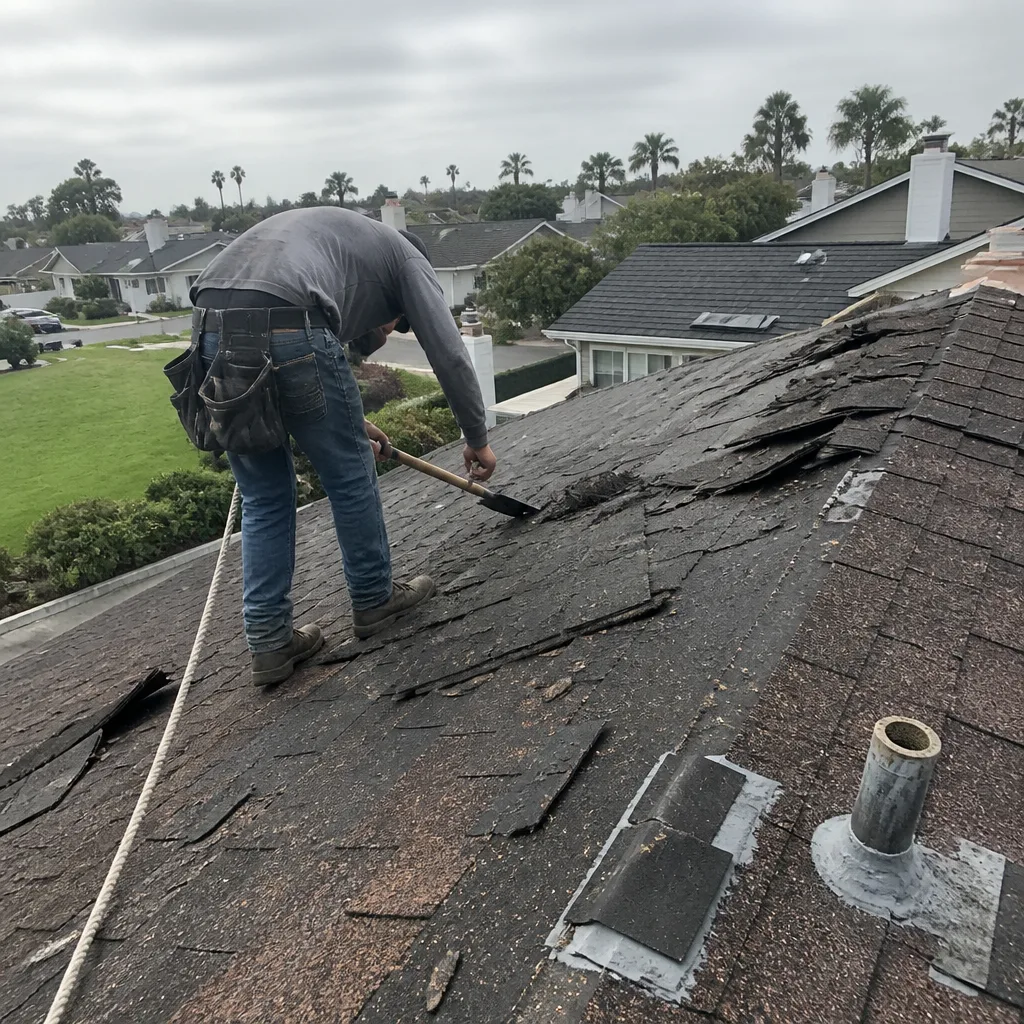 Before
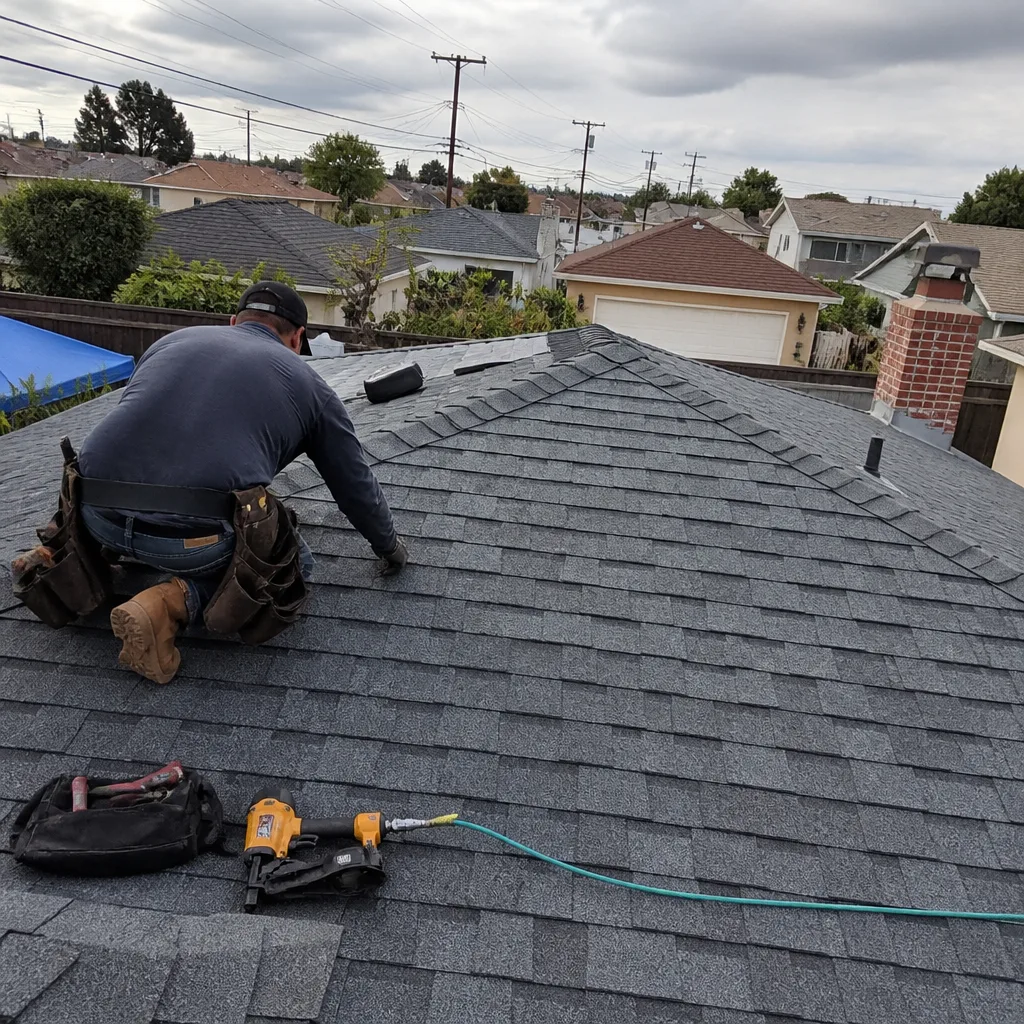 After
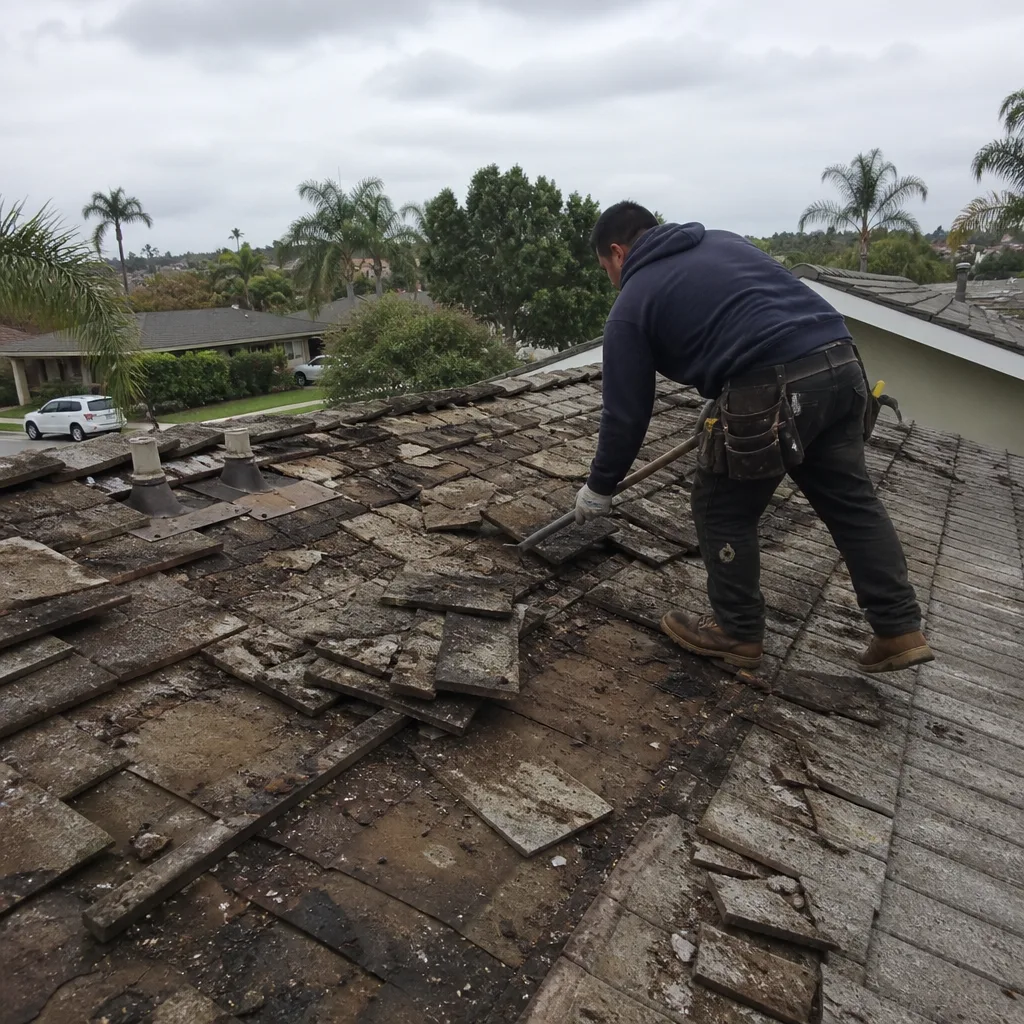 Before
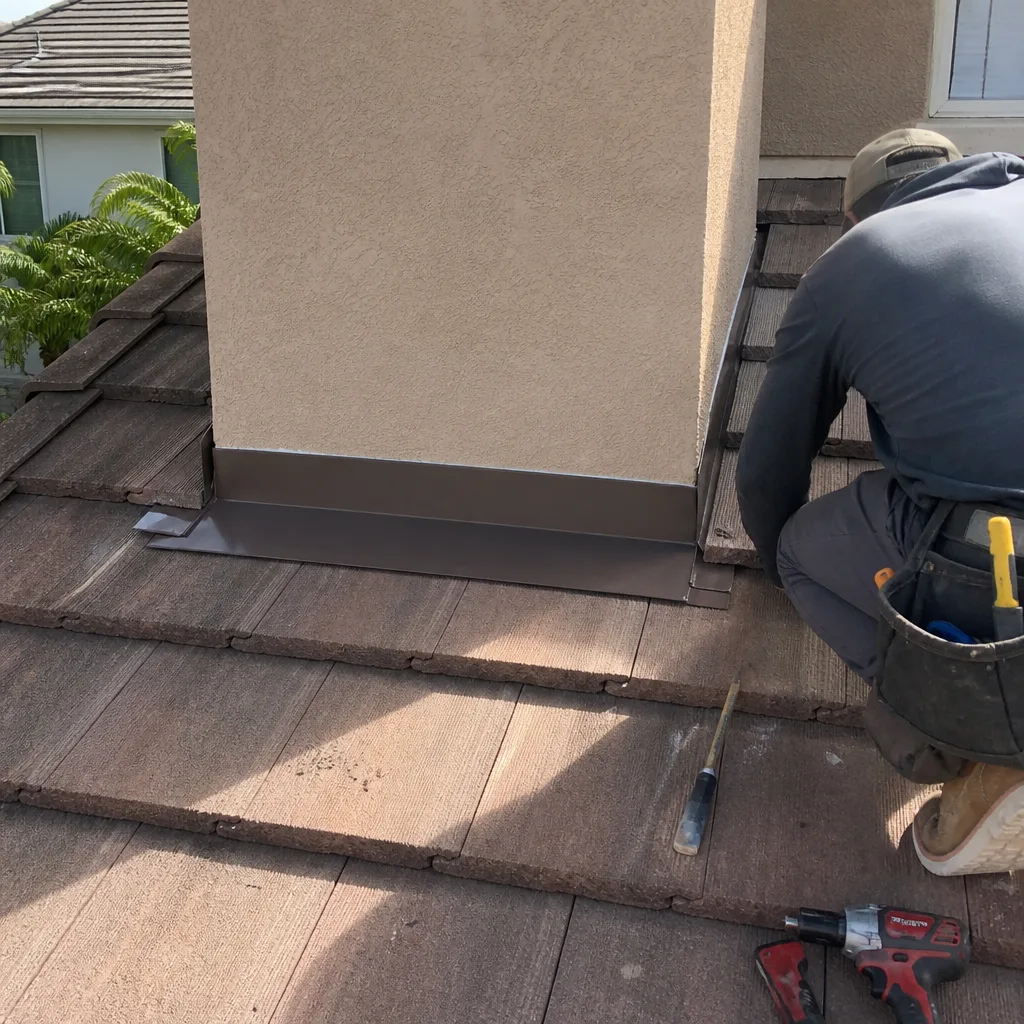 After
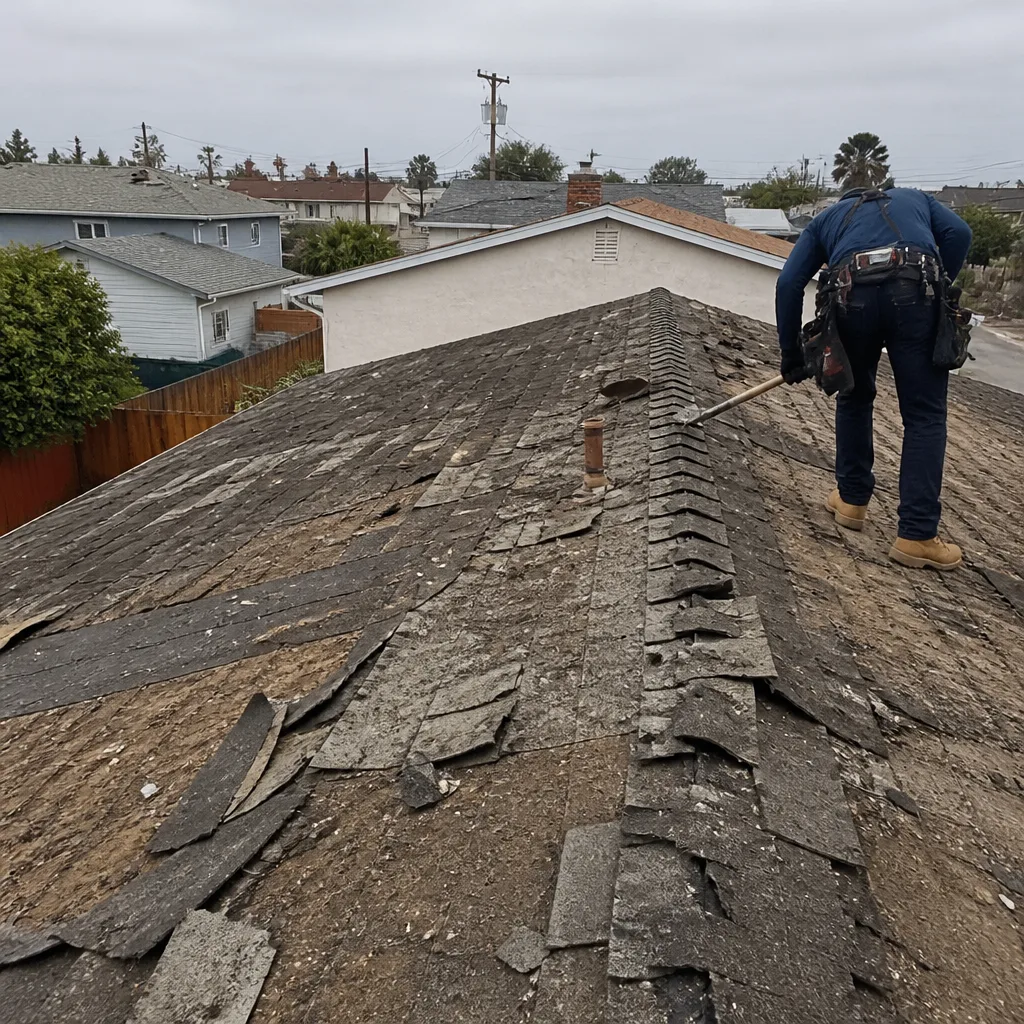 Before
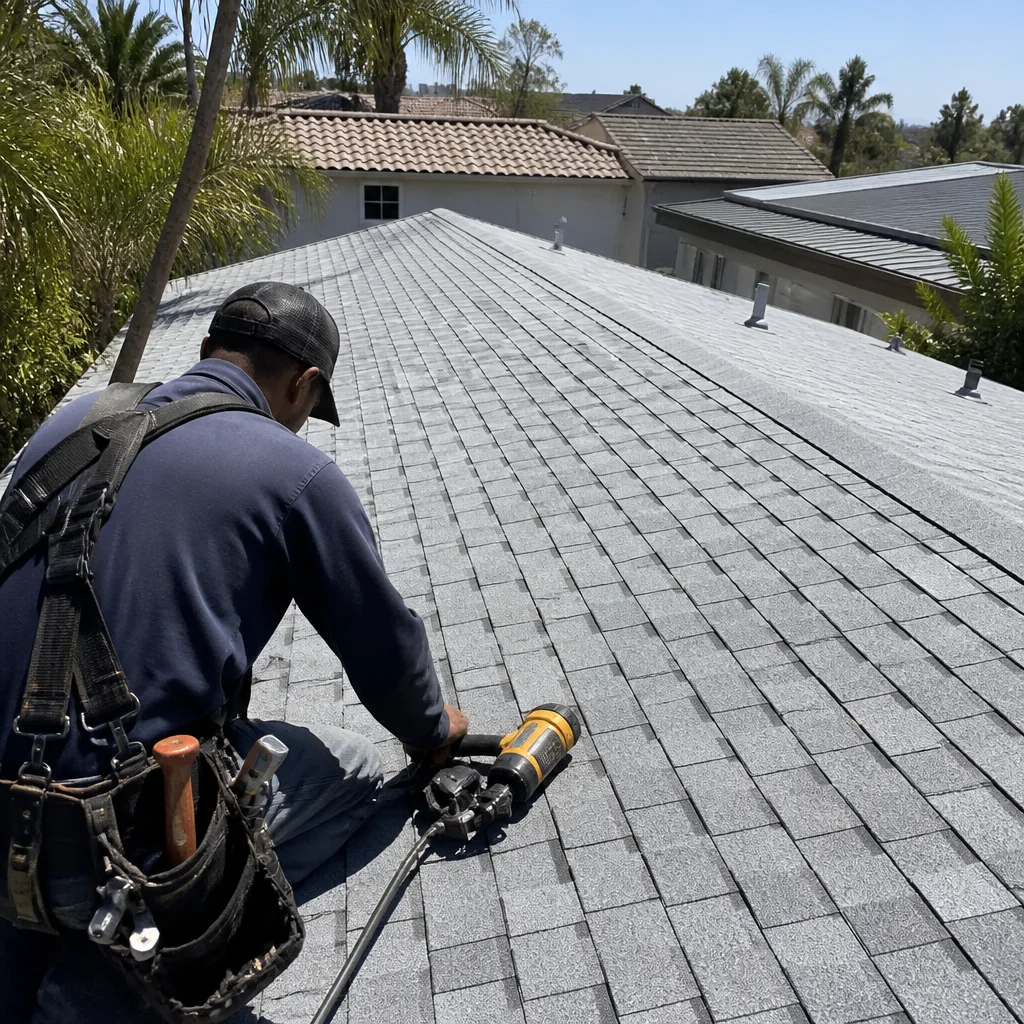 After