
Last updated October 31, 2026
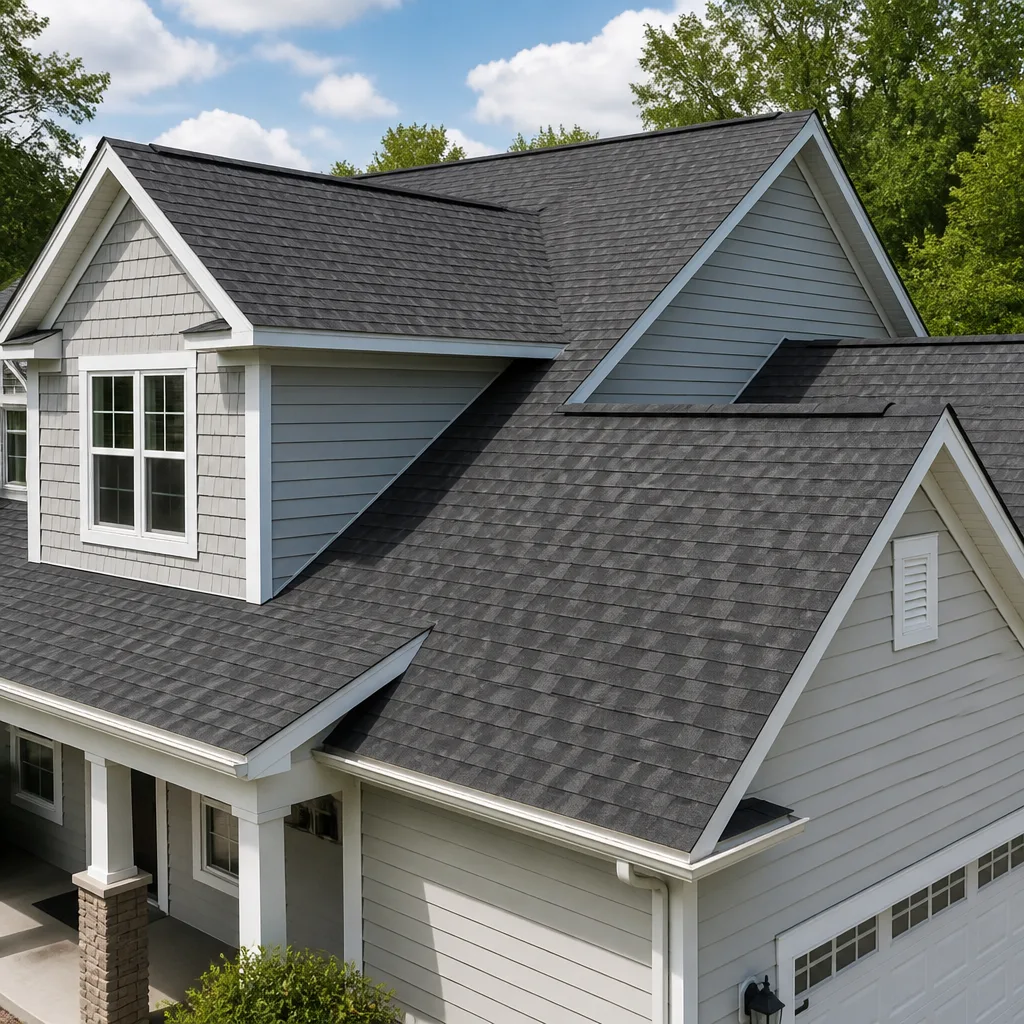 Architectural shingles
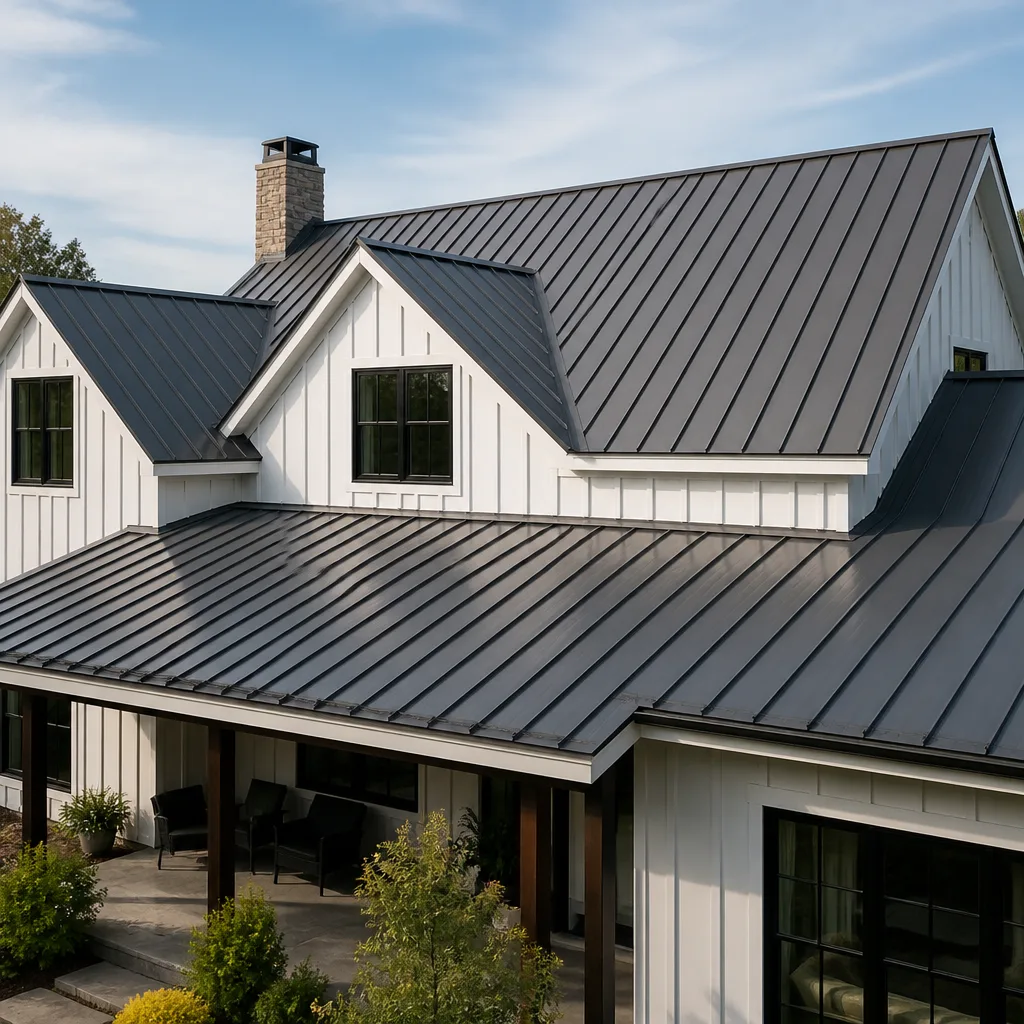 Metal roofing
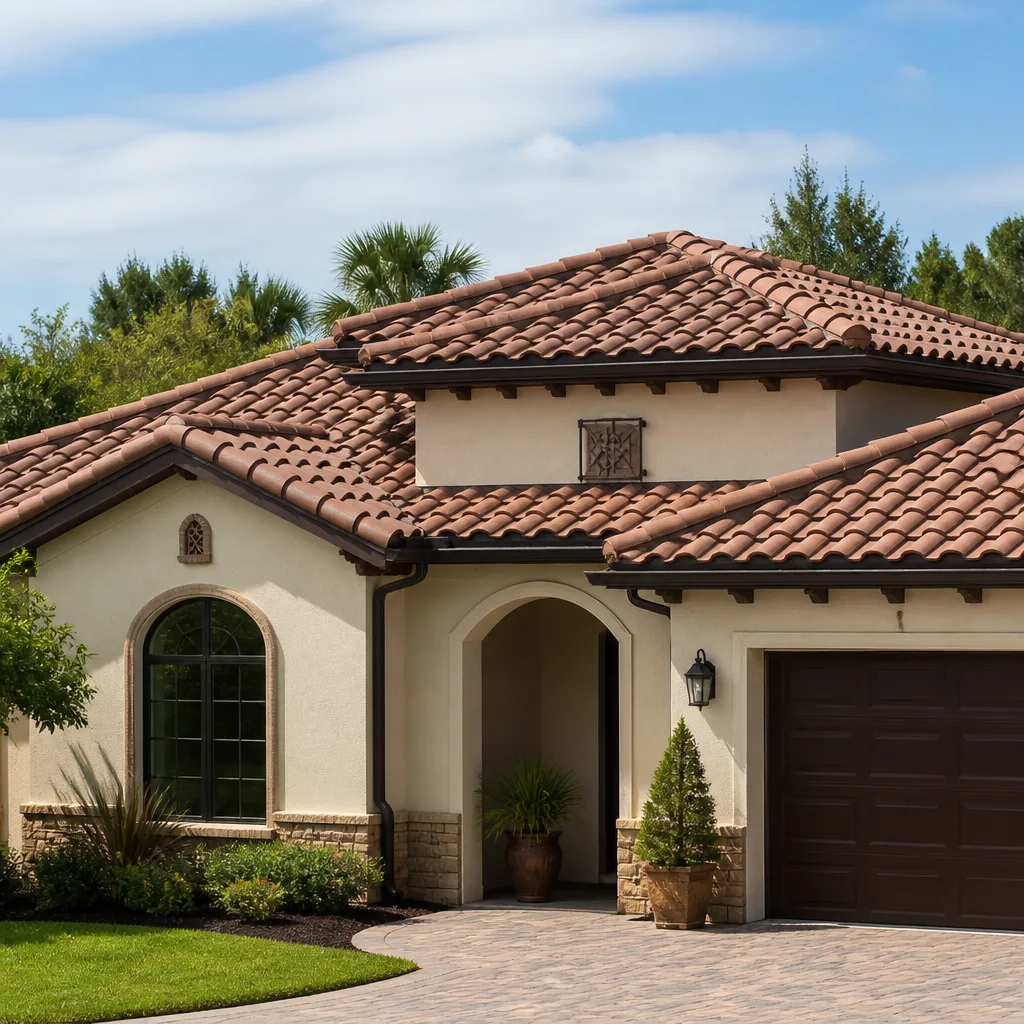 Tile roofing
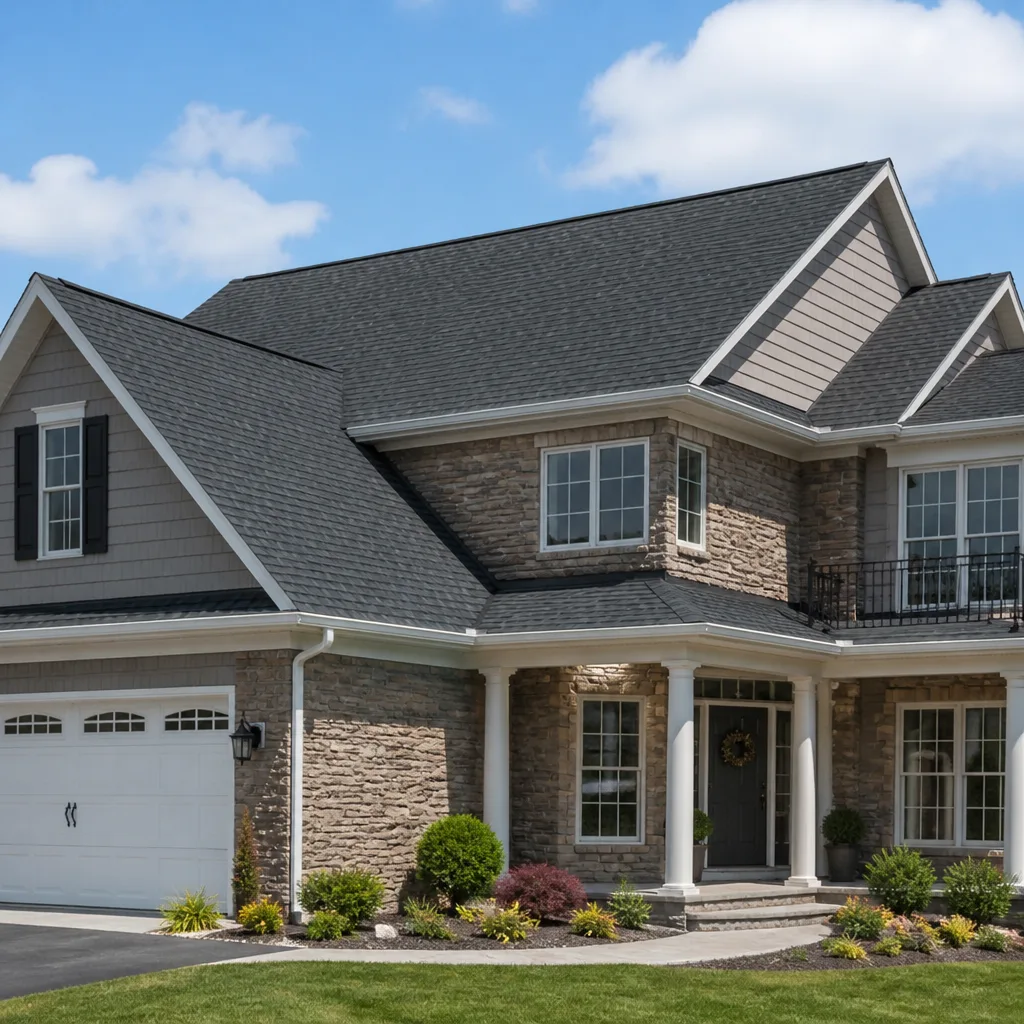 GAF
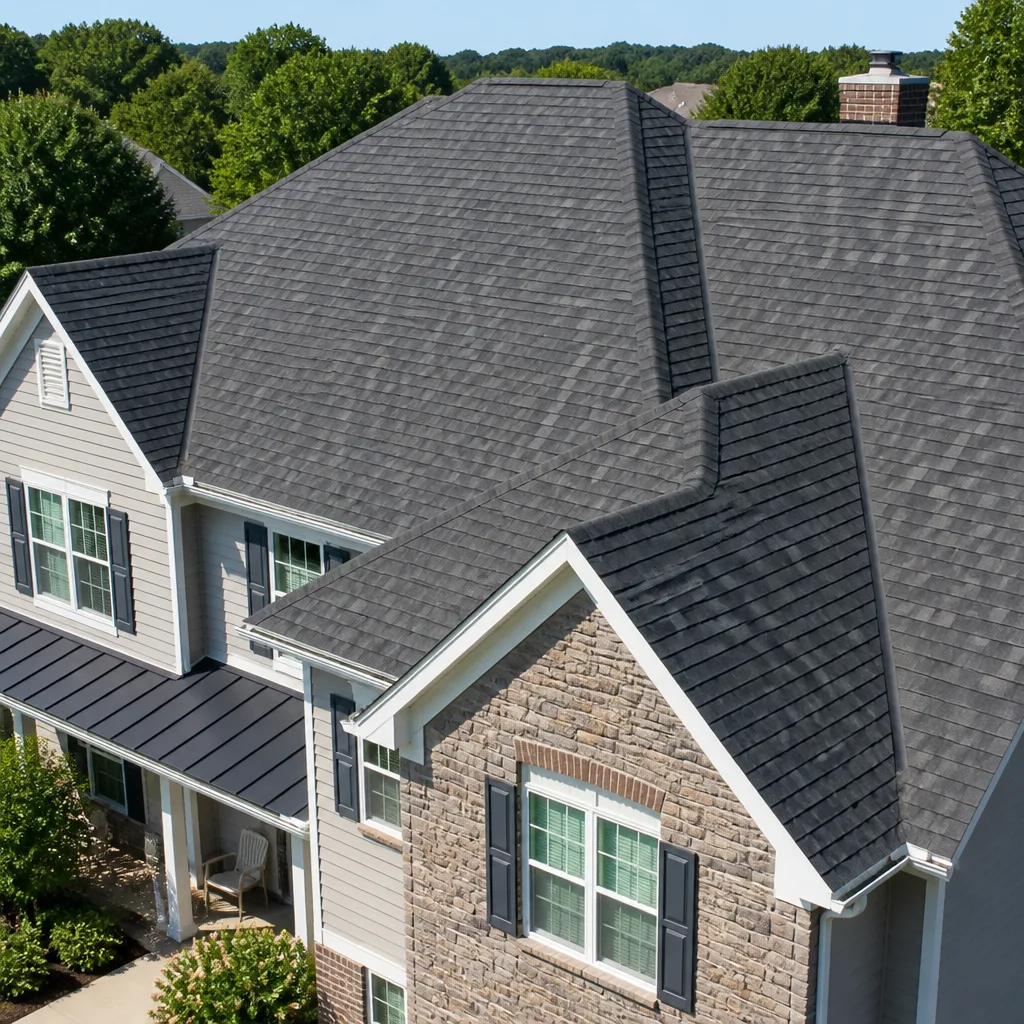 Owens Corning
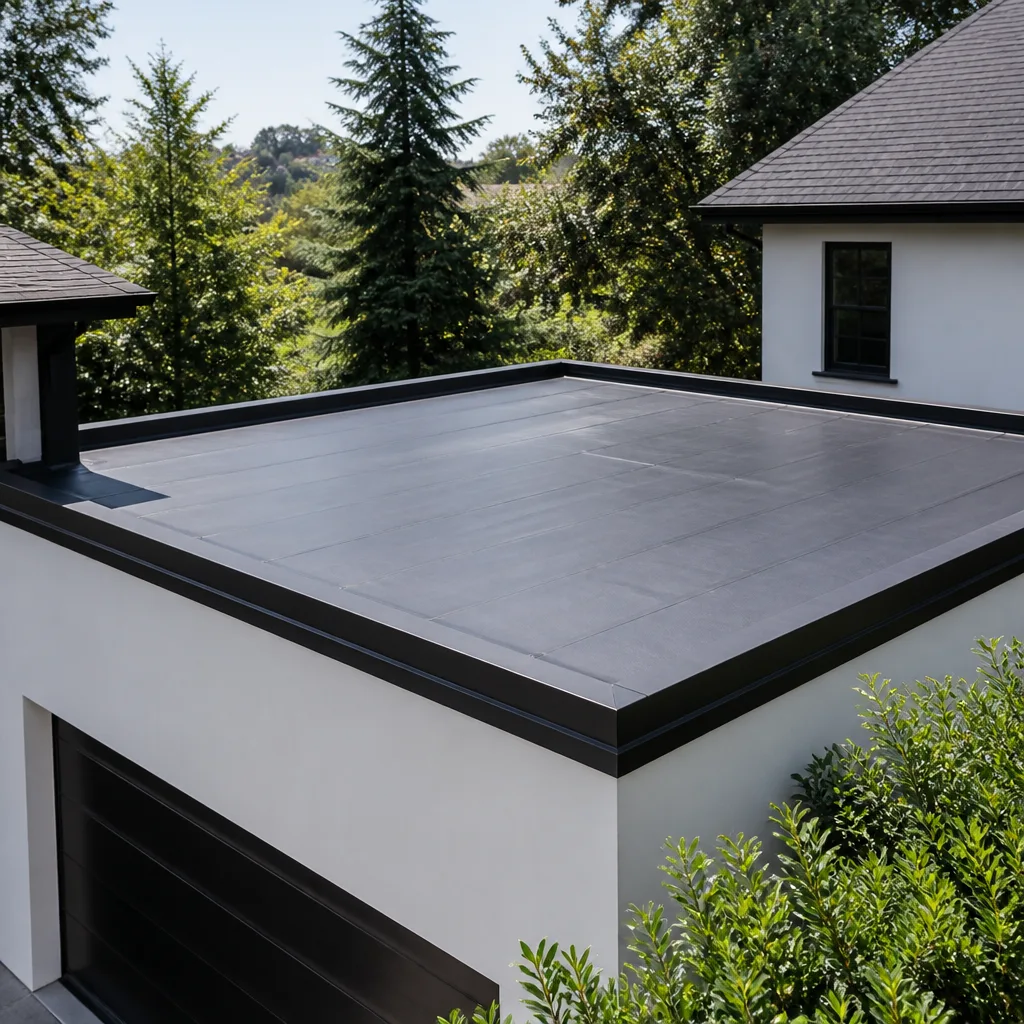 Flat & low-slope
Free roof inspection with deck photos before we talk money - GAF and Owens Corning certified installation
The Complete Roof Repair Guide for Huntington Beach Homeowners
Huntington Beach sits less than a mile from the Pacific at its widest point, which means marine layer moisture and airborne chloride are attacking fasteners, flashing, and underlayment year-round, not just when it rains. Most roofing guides treat Huntington Beach like any other Southern California city. That’s a costly mistake. This guide explains why roofs here fail differently, how to spot that failure before it spreads, and what an honest repair looks like when it’s done right. You’ll learn how salt air corrodes the parts of your roof you never see, why UV exposure at this latitude breaks down asphalt differently than inland heat, and how to read a repair estimate without getting fooled by vague line items. We’re Huntington Beach Roofers, and this is what we’ve learned from thousands of coastal roof inspections.
Quick Answer
Roof repair in Huntington Beach typically costs between $350 and $1,200 for localized fixes like shingle replacement or flashing resealing, while systemic decking or underlayment repairs run higher depending on how far moisture has traveled. The two factors that drive most repair work in this city are salt-air corrosion of metal fasteners and long-term UV exposure from roughly 300 sunny days a year. The right repair starts with a standalone roof inspection that probes the decking for hidden moisture before any shingles come off. For a free estimate in Huntington Beach, call (833) 467-4901.
Styles & brands we work with
Table of Contents
- Why Coastal Roofs Fail Differently in Huntington Beach
- How Salt Air Corrodes the Parts You Can’t See
- Why UV Exposure at This Latitude Ages Shingles Faster
- The Repair Sequence: From Inspection to Final Waterproofing
- Surface Repair vs. Systemic Repair: Knowing the Difference
- How to Read a Roof Repair Estimate Line by Line
- Matching the Material to the Roof, Not the Other Way Around
- Common Mistakes to Avoid
- When to Call a Professional
- Frequently Asked Questions
Why Coastal Roofs Fail Differently in Huntington Beach
A roof in Huntington Beach does not age the same way a roof in Riverside or Rancho Cucamonga does. The difference comes down to two environmental factors that inland homeowners rarely think about: airborne salt and marine layer moisture. These two forces work together in ways that shorten the functional life of standard roofing components, even when the visible shingles look fine from the ground.
What actually happens is this: the marine layer rolls in most nights and burns off by late morning. During those hours, the roof surface is wet without any rain having fallen. That moisture seeps into micro-cracks in sealant, sits against exposed nail heads, and condenses on metal flashing. Then the salt arrives. Chloride particles ride in on ocean breeze and settle on the roof deck. When salt, water, and metal come together, you get an electrochemical reaction called galvanic corrosion. Standard zinc-coated steel fasteners, the ones used on most roofs in drier climates, corrode at a measurably faster rate here. In our experience inspecting roofing in Huntington Beach, we’ve pulled nails from ten-year-old roofs that look like they’ve been in the ground for thirty.
The practical takeaway is simple: if you live within two miles of the coast, your roof’s weak points are not the shingles themselves most of the time. They’re the metal components. Flashing around chimneys, pipes, and valleys, the fasteners holding everything down, and the drip edge at the eaves. A proper repair in this environment means addressing those components specifically, not just swapping out a few torn shingles and calling it done. Our Roof Repair in Huntington Beach service starts with this assumption: that salt and moisture have been at work, and we need to find out where.
The Role of Marine Layer Moisture
Humidity in Huntington Beach averages around 70 percent year-round, spiking higher during May Gray and June Gloom. That persistent moisture means wood decking under your shingles rarely gets a chance to fully dry out if any water has found its way underneath. Inland, a small leak might dry on its own between rains. Here, it keeps working. Fungal growth in the decking, rust on the fasteners, and deterioration of the underlayment all accelerate in a permanently damp microclimate. This is why a repair that only addresses the surface is often not a repair at all. It’s a bandage over a wound that keeps getting wetter underneath. For a complete picture of what’s happening below your shingles, a Roof Inspection in Huntington Beach is the most direct way to find out.
How Salt Air Corrodes the Parts You Can’t See
The most common roofing failure we see in Huntington Beach has nothing to do with bad shingles. It’s fastener corrosion. Standard roofing nails are made from electroplated steel with a thin zinc coating. That coating is rated for typical interior environments, not for constant exposure to airborne chloride. Within five to eight years of coastal exposure, the zinc layer breaks down. The steel underneath begins to rust. As the nail head rusts, it expands slightly, loosening its grip in the decking. Eventually the nail head pops off entirely, and the shingle above it is no longer anchored.
This is why you’ll sometimes see shingles sliding down the roof slope after a heavy rain or high wind event in Huntington Beach. The shingles didn’t fail. The fasteners failed first. When we perform a repair, we never reuse existing fasteners or match the old ones out of habit. We upgrade to stainless steel or hot-dipped galvanized fasteners, which carry a much thicker zinc layer and are manufactured specifically for corrosive environments. The cost difference is minimal, typically a few dollars per hundred fasteners. The longevity difference is measured in decades.
Flashing is the second casualty. Galvanized steel flashing, common on homes built in the 1980s and 1990s, corrodes at its seams and bends where the protective zinc coating was stretched during forming. Once the zinc is compromised, the steel underneath rusts through within a few years. Aluminum flashing holds up better against chloride but corrodes quickly if it touches certain pressure-treated woods or copper components, which creates a dissimilar-metal reaction. On coastal homes, we pay close attention to the metal-to-metal junctions. A small piece of copper flashing touching a large piece of aluminum will cause the aluminum to disintegrate through galvanic action.
What a Salt-Air-Resistant Repair Looks Like
- Fastener check: We examine nail heads and staples during the inspection to determine if corrosion has already started. If it has, localized repair includes replacing affected fasteners with hot-dipped galvanized or stainless alternatives.
- Flashing assessment: We measure the thickness and condition of step flashing, counter-flashing, and pipe boots. In coastal Huntington Beach, we often recommend upgrading from galvanized to heavier-gauge aluminum or stainless where contact with compatible materials allows.
- Sealant selection: Not all roof sealants are formulated for high-humidity, salt-exposed environments. We use sealants rated for marine applications, which resist the breakdown that causes standard sealants to crack and peel within three to five years.
- Ventilation check: Marine layer moisture inside the attic accelerates decking rot from below. A proper repair includes confirming that soffit and ridge vents are clear and functional, keeping air moving through the attic space.
Why UV Exposure at This Latitude Ages Shingles Faster
Huntington Beach averages 300 sunny days a year. That’s good for the beach culture, and hard on asphalt shingles. But the type of UV damage we see here is different from inland cities like Temecula or Palmdale. Inland degradation is primarily thermal: the shingles bake, the asphalt hardens, and the material becomes brittle. In Huntington Beach, the degradation is photochemical. Ultraviolet radiation at this latitude, combined with the reflective effect of ocean water and frequent morning dew, breaks down the chemical bonds in the asphalt itself. The shingles don’t just get brittle. They lose their ability to flex and self-seal, and the granules on top begin to release not from heat cracking but from adhesive failure within the asphalt matrix.
What does this mean in practical terms? The shingles may look intact from a distance, but a close inspection reveals granule loss on the exposed surface, curling at the edges where the material has contracted, and cracking that follows the fiberglass mat lines rather than the shingle edges. Once the granules go, the asphalt underneath is fully exposed to UV. From that point, the shingle ages roughly three times faster. A roof that might have lasted 25 years inland reaches the end of its functional life at 17 to 20 years in Huntington Beach, sometimes sooner depending on the original material quality and orientation to the sun. South and west-facing slopes deteriorate fastest because they absorb the most cumulative UV exposure.
Shingle Formulations That Hold Up Better Here
Not all asphalt shingles are equally resistant to UV photochemical breakdown. Manufacturers have taken different approaches to UV stabilization, and the formulation differences matter more in coastal sunlight than they do inland. Owens Corning Duration shingles, for example, use a patented SureNail fabric strip and a heavier granule embedment that holds the surface layer in place longer under UV stress. GAF Timberline HDZ shingles use a different approach: their LayerLock technology bonds the shingle layers together mechanically, reducing the flexing and contraction cycles that accelerate UV damage at the shingle edges. CertainTeed’s premium lines use a higher-grade asphalt that includes UV blockers in the mix, not just in the surface coating.
The point is not that one brand is universally better. The point is that the formulation matters, and in Huntington Beach, you want a shingle formulated for high-UV coastal environments. When we’re matching repair materials on partial roof repairs, this becomes critical. A repair shingle that doesn’t match the original’s UV resistance will fade differently, age differently, and create a visible patch within a few years even if it matches in color on day one. That’s one reason we carry multiple brands, including GAF, CertainTeed, Owens Corning, and IKO. The material choice follows the roof’s condition and your budget, not our inventory limitations. Seven brands. One contractor.
The Repair Sequence: From Inspection to Final Waterproofing
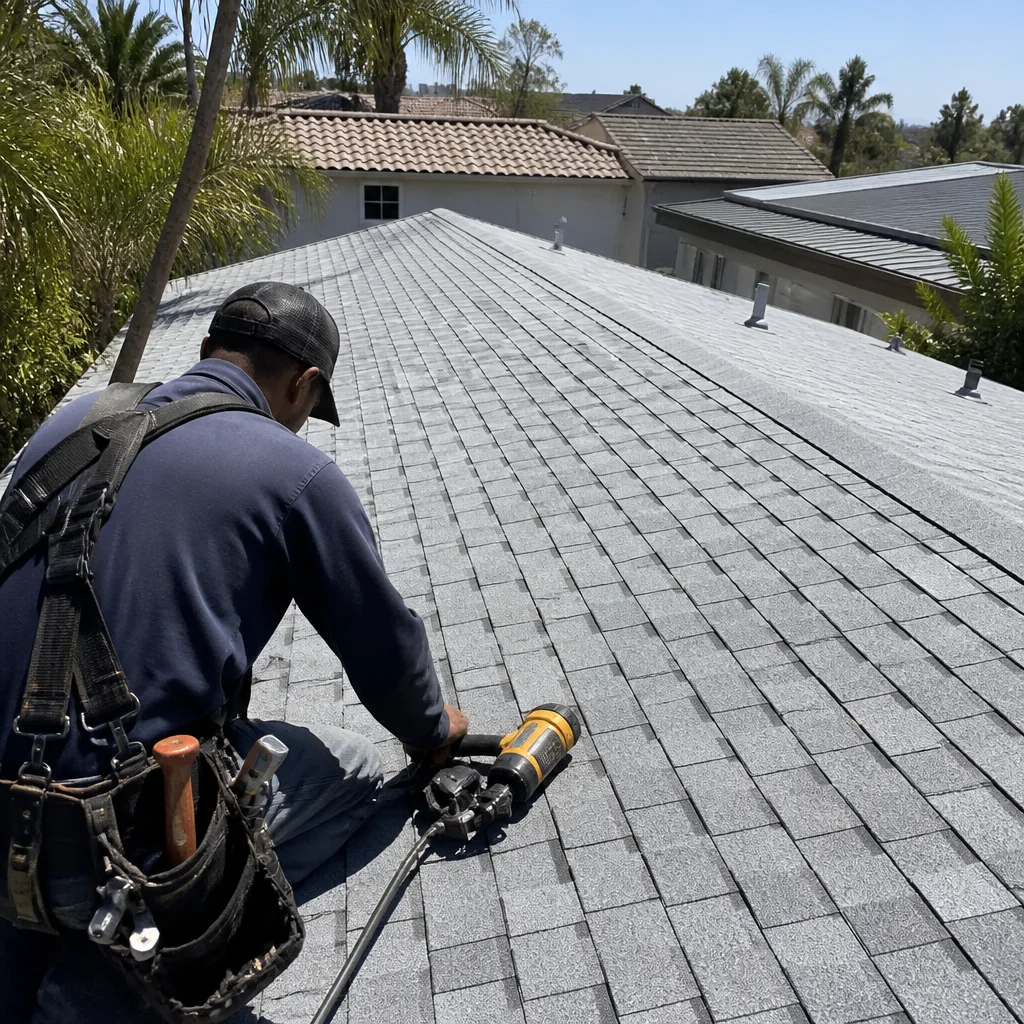
A proper roof repair in Huntington Beach follows a defined sequence. Skipping steps is how small problems become large ones. Here’s the order we follow on every repair, whether it’s three shingles or thirty square feet of decking.
- Visual inspection from the ground and roof: We look at the roof from both perspectives. From the ground, we check for shingle sagging, visible granule loss in gutters, and staining on eaves. On the roof, we check for loose shingles, cracked sealant at penetrations, and flashing separation.
- Moisture probe of the decking: Before any shingles come off, we use a moisture meter to probe the decking underneath the suspected damage area. This tells us whether water has penetrated the underlayment and how far it has spread. In Huntington Beach’s high-humidity environment, we probe beyond the visible stain. Moisture travels through plywood and OSB along grain lines, and what looks like a small leak at the ceiling often originates six or eight feet away.
- Targeted shingle removal: We remove only the shingles needed to access the damaged area. We cut the sealant bonds carefully to avoid damaging surrounding shingles, then pull the fasteners and set aside any shingles that can be reused.
- Decking and underlayment evaluation: With the shingles off, we inspect the decking surface, the underlayment condition, and the fastener holes. In coastal homes, we often find that the underlayment around the leak has degraded even if the decking itself is still solid. We replace any damaged underlayment with a material rated for high-humidity environments.
- Material match and installation: We match the replacement shingles, flashing, and fasteners to what’s on the roof, upgrading to corrosion-resistant fasteners in every case. The new shingles are installed to the manufacturer’s specification.
- Final waterproofing and sealant: We apply marine-rated sealant at all penetrations and junctions, then check the repair for water-tightness. The area is swept clean, and we document the work with photos showing before, during, and after.
This sequence matters because it’s built around diagnosis before treatment. We inspect first, recommend second. If the moisture probe shows that the decking is sound and the leak is limited to a failed sealant joint, that’s a surface repair. If the probe shows saturation spread across a wider area, we tell you that up front and explain what a systemic repair involves. The homeowner makes the decision with complete information. That’s the only way to approach a roof you plan to keep for another decade or two.
Surface Repair vs. Systemic Repair: Knowing the Difference
Most homeowners want the cheap fix, and we understand that. But there’s a difference between a repair that solves the problem and a repair that defers it. We call these surface repairs and systemic repairs, and the distinction changes everything about cost, longevity, and what you should expect.
A surface repair addresses a localized failure where the underlying structure is still sound. Examples include: a few cracked or missing shingles from a single storm, a pipe boot that has split from sun exposure, a section of step flashing that has come loose at a wall junction, or a nail that has popped through the shingle surface. In each case, the decking is dry, the underlayment is intact, and the surrounding roof is in acceptable condition. Surface repairs are usually $350 to $800 depending on materials and access. They’re the right call when the problem is genuinely localized.
A systemic repair addresses a failure that has spread beneath the surface. The visible damage might still look small: a water stain on the ceiling, a few curled shingles. But the moisture probe reveals that water has reached the decking and traveled along the roofline. The underlayment has lost its waterproofing. Multiple fasteners show corrosion. The decking itself may have begun to delaminate. In these cases, replacing the visible shingles does almost nothing. The water entry point needs to be found, the damaged decking and underlayment removed and replaced, the corroded fasteners pulled, and the entire affected area re-roofed. Systemic repairs run $1,200 to $3,500 or more depending on how far the damage has spread.
How do you know which one you’re dealing with? You can’t tell from the ground. That’s exactly why a Roof Inspection in Huntington Beach is valuable as a standalone service, not as a sales pitch. An inspection includes the moisture probe. The probe tells us whether the repair is surface or systemic. Without that data point, any estimate you get is a guess. You deserve better than a guess. If a full replacement is the honest recommendation, we’ll tell you that too, and explain why patching would be throwing money at a temporary fix. Repair or replace. We’ll tell you which one actually makes sense. That page on Roof Replacement in Huntington Beach explains the replacement side in detail.
How to Read a Roof Repair Estimate Line by Line
Roof repair estimates are written in contractor language, and much of that language is designed to be vague enough to protect the contractor from scope disputes. When you’re comparing estimates in Huntington Beach, here’s what each common line item actually means for your repair.
“Remove and Replace” vs. “Seal and Re-Nail”
When you see “remove and replace,” the contractor is committing to physically removing the damaged material and installing new material in its place. That means pulling the shingles, inspecting what’s underneath, replacing fasteners, and installing new shingles, underlayment, or flashing as specified. When you see “seal and re-nail,” the contractor is committing to a much narrower scope: applying sealant to the problem area and driving a few new fasteners to tighten things up. There’s no removal, no inspection underneath, and no new materials beyond sealant and nails. A “seal and re-nail” estimate is a surface response to a problem that may be systemic. It’s not inherently wrong for things like minor nail pops or small sealant cracks, but if you’re dealing with an active leak, it’s rarely sufficient on its own.
Material Line Items: What You’re Paying For
Look for the shingle brand and model named in the estimate. If it just says “architectural shingles match existing,” that’s a red flag. Architectural is a style, not a specific product. The contractor could be installing an entry-level three-tab lookalike, a mid-grade laminate, or a premium designer shingle. In Huntington Beach’s UV environment, the formulation matters for longevity and color stability. Ask for the specific product name: GAF Timberline HDZ, Owens Corning Duration, CertainTeed Landmark, or IKO Dynasty. Each has different UV stabilizers, granule adhesion, and warranty terms. The estimate should name the product.
Labor, Disposal, and Access Fees
Repair estimates should break out labor and materials separately. If they don’t, ask for the split. Disposal fees cover hauling away the old shingles and debris, usually $50 to $150 depending on volume. Access fees appear on two-story homes or steep-pitch roofs where the crew needs to use harnesses or special ladders. In Huntington Beach, some homes in the Huntington Harbour area have limited ground access that affects material staging. A legitimate access fee is explained; an unexplained one is worth questioning.
Warranty Language
Look for the words “workmanship warranty” or “labor warranty.” That’s the contractor’s guarantee on the installation itself, separate from any manufacturer warranty on the materials. In coastal environments, manufacturer warranties often have specific language about salt air and high humidity. Ask which manufacturer warranty applies to the replacement materials, and whether the contractor’s labor warranty covers the repaired area.
Matching the Material to the Roof, Not the Other Way Around
Here’s a scenario we see often in Huntington Beach: a homeowner needs a repair, and the contractor they call installs one brand of shingle. That’s the only option they offer. If the existing roof is that brand, fine. If it’s not, the contractor either recommends a full replacement or slaps on a mismatched patch and calls it close enough. That’s not material matching. That’s inventory-driven roofing.
Carrying one brand is cheaper for the contractor. But it forces the homeowner into a corner. We take a different approach. We hold authorized installer status with seven leading manufacturers: GAF, CertainTeed, Owens Corning, IKO, Atlas, Tamko, and Boral. That portfolio spans entry-level three-tab shingles through premium architectural laminates and designer lines. When we walk onto a Huntington Beach roof for a repair, we’re not trying to fit the roof to our material. We’re matching the material to the roof’s existing profile, age, color, and environmental exposure.
This matters for two practical reasons. First, matching the shingle profile and color blend means the repair doesn’t look like a patch from the street. Property values in Huntington Beach are high, and a visible roof patch can be flagged in a future home inspection. The repair should be invisible. Second, matching the material’s performance characteristics means the repair ages at the same rate as the surrounding roof. If the original roof is a premium laminate and the repair uses a builder-grade shingle, the patch will fail years before the rest of the roof, and you’ll be back on the phone for another repair. When one brand is backordered or discontinued, which happens more often than manufacturers like to admit, we can pull from the other brands in our portfolio without slowing the job down. No single-vendor dependency.
When Brand Choice Matters Most
- Insurance claims: If your repair is part of an insurance claim, the adjuster may require documentation that the replacement material matches the original specification. Having access to the specific brand and product line simplifies that paperwork.
- HOA communities: Some Huntington Beach HOAs have material guidelines or approved color palettes. Multi-brand access makes compliance straightforward.
- Warranty coverage: Certain manufacturer warranties only apply when the entire system, including underlayment, fasteners, and ridge components, comes from the same brand. We can build a matched system from any of the seven brands we carry.
From the first inspection to the final shingle, the material choice is yours to make with complete information, not the contractor’s to dictate from a limited shelf.
Common Mistakes to Avoid
- Ignoring a small leak because it only appears during heavy rain. In Huntington Beach, the real damage often starts during the marine layer months when moisture wicks in slowly and sits against the decking. By the time your ceiling stains, the decking has likely been wet for months.
- Using interior-grade caulk or sealant on roof penetrations. Standard silicone and acrylic caulks break down rapidly under UV and salt air. A marine-rated roof sealant costs more and lasts years longer.
- Assuming granule loss is a cosmetic issue. Once the granules come off, the asphalt underneath is unprotected and ages roughly three times faster. Granule loss on a south-facing slope in Huntington Beach is an early warning, not a minor aesthetic issue.
- Accepting a “seal and re-nail” estimate for an active leak. Sealing over a leak without inspecting the decking underneath is like painting over rust. The problem keeps advancing where you can’t see it.
- Matching by color only, without checking the shingle profile. A color match that ignores profile and granule formulation creates a patch that ages differently and becomes more visible over time.
- Putting off the moisture probe. The probe tells you whether the fix is surface or systemic. Without it, every estimate you get is speculation.
- Choosing the cheapest contractor without checking material specifications. The lowest bid often hides builder-grade materials that won’t survive this coastal environment. Ask for brand names and specific product lines in writing.
When to Call a Professional
Some roof issues are safe to clean up with a broom and a hose. Most are not. Call a professional if you see water stains on your ceiling or walls, especially if the stain grows after rain. If you notice shingles in your yard after Santa Ana wind events, or you see daylight through your attic boards, don’t wait. Cracked pipe boots, loose flashing at wall junctions, and visible rust on any metal roof component all warrant a professional assessment. Walking on a roof without experience damages shingles and risks injury. Steep-pitch roofs, common on newer Huntington Beach construction, are not safe for untrained homeowners. Huntington Beach Roofers offers free estimates in Huntington Beach and is the Huntington Beach Roofers home base for inspection, repair, and replacement work. Call (833) 467-4901 to schedule.
Frequently Asked Questions
Localized roof repair in Huntington Beach typically runs between $350 and $800 for surface issues like missing shingles or a split pipe boot. Systemic repairs that involve decking or underlayment replacement start around $1,200 and can exceed $3,500 depending on how far moisture has traveled. Salt-air corrosion and marine layer humidity drive repair costs up here compared to inland cities because more components need attention. Call (833) 467-4901 for an exact quote, estimates are free.
It shouldn’t, if the original estimate was based on a proper inspection that included a moisture probe of the decking. Price changes happen when a contractor opens up the roof and finds damage they didn’t inspect for. We inspect first, recommend second. Our written estimates include the moisture probe findings, so the scope is clear before any work begins.
In Huntington Beach, minor roof repairs that replace less than 10 percent of the roof area typically do not require permits. Larger repairs and replacements fall under California Building Code and require permits through the city. We handle permit pulls and inspections on every job that requires them. If your repair crosses the threshold into replacement territory, we’ll tell you and explain the permitting path before any work starts.
Most surface repairs are completed in one day, including setup, removal, installation, and cleanup. Systemic repairs that involve decking replacement or extensive underlayment work typically take two to three days depending on access and weather. Coastal morning fog in Huntington Beach can add time to projects that require adhesives to cure properly, and we account for that in scheduling.
Yes, in most cases. We carry seven brands of roofing materials, including GAF, CertainTeed, Owens Corning, and IKO, which gives us a wide library of profiles, colors, and formulations to match against. If your original shingle has been discontinued, which happens with products that are 15 years or older, we’ll find the closest visual match and explain the differences. A perfect match isn’t always possible, but a blend that doesn’t call attention to itself usually is.
In a coastal environment like Huntington Beach, you should have your roof inspected every two to three years, even if there’s no visible problem. The marine layer and salt air work continuously on metal components and sealants, and the damage starts long before it becomes visible from the ground. For homes over 15 years old, we recommend annual inspections. A standalone Roof Inspection in Huntington Beach costs less than the average deductible on a water damage claim. Call (833) 467-4901 to schedule one.
There’s no single best brand for every coastal roof. The right answer depends on your existing roof profile, your budget, your roof’s pitch, and your HOA requirements if applicable. What we can tell you is that formulation matters more in Huntington Beach than it does inland. Look for shingles with heavy granule embedment, UV blockers in the asphalt mix, and good warranty terms for high-humidity coastal zones. We’ll walk you through the trade-offs between Owens Corning Duration, GAF Timberline HDZ, CertainTeed Landmark, and other lines so you can make the choice with your eyes open.
The Bottom Line
Roof repair in Huntington Beach is a different animal than roof repair inland. Salt air attacks your fasteners. Marine layer moisture attacks your decking. UV radiation attacks your shingles from above. A good repair addresses all three, not just the visible symptom. The process starts with an inspection that probes beneath the surface, continues with a material match that fits your existing roof and your budget, and ends with fasteners and sealants built for the coast. Seven brands. One contractor. From the first inspection to the final shingle, the goal is a repair that doesn’t announce itself and doesn’t need to be redone in three years. If your roof is showing signs of wear, call (833) 467-4901 for a free estimate. We’ll tell you honestly whether a repair makes sense, or whether it’s time to talk about replacement.
Written by the team at Huntington Beach Roofers, serving Huntington Beach since 2018.
See the difference
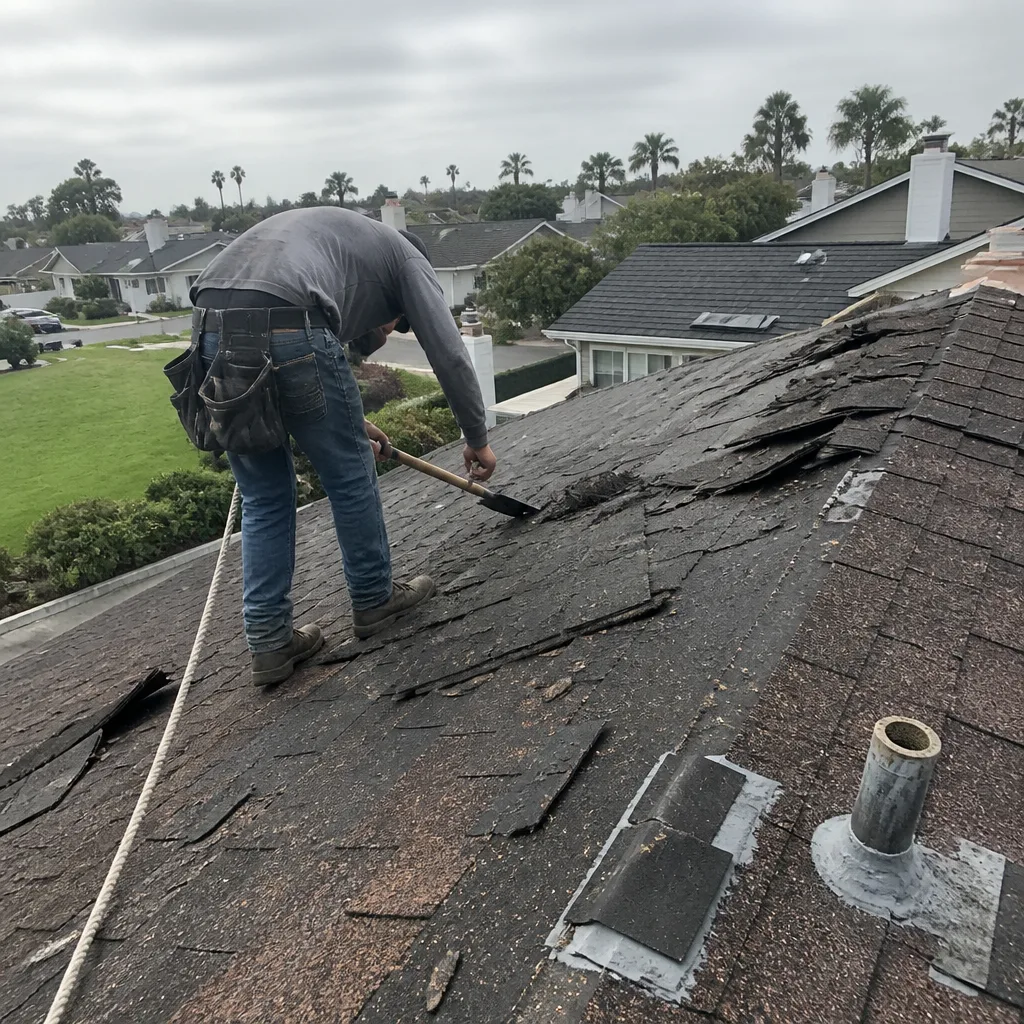 Before
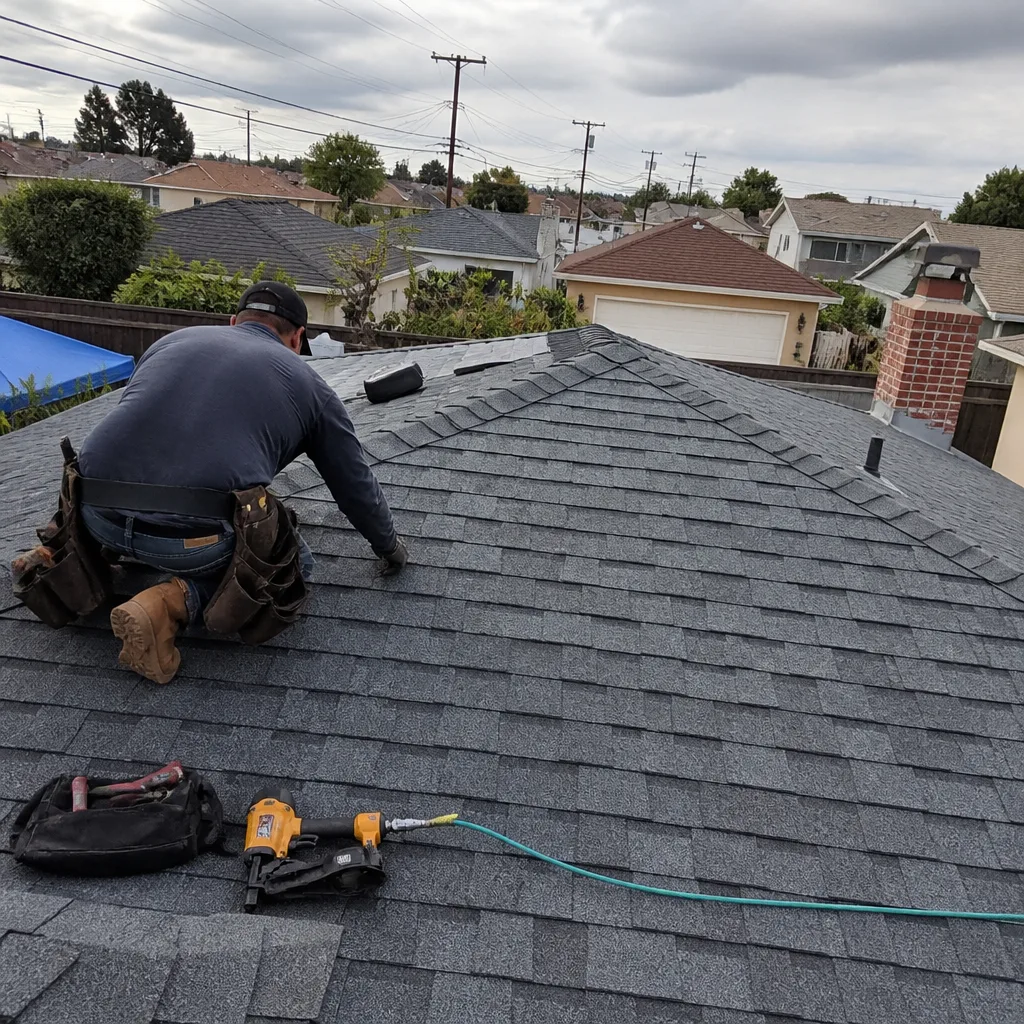 After
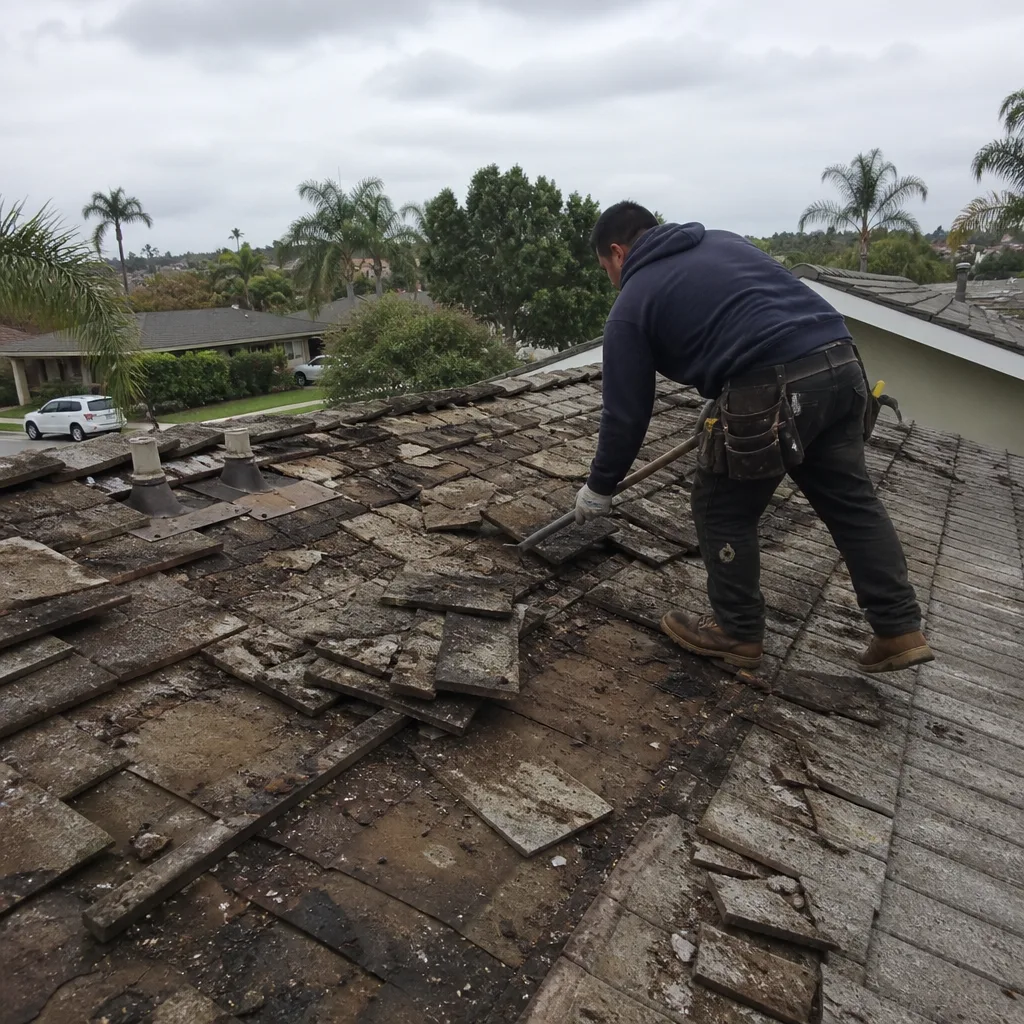 Before
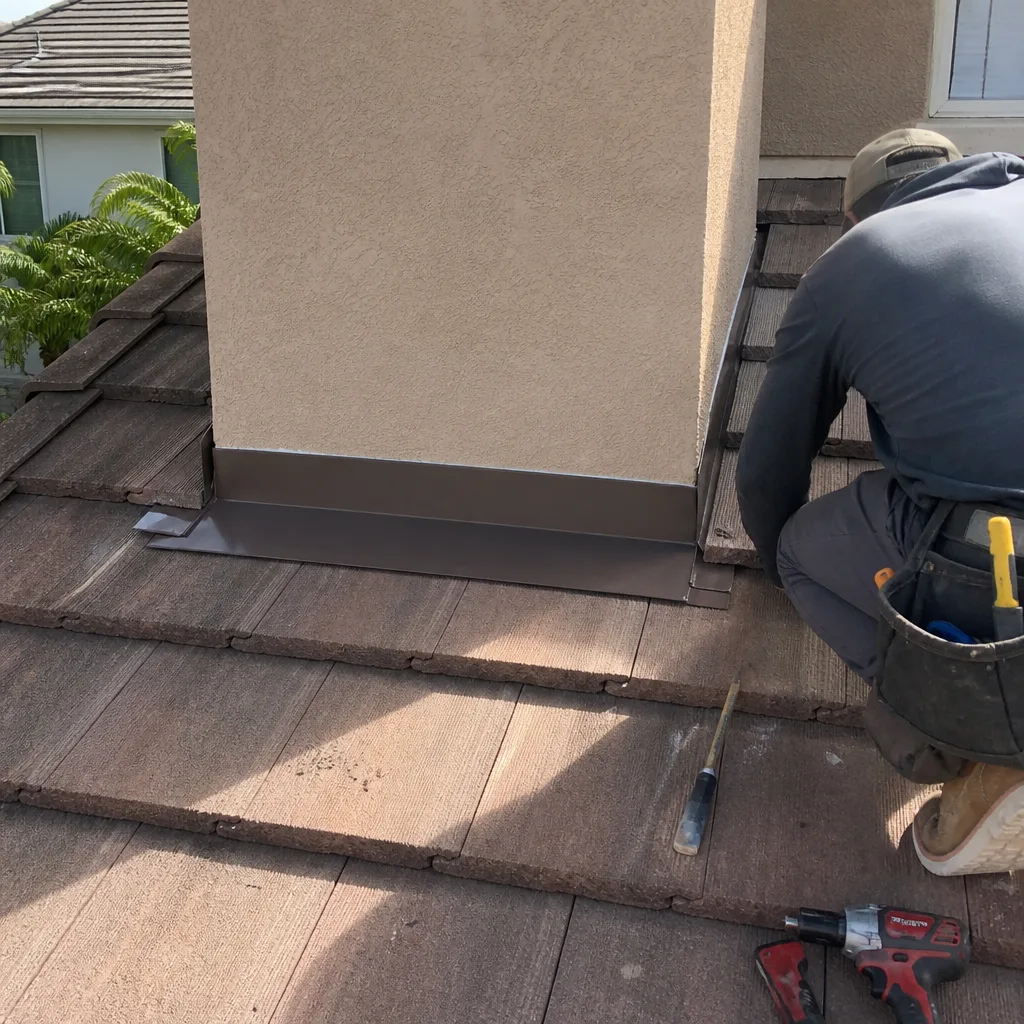 After
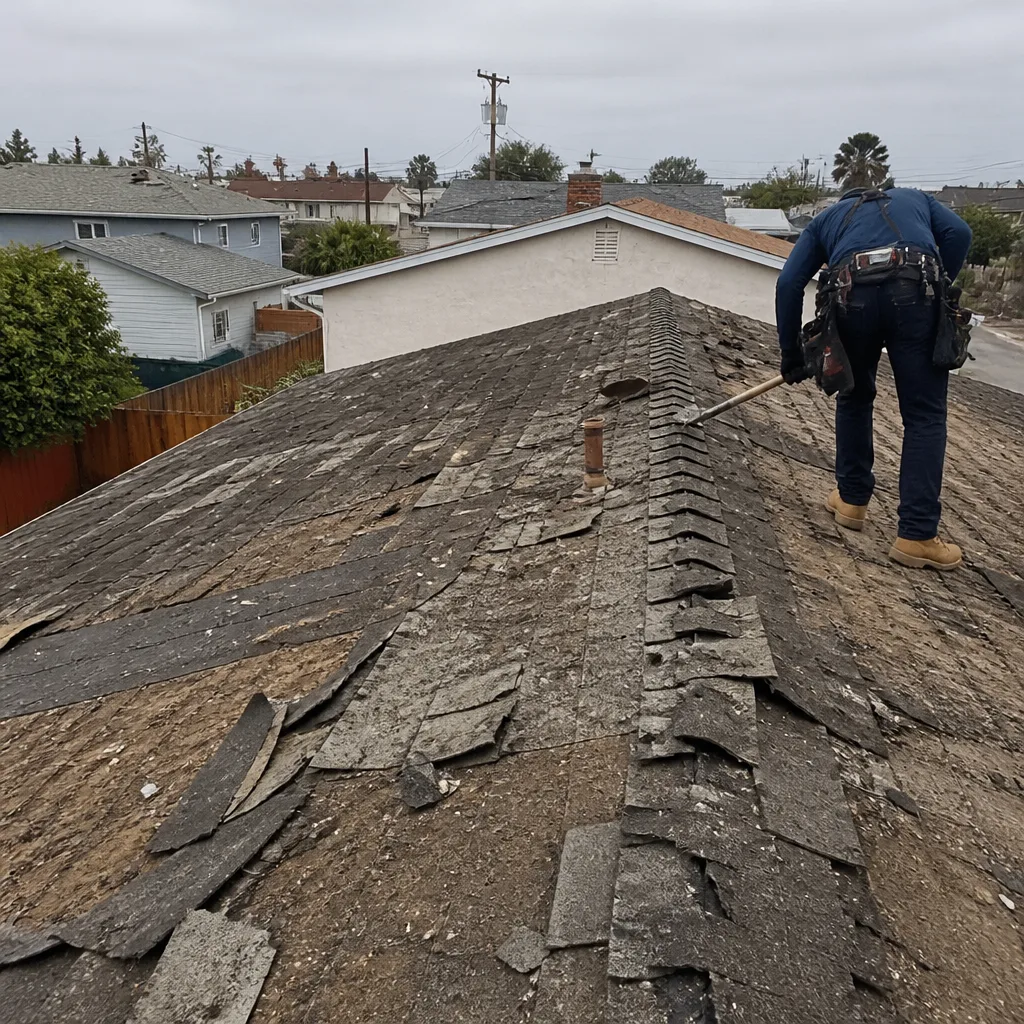 Before
 After